

Plumbing dispatch is the operational system that assigns technicians to jobs, manages scheduling, and controls how your field team spends every billable hour. Understanding why plumbing dispatch matters for hiring needs is the first step toward building a business that grows without constantly adding headcount. A skilled dispatcher adds 20–30% more revenue from the same number of technicians by filling schedule gaps and cutting wasted drive time. That single fact reframes the entire hiring conversation. Before you post another job listing, you need to know whether your dispatch process is the real bottleneck.
Why plumbing dispatch matters for hiring needs
Poor dispatch is the most common reason plumbing owners hire too fast. When technicians sit idle between jobs or drive across town for back-to-back calls, the instinct is to add more people. The real fix is usually a better system, not a bigger crew.
Manual dispatching loses 15–25% of billable capacity through inefficient routing and idle time. For a five-technician crew, that translates to $75,000–$130,000 in lost annual revenue. That is not a staffing gap. That is a process gap wearing a staffing costume.
The financial logic is direct. Fixing dispatch recovers revenue you already have the people to earn. Hiring without fixing dispatch just spreads the same inefficiency across a larger payroll.
Pro Tip: Before you open a new position, pull your technicians' job completion logs for the past 30 days. If average daily jobs per tech are below your market benchmark, dispatch is the problem, not headcount.
Common dispatch inefficiencies that drive premature hiring include:
- Idle time between jobs caused by poor schedule sequencing
- Cross-town routing where two techs swap service areas daily
- Missed emergency calls that go to competitors during peak hours
- No-show buffer jobs that leave techs waiting with no fallback assignment
Each of these problems looks like a capacity problem. Each one is actually a coordination problem. Recognizing that distinction saves you from common job posting mistakes that small business owners make when they hire reactively instead of strategically.
Should you systemize dispatch before expanding your team?

The answer is yes, every time. Hiring to fix broken dispatch processes leads to inefficient headcount growth and ongoing operational issues. The new hire inherits the same broken system, and the problem compounds.
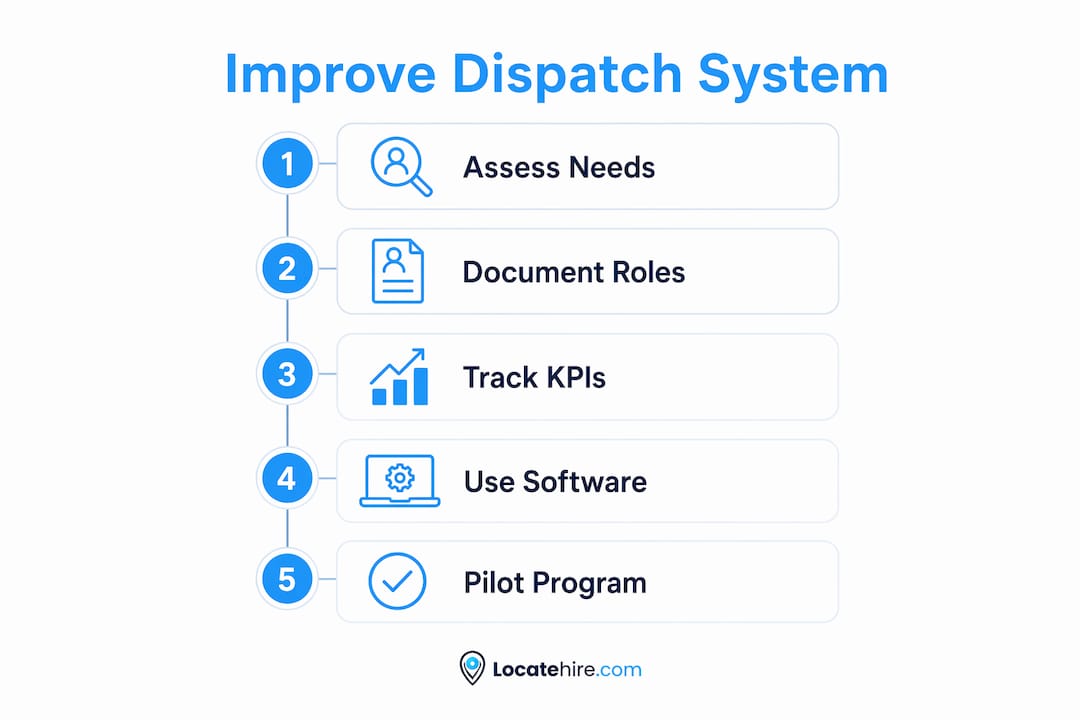
Systemizing dispatch means three things: written job descriptions for dispatch roles, documented key performance indicators, and technology that enforces the process daily. Without all three, dispatch remains a personality-driven function that collapses when one person leaves.
KPIs worth tracking for any dispatcher include average jobs completed per technician per day, first-call resolution rate, and average drive time between jobs. These numbers tell you whether your dispatch function is performing or just functioning.
Dispatch software's value is realized only with consistent daily use and technician buy-in. A platform that sits unused after the first month is an expensive calendar. Management discipline and staff adoption determine whether the tool pays off.
Pro Tip: Run a 30-day pilot with your dispatch software before committing to a full rollout. Track job completion rates weekly. If adoption stalls, address the training gap before blaming the tool.
Technology also changes the math on after-hours coverage. An AI receptionist for inbound dispatch calls reduces labor costs by 85–95% compared to a full-time human dispatcher. It captures emergency calls around the clock, including the ones that currently go to a competitor at 11:00 PM.
How does good dispatch reduce urgent hiring needs?
Good dispatch creates capacity you already own. The most direct method is zone-based routing, which assigns technicians to geographic areas rather than sending them wherever the next call lands.
Zone-based dispatch saves technicians 60–90 minutes of drive time daily, adding 1–2 billable jobs per tech without a single new hire. For a five-person crew, that is potentially 10 additional jobs completed every day. The revenue impact is immediate and requires no onboarding period.
Advanced dispatchers also use emergency-rate triggers and tiered after-hours rules. These protocols cut unnecessary call-outs by 60–70%, protecting technician time for genuine emergencies while filtering out calls that can wait for the next business day.
The retention angle matters just as much as the productivity angle. Technicians using poor dispatch systems suffer burnout, and replacing a burned-out tech costs $15,000–$25,000 per departure. Good dispatch directly reduces that expense by making technicians' days manageable and predictable.
| Dispatch improvement | Daily impact per tech | Hiring pressure reduction |
|---|---|---|
| Zone-based routing | 60–90 minutes saved | 1–2 fewer hires needed |
| Emergency triage protocols | Fewer unnecessary call-outs | Lower after-hours burnout |
| Schedule gap filling | 1–2 extra billable jobs | Revenue without added payroll |
| AI after-hours coverage | 24/7 call capture | No overnight dispatcher hire |
The pattern across all four improvements is the same. Better dispatch extends what your current team can do before you genuinely need to add someone new.
Hiring considerations for plumbing dispatchers
When your call volume consistently exceeds what one dispatcher can handle without errors, that is the signal to hire. Volume thresholds vary by market, but most small plumbing businesses reach that point somewhere between 15 and 25 inbound service calls per day.
A structured plumbing dispatcher hiring considerations list starts with role clarity. A dispatcher who does not have a written job description with defined KPIs will drift toward whatever feels urgent rather than what drives revenue.
Follow this sequence when hiring a dispatcher:
- Document the current dispatch process before interviewing anyone. You cannot onboard to a process that does not exist on paper.
- Define the KPIs the new hire will be measured against from day one: jobs per tech, average response time, and callback rate.
- Set compensation aligned with performance. A base plus a small per-job bonus ties the dispatcher's income to technician productivity.
- Build a 30-day onboarding plan that covers your dispatch software, your service zones, and your emergency protocols.
- Avoid panic recruitment. Hiring haste produces under-qualified dispatch staff who cause revenue leakage that is harder to measure than an empty schedule.
Pro Tip: Treat your dispatcher hire with the same rigor you apply to a lead technician. A bad dispatcher costs you more per day than a bad tech, because every tech on your crew runs through that one person.
The importance of plumbing dispatch shows up most clearly in retention. Technicians who work under a competent dispatcher stay longer, complete more jobs, and generate fewer callbacks. That is a direct reduction in your annual recruiting spend.
How does dispatch connect to your broader plumbing hiring process?
Dispatch efficiency and workforce planning are not separate functions. They feed each other. When dispatch runs well, you know exactly how many technicians your current call volume requires. That clarity prevents both overstaffing and the frantic hiring that happens when demand spikes unexpectedly.
Many owners prematurely hire technicians instead of fixing dispatch first. The returns on improving dispatch exceed those of adding field staff, especially in the early growth stages of a plumbing business. Fixing dispatch first gives you an accurate baseline for actual staffing needs.
A continuous recruiting pipeline aligned with dispatch capacity looks like this:
- Track dispatch capacity monthly. When your dispatcher's error rate rises or job completion rates drop, that is a leading indicator that you need support before you feel the pain.
- Keep a warm candidate list. Maintain contact with two or three qualified dispatcher candidates even when you are not actively hiring. Reactive hiring always costs more.
- Use AI-powered hiring tools to reduce the time between identifying a need and filling a role. Speed matters when dispatch gaps directly affect daily revenue.
- Review technician satisfaction quarterly. Dispatch quality is one of the top drivers of field technician retention. If satisfaction scores drop, investigate dispatch before assuming the problem is pay.
The hidden cost of poor dispatching includes lost emergency calls and wasted technician hours. These are invisible revenue leaks that do not show up on a profit and loss statement but absolutely show up in your growth ceiling.
Key Takeaways
Effective plumbing dispatch is the single highest-return investment a small plumbing business can make before adding headcount, because it recovers revenue from existing capacity rather than creating new payroll obligations.
| Point | Details |
|---|---|
| Fix dispatch before hiring | Poor dispatch causes capacity gaps that look like staffing shortages but are actually process failures. |
| Zone-based routing adds capacity | Geographic dispatch saves 60–90 minutes per tech daily, adding 1–2 billable jobs without new hires. |
| Systemize before you scale | Document KPIs and job descriptions before hiring a dispatcher to prevent revenue leakage from day one. |
| Burnout drives turnover costs | Replacing a burned-out technician costs $15,000–$25,000; good dispatch reduces that risk directly. |
| Align hiring with dispatch data | Use dispatch performance metrics to time new hires accurately and avoid both overstaffing and panic recruitment. |
Dispatch is the growth lever most plumbing owners overlook
I have watched plumbing owners hire their third and fourth technician while their first two were completing five jobs a day in a market where seven is standard. The instinct to hire is understandable. Revenue is growing, phones are ringing, and adding a body feels like the obvious move. The problem is that the new hire steps into the same broken routing logic, the same missed emergency calls, and the same idle afternoon gaps.
The businesses that grow without constantly bleeding cash on recruitment are the ones that treat dispatch as a revenue function, not an administrative one. A dispatcher who fills one extra job slot per technician per day is worth more to your bottom line than a new technician who runs the same inefficient route as everyone else.
The technology argument is real but incomplete. AI receptionists and dispatch platforms genuinely change the economics of after-hours coverage and route planning. But the owners who get the most from those tools are the ones who already have documented processes and clear KPIs. The tool enforces the discipline. It does not create it.
My honest advice: spend 30 days measuring your current dispatch performance before you spend a dollar on a new hire. You will almost certainly find capacity you did not know you had.
— Jeff
Locatehire helps plumbing businesses hire smarter
Running a plumbing business means you are always one dispatcher vacancy or one technician departure away from a service disruption. Locatehire is built for exactly that reality.
Locatehire's AI-powered recruitment platform helps small plumbing businesses fill dispatcher and technician roles faster, with less manual work and better candidate quality. The platform is designed for businesses with ongoing hiring needs, meaning it keeps your pipeline active even when you are not actively recruiting. When your dispatch data tells you it is time to hire, Locatehire makes sure the right candidate is already in your queue.
FAQ
Why does plumbing dispatch affect hiring decisions?
Dispatch controls how many jobs your current technicians complete daily. Poor dispatch creates false capacity gaps that trigger premature hiring, while good dispatch can add 1–2 billable jobs per tech without any new headcount.
When should a plumbing business hire a dedicated dispatcher?
Hire a dedicated dispatcher when inbound call volume consistently exceeds what one person can manage without errors, typically around 15–25 service calls per day for a small crew.
How much revenue does poor dispatching actually cost?
Manual dispatching loses 15–25% of billable capacity, which equals $75,000–$130,000 annually for a five-technician team. That loss shows up as missed jobs and idle technician hours.
What KPIs should a plumbing dispatcher be measured on?
Track average jobs completed per technician per day, first-call resolution rate, average drive time between jobs, and callback rate. These four metrics tell you whether dispatch is performing or just keeping up.
Can technology replace a human dispatcher in a small plumbing business?
Technology handles after-hours call capture and route optimization well, but human judgment is still needed for complex scheduling and customer communication. An AI receptionist works best as a complement to a dispatcher, not a full replacement.