

Plumbing company staffing best practices are defined as the documented systems a business uses to hire, onboard, train, and retain field technicians and journeymen. One owner reduced journeyman turnover from 30% to 8% by posting a career ladder, increasing PTO, and adding a quarterly $500 skills bonus. That single shift cost $7,000–$9,000 per journeyman annually but saved $40,000–$50,000 per avoided turnover event. The gap between reactive hiring and structured workforce management is that wide. Tools like Locatehire, programs like SkillBridge, and frameworks from publications like Plumbing & Mechanical give owners a clear path forward.
1. What are the top plumbing company staffing best practices?
Workforce management in plumbing is the formal term for what most owners do informally. It covers role design, recruitment, onboarding, compensation, and leadership development. The best plumbing companies treat each of these as a system, not a gut call.
The core practices that consistently reduce turnover and improve hiring quality are:
- Document role standards. Sit with your best technician for 30 minutes and capture their daily routine. That one-page document becomes your hiring and training standard for every future hire.
- Use specialized recruitment channels. SkillBridge internships, apprenticeship partnerships, and career-tech dual enrollment programs produce candidates with stronger retention than general job boards.
- Design lean onboarding. Set specific milestones: safety week, shadow three jobs, first solo call by day 10.
- Offer structured compensation. Career ladders, PTO increases, and skills-based bonuses signal long-term commitment to your crew.
- Invest in frontline leaders. Supervisors and foremen are your primary retention tool. Train them to listen, mentor, and communicate.
Pro Tip: Post your referral program in truck bays and mention it in every toolbox talk. Referral programs fail because technicians forget they exist, not because they don't want to help.
2. How to define clear role standards before you hire
Vague job descriptions produce vague hires. The fix is simple: document what a great day looks like for each role before you post the opening. Documenting a top performer's routine creates a one-page standard useful for both hiring and training.

That document should list the five to seven tasks the role handles daily, the tools required, the performance targets, and the common problems the person solves. It takes 30 minutes to create and eliminates months of misaligned expectations. When a candidate reads it during the interview, they self-select in or out. That saves you a bad hire.
Use the same document as your onboarding checklist. New hires know exactly what success looks like from day one. Callbacks drop, confidence builds faster, and your experienced techs spend less time cleaning up avoidable mistakes.
3. How to design referral and recruitment programs that actually work
Referral programs are the highest-return recruitment channel in the trades. They produce candidates who already understand the work culture and arrive with a built-in advocate on your team. The problem is that most referral programs exist only on paper.
Referral programs fail due to lack of visibility. Success requires written documentation, visible postings, and weekly reminders. Post the program in truck bays. Mention it at every toolbox talk. Make the bonus amount impossible to forget.
Beyond referrals, build a pipeline through these channels:
- SkillBridge internships. Transitioning military members can intern at zero wage cost to the employer during their final 180 days of active duty. Conversion rates are strong when the fit is good.
- Apprenticeship partnerships. Apprenticeships rank as the best long-term hiring strategy during growth periods because they build loyalty and let you shape skills from the start.
- Career-tech dual enrollment. Partner with local high schools and community colleges. Students in dual enrollment programs are already committed to the trade.
- Maintain a bench. Keep contact with strong candidates who were not hired due to timing. A quarterly check-in email costs nothing and keeps your pipeline warm.
Pro Tip: Compare your cost per hire from job boards against your cost per hire from referrals and apprenticeships. Most owners find the board cost is three to five times higher, with lower retention to match.
4. What structured onboarding steps improve first-year retention?
First-year turnover in plumbing is almost always an onboarding failure, not a candidate failure. New hires leave because expectations were unclear, training was inconsistent, or they felt unsupported during the first 90 days. A structured onboarding program fixes all three.
Replacing vague instructions with specific targets reduces callbacks and speeds time to productivity. A proven framework looks like this:
- Week 1: Safety orientation, company policies, tool inventory, and ride-along with a senior tech.
- Days 2–5: Shadow three separate job types to build context across service categories.
- Day 10: First supervised solo call with a debrief immediately after.
- Day 30: Performance check against call return time targets and ticket close-out benchmarks.
- Day 90: Full review with the supervisor, career ladder discussion, and goal setting for year one.
Mentor pairing accelerates this process. Assign every new hire a named mentor, not just a supervisor. The mentor handles just-in-time training on the job site. The supervisor handles performance reviews and career conversations.
Amortizing new hire training costs into your margin targets prevents financial surprises. Document the total cost per new hire, including lost productivity time, mentor hours, and materials. Build that number into your project pricing so growth does not erode your margins.
| Onboarding milestone | Target timeline | Success metric |
|---|---|---|
| Safety and policy orientation | Day 1 | Signed acknowledgment |
| Shadow three job types | Days 2–5 | Mentor sign-off |
| First solo call | Day 10 | Callback rate under 5% |
| Performance check-in | Day 30 | Ticket close-out benchmark met |
| Full review and goal setting | Day 90 | Career ladder path documented |
5. How leadership practices affect plumbing workforce retention
The supervisor-technician relationship is the single strongest predictor of whether a technician stays or leaves. Pay matters, but most technicians who quit cite their direct supervisor before they cite their paycheck. Consistent communication fosters loyalty and reduces turnover even without a formal HR department.
Strong frontline leadership with regular weekly check-ins improves retention significantly. Those check-ins do not need to be long. Five minutes at the start of a shift to listen, share a business update, and acknowledge good work is enough to make a technician feel seen. Foremen who skip this step create a vacuum that rumors and resentment fill.
"The best retention tool you have is a foreman who knows every technician's name, their goals, and what's bothering them this week." — Plumbing & Mechanical
Leadership training for foremen should cover three skills: how to give feedback without creating defensiveness, how to mentor without micromanaging, and how to hold accountability conversations that preserve the relationship. These are learnable skills. Most foremen were promoted because they were great technicians, not because they were trained leaders. That gap is your responsibility to close.
6. Reactive hiring vs. strategic workforce planning: what's the difference?
Reactive hiring means posting a job when someone quits. Strategic workforce planning means knowing six months in advance that you will need two more journeymen and having candidates already in your pipeline. The difference in cost and quality is significant.
Shifting from reactive hiring to strategic talent planning with clear buy-or-build decisions leads to workforce flexibility and higher retention. "Buy" means hiring experienced journeymen from outside. "Build" means growing apprentices into journeymen internally. Both have a place, but companies that only buy are always at the mercy of the labor market.
| Approach | Cost | Retention | Lead time needed |
|---|---|---|---|
| Reactive job board hiring | High | Low | 0–2 weeks |
| Agency placement | Very high | Low to medium | 1–3 weeks |
| Referral program | Low | High | 2–4 weeks |
| Apprenticeship pipeline | Medium upfront | Very high | 6–18 months |
| SkillBridge internship | Near zero | High | 3–6 months |
Strategic workforce planning transforms recruiting into a proactive process that signals commitment and builds trust with your existing crew. Use quarterly check-ins, technician growth maps, and simple hiring scorecards to align your talent pipeline with your business calendar. If you know your busy season starts in april, your recruiting should start in january. That timing shift alone reduces panic hires and the turnover that follows them. For a deeper look at building this kind of process, the guide on building a small business hiring process covers the structural steps in detail.
If your current process shows signs of strain, reviewing broken hiring signals for trades can help you identify where the gaps are before they cost you another good technician.
Key takeaways
Plumbing companies that document role standards, build referral pipelines, and train frontline leaders reduce turnover costs by tens of thousands of dollars per avoided exit.
| Point | Details |
|---|---|
| Document role standards first | A one-page "good day" profile sets hiring and training expectations before the first interview. |
| Referral programs need visibility | Post bonuses in truck bays and repeat them in toolbox talks every week. |
| Structured onboarding cuts first-year exits | Specific milestones like a solo call by day 10 reduce callbacks and build confidence faster. |
| Frontline leaders drive retention | Weekly five-minute check-ins from foremen reduce turnover more reliably than pay increases alone. |
| Strategic planning beats reactive hiring | Quarterly pipeline reviews and apprenticeship programs lower cost per hire and raise retention. |
What most owners get wrong about plumbing staffing
The most common mistake I see is treating staffing as a series of one-off problems instead of a system. An owner loses a journeyman, posts on Indeed, hires the first warm body available, and repeats the cycle six months later. The cost compounds quietly until it becomes a crisis.
The owners who break that cycle do one thing differently: they start with documentation. Not a 40-page HR manual. A one-page role standard. A written referral bonus. A printed career ladder on the break room wall. These are not complex tools. They are visible commitments that tell your crew you have thought about their future.
The second thing I would push every owner on is their foremen. You cannot retain technicians through pay alone if the daily work experience is frustrating. A foreman who communicates well, gives credit publicly, and addresses problems directly is worth more than a 10% raise. Train your foremen the way you train your best technicians. The return is just as measurable.
The third overlooked practice is building a bench before you need it. Maintain relationships with candidates who were not hired due to timing. Check in with local apprenticeship programs quarterly. When a position opens, you want three names ready, not zero. That preparation is what separates companies that scale cleanly from those that scramble.
— Jeff
How Locatehire supports plumbing staffing from first post to first day
Plumbing businesses with ongoing hiring needs require a system that keeps up with the pace of field operations. Locatehire is an applicant tracking system built specifically for small businesses in skilled trades, including plumbing, HVAC, and electrical.
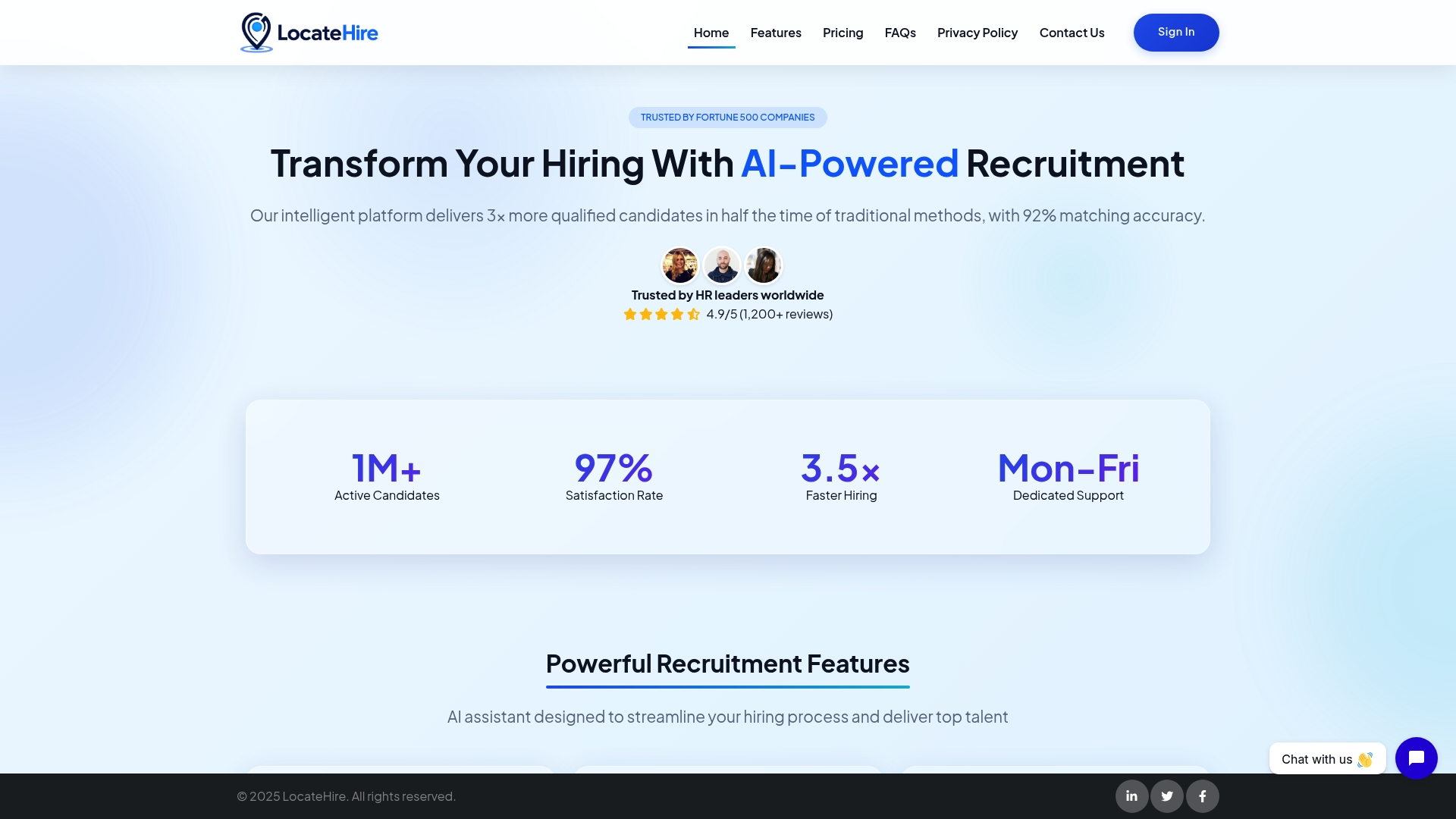
Locatehire handles job posting, candidate tracking, and pipeline management in one place, so you spend less time in your inbox and more time running your crew. The platform is built for businesses that hire repeatedly, not just occasionally. If you are ready to move from reactive posting to a managed hiring pipeline, Locatehire's AI recruitment platform gives you the tools to do it without adding an HR department. The setup is straightforward and the workflow fits how trades businesses actually operate.
FAQ
What are plumbing company staffing best practices?
Plumbing company staffing best practices include documenting role standards, using referral and apprenticeship programs, designing structured onboarding, offering skills-based compensation, and training frontline leaders. These practices reduce turnover and lower cost per hire.
How do I reduce turnover in my plumbing company?
Post a visible career ladder, increase PTO, and add a quarterly skills bonus. One owner cut journeyman turnover from 30% to 8% using exactly those three changes.
What is the best recruitment channel for plumbing companies?
Referral programs and apprenticeship partnerships produce the highest retention at the lowest cost per hire. SkillBridge internships offer a near-zero-cost option for hiring transitioning military members.
How long should plumbing technician onboarding take?
A structured onboarding program runs 90 days, with specific milestones at day 1, day 10, day 30, and day 90. The goal is a first supervised solo call by day 10 and a full performance review by day 90.
What is the difference between reactive hiring and strategic workforce planning?
Reactive hiring fills open seats after someone leaves. Strategic workforce planning builds a candidate pipeline before positions open, using quarterly reviews, growth maps, and apprenticeship programs to stay ahead of demand.