

Staffing challenges for pool companies are the single biggest threat to growth that most small owners underestimate. Recruiting and retaining skilled employees ranks as a top-three concern for 47% of pool service companies, and people costs consume roughly 35% of total budgets. A bad hire costs between $2,500 and $20,000, and the average trade role sits vacant for 44 days. These numbers make workforce problems a financial problem, not just an operational one.
1. What are the most common hiring challenges pool service companies face?
The common hiring challenges pool service companies encounter fall into predictable patterns. Knowing them by name is the first step to fixing them.
1. Skilled labor shortage competing with other trades

Pool service competes directly with HVAC, landscaping, and plumbing for the same labor pool. Those trades often offer indoor or year-round work, which makes them easier sells to job seekers. You are not just hiring. You are competing.
2. High turnover rates
The industry averages 32% annual turnover. That means roughly one in three technicians leaves every year. Replacing each one costs time, money, and customer goodwill.
3. Long time-to-fill positions
The average time to fill a pool service technician role is 44 days. Every day a route goes uncovered, service quality drops and customers notice.
4. Poor candidate screening
Most small owners rely on gut instinct and a 20-minute interview. That process alone produces a 46% early failure rate. Without a structured screening process, you are essentially guessing.
5. Expecting instant expertise
New hires rarely arrive knowing pool chemistry, equipment repair, and customer service simultaneously. Expecting that combination from day one leads directly to early turnover and frustration on both sides.
6. No structured onboarding
Throwing a new technician onto a solo route in week one is one of the most common workforce issues pool businesses create for themselves. Without a formal ramp-up plan, new hires feel overwhelmed and quit within 90 days.
7. Ignoring technology
Gen Z candidates reject paper-based operations. If your dispatch is a whiteboard and your water testing is manual, younger applicants see that as a red flag, not a quirk.
8. Reactive panic hiring
Most owners wait until they are desperate to hire. That urgency leads to lowering standards, skipping steps, and making offers to candidates who are not a good fit.
9. Weak retention strategies
Hiring without a plan to keep people is like filling a leaky bucket. Most small pool companies invest heavily in finding candidates and almost nothing in keeping them past year one.
10. Vague job descriptions and poor recruitment marketing
A job post that reads "pool tech wanted, must have experience" attracts no one worth hiring. Unclear descriptions signal a disorganized company before a candidate even applies.
Pro Tip: Post your job descriptions on trade-specific boards and include a one-paragraph description of your company culture. Candidates self-select more accurately when they understand who you are, not just what you need.
2. How can pool service companies compete for skilled labor?
Pool service companies win candidates by differentiating on the things competing trades cannot easily offer. The key is emphasizing career growth, culture, and compensation in a way that feels concrete, not promotional.
Here is what works:
- Career progression maps. Show candidates a written path from assistant technician to lead tech to route manager. Trades like HVAC rarely offer this kind of visible ladder at small companies.
- Transparent compensation packages. List base pay, overtime potential, and any performance bonuses in the job post itself. Hiding pay ranges filters out serious candidates.
- Company culture as a selling point. Flexible scheduling, team events, and a respectful work environment are real differentiators. Document them and talk about them in interviews.
- Technology as proof of professionalism. Showing candidates that you use routing software and digital dispatch signals that your company is organized and worth working for.
- Employee referral programs. Referred employees retain at a 46% higher rate after one year compared to job board hires. A $200–$500 referral bonus pays for itself within months.
- Structured interviews. Standardized scorecards and consistent question banks reduce bias and improve the quality of hiring decisions across every candidate you see.
Pro Tip: Ask your best current technician what made them stay. Their answer is your best recruiting pitch. Use their exact words in your next job post.
Understanding how the recruitment funnel works for small businesses helps you see where candidates drop off and where you can improve conversion at each stage.
3. What are effective onboarding and training practices for pool service employees?
Structured onboarding is the single most effective tool for reducing early turnover in pool service. Formal 30-day training programs reduce turnover by 50% and cut service callbacks by 70%. Those are numbers worth building a program around.
A strong onboarding approach includes:
- Week 1: Orientation and shadowing. Cover safety protocols, chemical handling, and company systems. Pair the new hire with your best technician for the first week.
- Weeks 2 and 3: Assisted routes. The new hire takes the lead on tasks while the senior tech observes. This builds confidence without removing the safety net.
- Week 4: Solo routes with check-ins. The technician runs their own route but reports back daily. Managers review job notes and address gaps in real time.
- Paid ride-alongs during recruitment. At $75–$100 per candidate, a paid ride-along is the best predictor of job success available. You see how a candidate handles real work before you commit to them.
- Written onboarding checklists. Document every step so the process is repeatable regardless of who is doing the training.
- Clear 90-day performance milestones. New hires perform better when they know exactly what success looks like at 30, 60, and 90 days.
Pro Tip: Use the paid ride-along as a two-way audition. Tell candidates upfront that it helps them decide if the job is right for them too. That framing reduces no-shows and increases honest engagement.
4. How does technology adoption impact hiring and retention?
Technology is now a recruitment signal, not just an operational tool. Younger candidates evaluate employers by the tools they use before they even accept an offer. A company running paper routes and manual logs tells a Gen Z applicant that the job will be frustrating and inefficient.
The tools that matter most to recruiting and retention include:
- Routing and dispatch software. Apps that optimize daily routes reduce technician drive time and daily stress. Less stress means lower turnover.
- Digital work orders and job notes. Replacing paper with mobile-friendly forms makes the job feel modern and reduces errors that lead to customer complaints.
- Bluetooth water testers. Devices that sync test results directly to a customer record eliminate manual data entry and reduce the chance of chemistry errors.
- Applicant tracking systems. Tools like Locatehire help small pool companies manage candidate pipelines without spreadsheets or missed follow-ups.
The connection between technology and retention is direct. Companies that adopt digital workflows attract younger workers and keep them longer. The investment in software pays back through reduced turnover costs, which average $8,000–$14,000 per technician replaced. Exploring the types of recruitment software available for small businesses is a practical starting point if you are still managing hiring manually.
5. How to build a systematic hiring process that avoids costly mistakes
Reactive hiring is the root cause of most recruitment obstacles in pool maintenance. Waiting until you are desperate to hire forces you to lower your standards, rush your process, and make offers to candidates who are not ready. The fix is a system you run before the need becomes urgent.
The table below compares reactive hiring to a disciplined approach:
| Factor | Reactive hiring | Disciplined hiring |
|---|---|---|
| Timing | Hire when overwhelmed | Hire before capacity breaks |
| Cash buffer | Little to none | 8 weeks payroll reserved |
| Screening | Gut instinct, short interview | Scorecard, ride-along, work sample |
| Onboarding | Thrown into solo routes | Structured 30-day ramp-up |
| Outcome | High turnover, callbacks | Lower turnover, consistent service |
Standardized interview scorecards and structured onboarding are the two practices that most reliably separate high-performing pool companies from struggling ones. The 2026 State of Pool Service Report confirms that operational discipline in hiring directly correlates with consistent headcount growth and service quality.
Pro Tip: Build your hiring buffer before you need it. Set a rule: do not post a job until you have 8 weeks of payroll in reserve. That buffer gives you time to train properly instead of rushing someone onto a route.
A step-by-step guide to building a hiring process for your small business gives you a repeatable framework you can apply every time you grow your team.
Key takeaways
The most effective approach to solving staffing challenges for pool companies combines proactive planning, structured training, and technology adoption into a repeatable system.
| Point | Details |
|---|---|
| Turnover is expensive | Replacing one technician costs $8,000–$14,000; retention strategies pay for themselves quickly. |
| Ride-alongs outperform interviews | A $75–$100 paid ride-along predicts job success better than any 20-minute interview alone. |
| Technology attracts Gen Z | Routing apps and digital dispatch are now recruitment tools, not just operational ones. |
| Plan before you hire | An 8-week payroll buffer prevents panic hiring and protects hire quality. |
| Referrals retain longer | Referred employees stay 46% longer than job board hires, making referral programs a high-return investment. |
Why most pool owners are solving the wrong hiring problem
Most small pool service owners I talk to believe their hiring problem is a supply problem. They think there simply are not enough qualified technicians out there. That framing leads them to post more job ads, raise pay slightly, and wait. It rarely works.
The real problem is almost always a process problem. The shortage is real, but the companies that grow their teams consistently are not finding some secret talent pool. They are building systems that make candidates want to stay. They run structured interviews. They invest in 30-day onboarding. They use technology that makes the job feel worth doing. They plan financially before they hire instead of after.
I have also seen owners resist the ride-along step because it feels expensive or awkward. A $100 investment to preview a candidate before committing to months of payroll is not expensive. It is the cheapest insurance you can buy. The owners who skip it are the same ones calling me six weeks later wondering why their new hire quit.
The pool industry hiring season creates real urgency in the spring, but urgency is not a reason to abandon your process. It is a reason to start that process in january, not april.
The labor market for skilled trades is not getting easier. The companies that treat hiring as an ongoing system, not a crisis response, are the ones that will grow. The ones that keep reacting will keep struggling.
— Jeff
How Locatehire helps pool service companies hire smarter
Fixing your hiring process is easier when you have the right tools behind it. Locatehire is an applicant tracking system built specifically for small businesses with ongoing hiring needs, including pool service, HVAC, and plumbing companies.
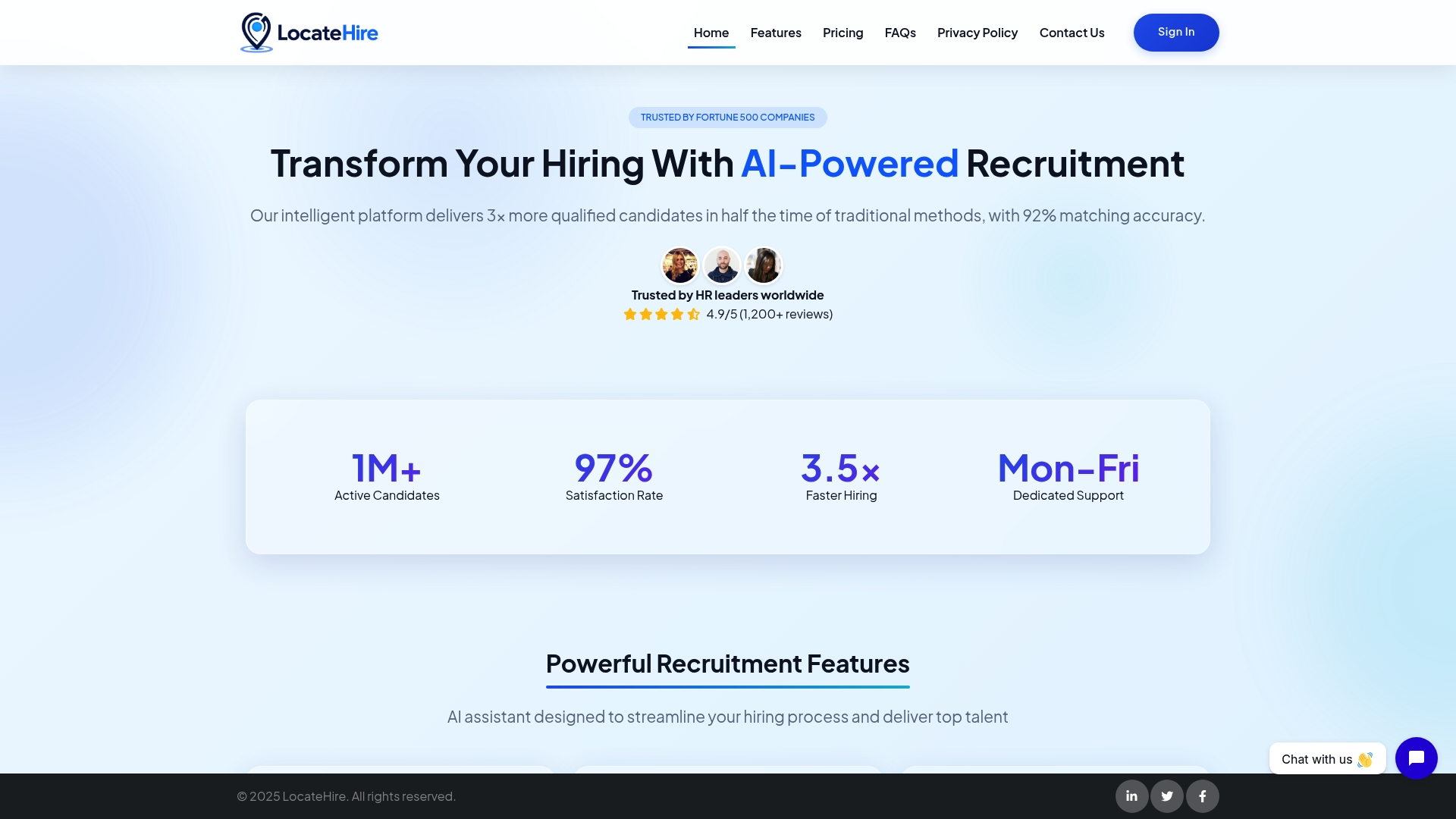
Locatehire automates candidate tracking, organizes your interview pipeline, and keeps every applicant from falling through the cracks. You can build scorecards, schedule follow-ups, and manage offers without spreadsheets or sticky notes. For pool companies running lean teams and tight schedules, that kind of structure is not a luxury. It is how you compete. Start building a smarter hiring system with Locatehire today and stop losing good candidates to disorganized follow-up.
FAQ
What is the average turnover rate for pool service technicians?
The pool service industry averages 32% annual turnover. Structured retention strategies can reduce that figure to 12%, saving $8,000–$14,000 per year for a moderately sized technician fleet.
How long does it take to fill a pool technician role?
The average time to fill a pool service technician position is 44 days. Proactive hiring before capacity breaks reduces that timeline and improves candidate quality.
Are paid ride-alongs worth the cost?
Yes. A paid ride-along costing $75–$100 per candidate is the strongest predictor of job success available to pool service owners. It directly reduces the 46% early failure rate produced by short interviews alone.
How do I compete with HVAC and landscaping companies for the same workers?
Emphasize career progression, transparent pay, and modern technology in your job posts and interviews. Referred candidates also retain at a 46% higher rate, so building an employee referral program gives you a consistent edge over competing trades.
What is the biggest mistake pool companies make when hiring?
Reactive panic hiring is the most common and costly mistake. Waiting until you are overwhelmed forces rushed decisions and lower standards. Maintaining an 8-week payroll cash buffer before posting a role gives you the time to hire correctly.