

The most effective ways to track pool service job applicants combine a disciplined manual process with technology built for field hiring, not corporate HR. Here is what works in practice:
- Spreadsheet tracking with five columns (Name, Date Applied, Source, Qualification Status, Notes) handles low-volume hiring of 3–10 people per year without any software cost.
- Applicant tracking systems (ATS) built for home service trades offer broad job board reach, built-in candidate texting, and same-day contact automation.
- Review every new application within 48 hours. Top pool technicians accept other offers fast, and waiting longer costs you qualified candidates.
- Build a candidate database beyond active postings. Pre-screened contacts from referrals, trade associations like UPA and IPSSA, and local Facebook groups cut your time-to-hire when a vacancy opens unexpectedly.
- Hire for attitude, train for skill. Candidates with strong customer service backgrounds from retail or similar roles reduce long-term recruiting costs compared to hiring purely on technical experience.
Table of Contents
- How to manually track pool service job applicants using spreadsheets
- What features should you prioritize in an ATS for pool service hiring?
- Best practices for reviewing and managing pool service job applicants
- How to build a candidate database for ongoing pool service hiring
- How Locatehire supports pool service applicant tracking and hiring workflows
- Legal and privacy considerations when tracking job applicants
- How to handle background checks and certifications for pool technician roles
- How to connect your applicant tracking with scheduling and communication tools
- How to use mobile apps for applicant tracking on the go
- Locatehire gives pool service owners a faster path to qualified hires
- Key Takeaways
How to manually track pool service job applicants using spreadsheets
A well-structured spreadsheet is the right starting point for most small pool service businesses. If you hire fewer than 10 people per year, a five-column Google Sheet replaces the core function of an ATS at zero cost.
Set up these five columns:
- Name — applicant's full name for basic identification
- Date Applied — tracks when the application arrived so you can measure response time
- Source — where they applied (Indeed, Facebook, referral, direct)
- Qualification Status — mark each as Yes, No, or Maybe based on three to five must-have skills from your job description
- Notes — resume highlights, phone screen verdict, or interview impressions
The daily process:
- Set a five-minute calendar reminder to check for new applications each morning during an active posting.
- Mark each applicant as qualified, not qualified, or maybe.
- Move all "Yes" applicants to a separate "Candidates" tab for focused follow-up.
- Phone screen qualified candidates within the same week.
- Interview your top three to five candidates the following week.
- Decide within 48 hours of the final interview.
This process takes roughly one to two hours per week during active hiring. It keeps your pipeline visible without any software overhead, and it forces the kind of disciplined review process that prevents good candidates from slipping through.

What features should you prioritize in an ATS for pool service hiring?
Corporate HR software is often too complex and costly for the fast-paced reality of small home service businesses. When your hiring volume grows past 10 per year, or you manage multiple open roles at once, an ATS built for trades hiring pays off. Focus on these features:
- Broad job board distribution. Indeed drives the highest volume of applicants for blue-collar and trade positions. Any ATS you consider should post to Indeed and other major boards in one click.
- Built-in candidate texting. Field workers miss emails far more often than texts. Texting should be included in the base plan, not sold as a paid add-on.
- Transparent, flat pricing. Avoid platforms that price on employee headcount. As you add technicians, your bill should not climb just because your team grew.
- Same-day contact automation. The best candidates are gone within days. An ATS that triggers an automatic text or message the moment someone applies keeps you ahead of slower competitors.
- Mobile-friendly interface. You are often in the field or between jobs. Your hiring tools need to work from a phone without friction.
Pro Tip: Check whether recruitment software for small businesses includes texting in its base plan before signing up. Platforms that gate it behind a paid tier will slow your response time exactly when speed matters most.
Best practices for reviewing and managing pool service job applicants
Speed and consistency separate businesses that hire well from those that settle. A few habits make the difference.
- Review within 48 hours. Top candidates in competitive markets accept other offers quickly. A same-day or next-day response signals that you run a professional operation.
- Use a blended interview approach. Combine behavioral questions ("Tell me about a time when a customer was upset"), situational questions ("What would you do if a pool chemistry reading was off"), and technical questions ("Walk me through a standard water chemistry test"). This mix surfaces how a candidate actually thinks, not just what they have memorized.
- Screen by text or phone first. A 15-minute phone screen eliminates unqualified applicants before you invest time in a full interview. For field roles, texting to schedule that call is faster than email.
- Keep clear notes in your tracking system. After each interaction, log the key takeaway in your Notes column. Comparing three candidates two weeks later is far easier when you have written context.
Pro Tip: If the initial interview goes well, offer a ride-along or working interview. Observing a candidate on an actual service stop tells you more about their customer skills and work ethic than any question you can ask in a conference room.
How to build a candidate database for ongoing pool service hiring
Treating hiring as a continuous process, rather than a reaction to a vacancy, is one of the clearest advantages experienced pool service owners have over newer competitors. A pre-screened candidate database means you are never starting from zero when a technician leaves unexpectedly.
Three terms matter here. Your applicant pool is everyone who applied for a specific open role. Your candidate pool is the subset who passed screening. Your talent pool is a broader group of potential future hires you have identified but not yet hired.
Build your talent pool from multiple channels:
- Online job sites like Indeed and Craigslist
- Trade associations such as UPA and IPSSA
- Regional Facebook groups for pool service professionals
- Employee referrals (a $250–$500 bonus to current staff is a high-return investment)
- Distributor contacts, who often know technicians looking for new opportunities
- People you meet in the field with strong customer service instincts
Categorize database contacts by skill level, availability, and when you last spoke with them. Refresh the list at least once per season. When peak season hiring hits, you reach out to warm contacts instead of posting cold and waiting.
How Locatehire supports pool service applicant tracking and hiring workflows
Locatehire is an applicant tracking system built specifically for small businesses with ongoing hiring needs, including pool service, HVAC, plumbing, and janitorial companies. It is designed around the way field hiring actually works, not the way corporate HR departments operate.
Key capabilities relevant to pool service owners:
- Candidate pipeline management that moves applicants from new to hired in one dashboard, with no spreadsheet juggling
- Integrated communication tools including texting, so you reach field candidates where they actually respond
- Mobile-friendly design that lets you review applications, send messages, and update candidate status from your phone between service stops
- Job board distribution to reach applicants on the platforms where pool technicians search
- Scheduling and workflow integration to connect hiring activity with your operational tools
Locatehire also provides practical hiring guidance for pool service hiring challenges, giving owners a resource beyond just software.
Legal and privacy considerations when tracking job applicants
Applicant tracking in the home service sector carries real legal obligations. The Equal Employment Opportunity Commission (EEOC) requires that hiring records, including applications and screening notes, be retained for at least one year from the date of the hiring decision. For federal contractors, that period extends to two years.
Privacy matters too. Store applicant data securely, whether in a password-protected spreadsheet or an ATS with encryption. Do not collect information unrelated to job qualifications, such as age, national origin, or disability status, during the screening process. If you use automated scoring or AI-assisted matching, document how those tools work so you can demonstrate they do not create disparate impact on protected groups. When candidates ask to have their data removed, honor that request promptly.
How to handle background checks and certifications for pool technician roles
Background checks and certifications are standard requirements for pool service roles, and managing them efficiently prevents delays between offer and start date.
Run background checks through a Consumer Reporting Agency (CRA) that complies with the Fair Credit Reporting Act (FCRA). You must get written consent from the candidate before running any check, and you must follow the adverse action process if a result leads you to withdraw an offer. Services like Checkr and Sterling integrate directly with many ATS platforms, so you can trigger a check from within your hiring pipeline rather than managing it separately.
For certifications, the Certified Pool Operator (CPO) credential from the Pool and Hot Tub Alliance (PHTA) is the most widely recognized standard in the United States. Track certification status and expiration dates in your candidate database. Some owners hire candidates who lack the CPO and sponsor them through training, which builds loyalty and reduces early turnover.
How to connect your applicant tracking with scheduling and communication tools
Your hiring pipeline does not end at the offer letter. Connecting your ATS to your scheduling and field management tools reduces the gap between "hired" and "productive on route." When a new technician is confirmed, their schedule, route assignments, and onboarding tasks should flow automatically rather than requiring manual data entry across separate systems.
For pool service businesses, this means choosing an ATS that either integrates with field service management software or exports candidate data cleanly. Communication tools matter equally. Automated text reminders for interview times, onboarding steps, and first-day logistics reduce no-shows and set a professional tone from the start. Recruitment automation approaches used in staffing and service businesses show that connecting communication to pipeline stages cuts candidate drop-off significantly.
How to use mobile apps for applicant tracking on the go
Most pool service owners are not at a desk when a strong application comes in. A mobile-ready ATS lets you review candidate profiles, send a text, and move someone through your pipeline from a job site or your truck. Look for apps that show your full candidate pipeline at a glance, allow one-tap status updates, and send push notifications when new applications arrive.
If you are still using a spreadsheet, Google Sheets works on mobile and keeps your data accessible anywhere. The key discipline is checking it daily, not just when you remember. Set a recurring phone reminder for 7:00 AM each day during an active posting. Consistent daily review, even from your phone, is what keeps your applicant screening process competitive against larger companies with dedicated HR staff.
Locatehire gives pool service owners a faster path to qualified hires
Posting on job boards and managing a spreadsheet works up to a point. When you are running multiple open roles, dealing with seasonal surges, or losing good candidates because follow-up was too slow, you need a system built for this kind of hiring.
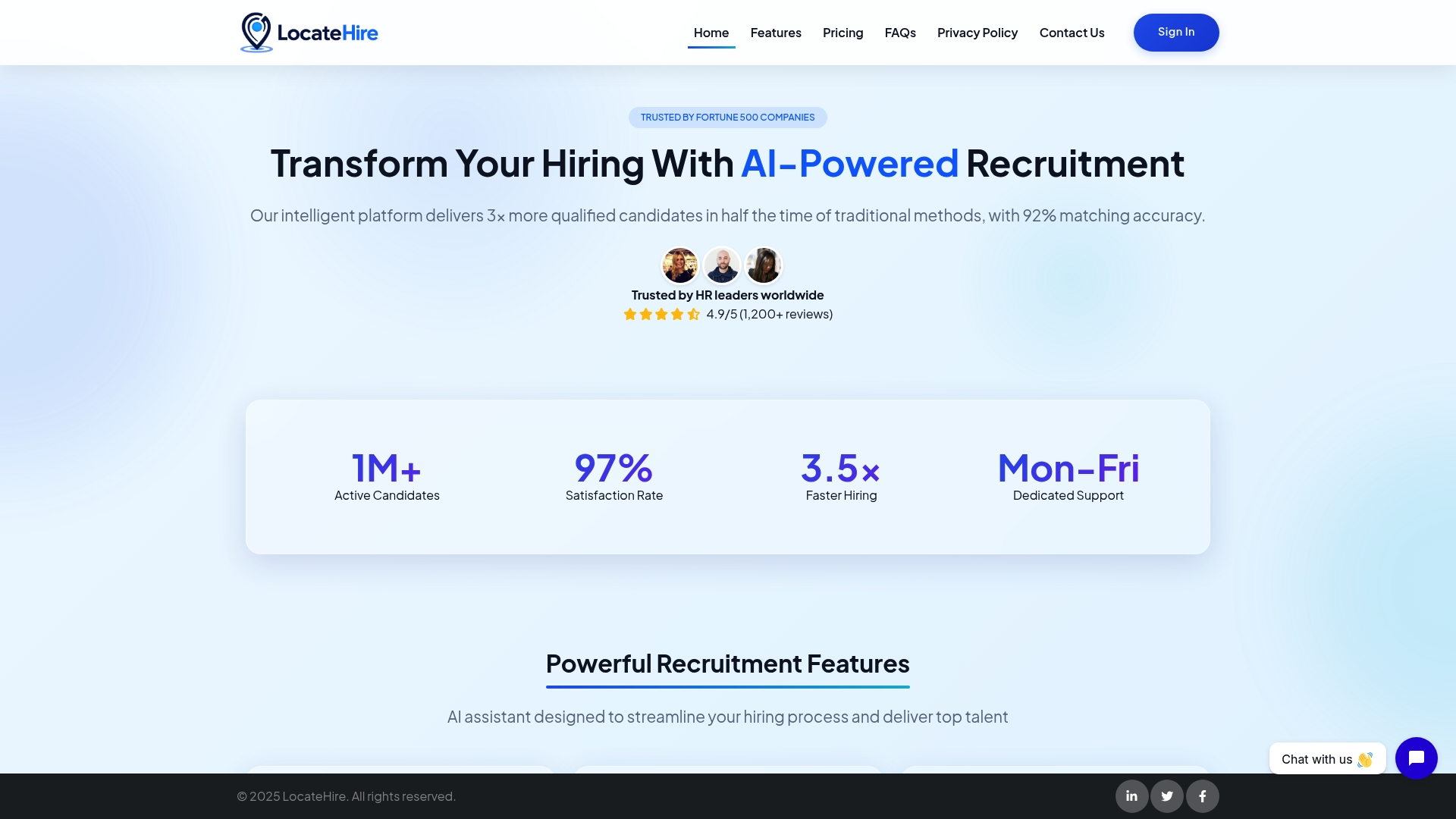
Locatehire is that system. It is built for small service businesses with ongoing hiring needs, including pool service companies that hire repeatedly throughout the year. You get candidate pipeline management, built-in texting, mobile access, and job board distribution without the complexity or cost of enterprise HR software. No headcount-based pricing. No features you will never use.
If you are ready to stop losing qualified technicians to faster competitors, start with Locatehire and see how quickly your hiring process tightens up.
Key Takeaways
Effective pool service applicant tracking combines spreadsheet discipline for low-volume hiring with a mobile-ready ATS, a pre-screened candidate database, and a 48-hour review rule to secure top technicians before competitors do.
| Point | Details |
|---|---|
| Spreadsheet for low volume | A five-column Google Sheet covers applicant tracking for businesses with low annual hiring volume. |
| 48-hour review rule | Reviewing new applications within 48 hours prevents losing qualified candidates to faster competitors. |
| Texting over email | Field workers respond to texts far faster than email; built-in texting should be a base-plan feature. |
| Candidate database | A pre-screened talent pool from referrals, trade associations, and Facebook groups cuts time-to-hire during peak season. |
| Locatehire | Purpose-built ATS for small pool service businesses with pipeline management, texting, and mobile access. |