

Seasonal hiring strategies for small businesses are defined as structured, repeatable processes that match workforce size to predictable demand spikes, then scale back without disrupting operations. The industry term for this practice is seasonal workforce planning. Small businesses in retail, HVAC, pool service, janitorial, and landscaping live and die by how well they execute it. A 239% spike in job applications at the end of 2025 means the volume problem is no longer a large-employer issue. You now face the same screening noise as enterprise HR teams, with a fraction of the staff. The good news: a structured approach closes that gap fast.
1. Seasonal hiring strategies small business owners should start 3–4 months early
Effective seasonal hiring plans start 3–4 months before peak demand. That lead time gives you access to better candidates before competitors post their openings, and it removes the scramble that forces bad hires.
Starting early also means you can forecast accurately. Pull your sales data, service call logs, or transaction history from the same period last year. Identify the weeks where output spiked and map those directly to headcount. A pool service company, for example, knows that may through august requires double the route technicians. That pattern does not change year to year.
- Review last season's staffing gaps and overtime costs
- Identify which roles took longest to fill and why
- Set a target headcount by role before you post a single job
- Build a hiring calendar with deadlines for posting, screening, and offers
Pro Tip: Set a calendar reminder for exactly 14 weeks before your peak start date. That is your hiring kickoff, not the day you post the job.
2. Hold a kickoff meeting before you post any jobs

A kickoff meeting with hiring managers to align on skills and role requirements before sourcing is the fastest way to avoid costly mismatches. For a small business, this might be a 30-minute conversation between you and a shift supervisor. The output matters more than the format.
Define the non-negotiables for each role. Write down three to five must-have qualities before you draft the job description. For a retail floor position, that might be weekend availability, physical stamina, and a track record of customer-facing work. For a janitorial crew hire, it might be reliable transportation and the ability to work early morning shifts.
This step prevents the most common small business hiring mistake: writing a vague job post, getting flooded with mismatched applicants, and wasting two weeks sorting through them.
3. Write job postings that filter candidates before they apply
A clear job posting is your first screening tool. State the schedule, the physical demands, and the end date of the role in the first paragraph. Candidates who cannot meet those requirements will self-select out. That saves you time.
Avoid vague language like "fast-paced environment" or "team player required." Replace those phrases with specifics. "You will work friday through sunday, 7 a.m. to 3 p.m., and lift up to 50 pounds regularly" tells candidates exactly what to expect. Specificity also signals that you run a professional operation, which attracts better applicants.
Post across multiple channels: Indeed, Craigslist, local Facebook groups, and your own employee referral network. Referrals from current employees consistently produce candidates who already understand your work culture.
4. Reach out to returning seasonal workers first
Returning seasonal workers are your lowest-cost, highest-quality hire. They already know your systems, your customers, and your pace. Recruiting them back costs a fraction of what it takes to find and train someone new.
Build a simple list of every seasonal employee from the past two seasons. Note who left on good terms, who showed up reliably, and who you would hire again. Contact them directly in september or october for a holiday season role, or in february for a spring ramp-up. A personal message from you, the owner, carries more weight than a job board post.
Framing seasonal workers as structured flexibility rather than stopgap labor increases return rates and reduces recruitment costs. That framing starts with how you treat them during the season, not just when you call them back.
5. Use structured scorecards to screen candidates consistently
Structured interviews and scorecards reduce unconscious bias and produce faster, more defensible hiring decisions during high-volume periods. A scorecard is a one-page document listing the four to six qualities you defined in your kickoff meeting, each rated on a simple 1–3 scale.
Every interviewer uses the same scorecard for every candidate. That consistency means you can compare applicants directly, even if different managers conducted the interviews. It also protects you legally if a hiring decision is ever questioned.
The 239% application spike makes this non-negotiable. Without a scorecard, you default to gut feel, and gut feel at high volume produces inconsistent results. You end up hiring the last person you interviewed simply because they are freshest in your memory.
Pro Tip: Add one practical scenario question to every interview. "Tell me about a time a customer got frustrated with you. What did you do?" reveals more than a polished resume ever will.
| Evaluation area | What to assess |
|---|---|
| Availability | Exact days and hours; willingness to work weekends and holidays |
| Physical fit | Ability to meet role-specific demands (lifting, standing, outdoor work) |
| Customer orientation | Past experience in service or client-facing roles |
| Reliability signals | Transportation, punctuality history, references |
| Soft skills | Adaptability, composure under pressure, team communication |
6. Prioritize soft skills over technical credentials for seasonal roles
Soft skills like customer service orientation and adaptability are more critical than technical skills for seasonal roles that require high-intensity interaction. A retail associate who stays calm during a holiday rush is more valuable than one with a longer resume who shuts down under pressure.
Technical skills for most seasonal roles can be taught in a day. Attitude, reliability, and composure under pressure cannot. When you are screening 40 applicants for 8 positions, filter first on soft skills and availability, then on experience.
AI-enhanced applications complicate screening by increasing volume while also increasing noise from less qualified applicants. Assess authenticity, reasoning, and real-world performance rather than resume polish. A short phone screen asking one behavioral question cuts through that noise in under five minutes.
7. Be transparent about schedule intensity before the offer
Transparency about workload intensity, weekend shifts, and overtime during the interview prevents early churn. Candidates who accept a role knowing exactly what it demands are far less likely to quit in week two.
State the hard facts in the interview, not just in the offer letter. "During december, you will likely work six days a week and may be asked to stay late on weekends" is a sentence that saves you from replacing someone mid-season. Most candidates respect that honesty. The ones who do not were never going to last anyway.
This is one of the most overlooked small business hiring tips. Owners often soften the pitch to close the candidate, then lose them when reality hits. Transparency is a retention tool.
8. Build an onboarding process that integrates seasonal workers into your culture
Seasonal employees who feel like part of the team perform better and return next season. Treating seasonal employees as part of the workforce culture improves return rates and lowers future recruitment costs. That starts on day one.
Pair each new seasonal hire with an experienced team member for the first three shifts. Give them a clear written schedule for their first two weeks. Recognize good work publicly, even in a small team setting. A brief "great job handling that customer" from the owner lands differently than silence.
- Assign a buddy or mentor for the first week
- Provide a written schedule at least two weeks in advance
- Include seasonal staff in team meetings and communications
- Recognize performance milestones, even small ones
- Explain the path to returning next season or moving to a permanent role
9. Use hiring software to manage candidate volume without adding headcount
Small businesses that build a structured hiring process handle seasonal volume without burning out the owner or office manager. An applicant tracking system (ATS) built for small businesses centralizes applications, automates status updates, and keeps your scorecard data in one place.
Without a system, applications arrive by email, text, and voicemail. Candidates fall through the cracks. Good applicants accept other offers while you are still sorting your inbox. An ATS built for businesses like HVAC contractors, pool service companies, and retail shops solves that problem at a cost that fits a small business budget.
Applicant screening for small businesses works best when the process is documented and repeatable. Software makes that possible without requiring a dedicated HR team.
Key Takeaways
The most effective seasonal workforce planning for small businesses combines early forecasting, structured evaluation, and cultural integration to reduce turnover and improve hiring speed.
| Point | Details |
|---|---|
| Start 3–4 months early | Begin forecasting and posting before competitors to access better candidates. |
| Use scorecards for every interview | Standardized evaluation reduces bias and speeds decisions during high-volume periods. |
| Prioritize soft skills | Adaptability and reliability matter more than technical credentials for most seasonal roles. |
| Be transparent about schedule demands | Stating shift intensity upfront prevents early quitting and mid-season gaps. |
| Treat seasonal staff as returning talent | Integrating seasonal workers into your culture increases return rates and cuts future costs. |
What I've learned about seasonal hiring after watching small businesses get it wrong
Most small business owners treat seasonal hiring as a once-a-year fire drill. They post a job two weeks before they need someone, interview whoever shows up, and hope for the best. That approach produces exactly the results you would expect: high turnover, missed shifts, and a frantic second round of hiring mid-season.
The shift that actually works is treating your seasonal workforce as a structured asset, not a temporary patch. The businesses I have seen do this well, whether they run HVAC crews, retail floors, or janitorial contracts, build a short roster of reliable returning workers and fill gaps with new hires who are screened against a clear standard. They do not wing it.
The 2026 hiring environment makes this even more urgent. When application volume spikes because of AI-generated submissions, the owners who have a scorecard and a structured phone screen process cut through the noise in hours. The ones relying on gut feel spend days sorting resumes that all look the same.
One more thing: the transparency piece is underrated. Telling a candidate "this role is intense, here is exactly what that looks like" is not a deterrent. It is a filter. The candidates who say yes to that conversation are the ones who show up on the hard days.
— Jeff
Locatehire helps small businesses hire smarter every season
Seasonal hiring does not have to mean starting from scratch every year. Locatehire is an applicant tracking system built specifically for small businesses with ongoing and seasonal hiring needs, including pool service, HVAC, janitorial, electrical, plumbing, and retail.
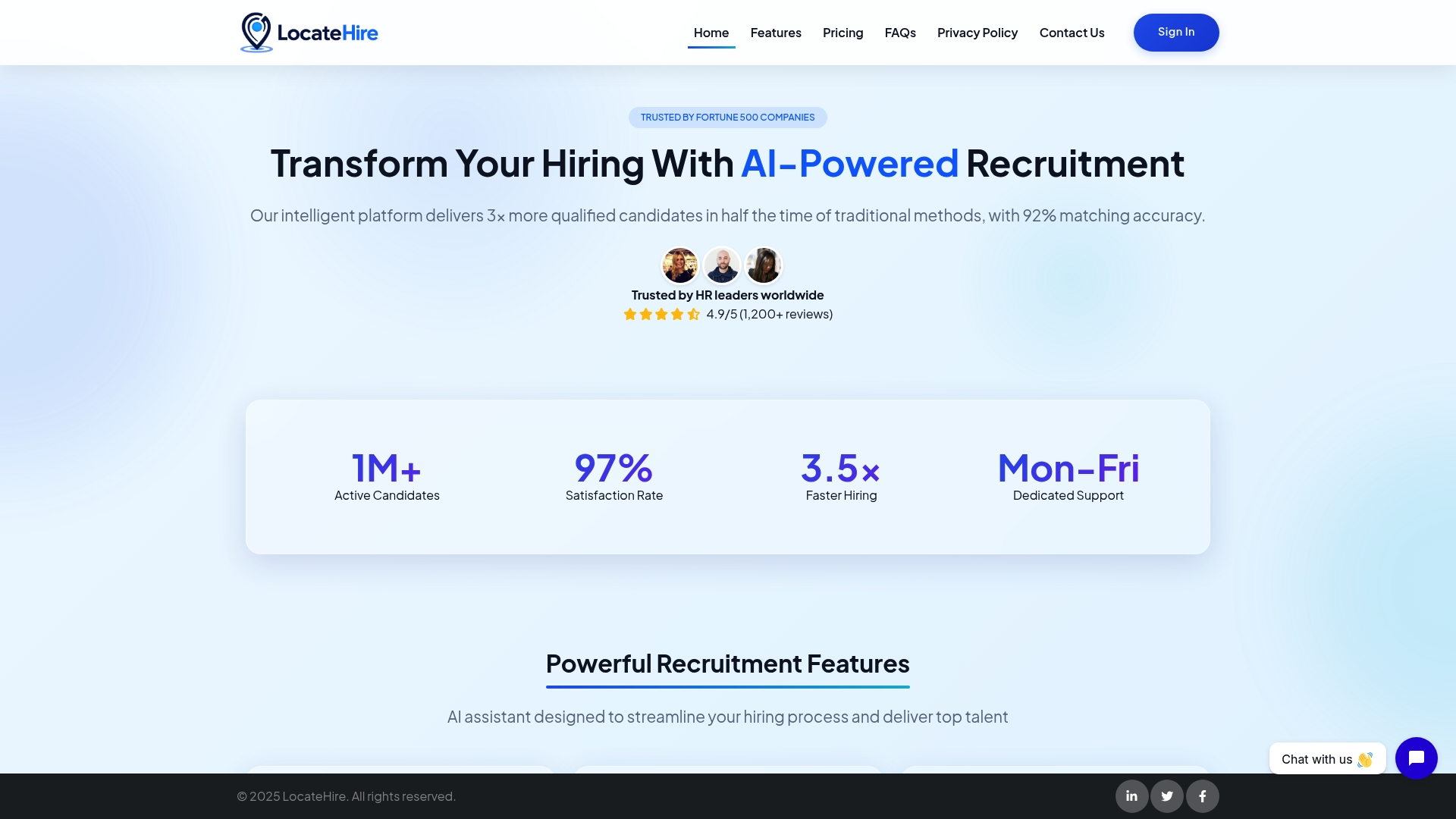
Locatehire centralizes your applications, keeps your scorecards and candidate notes in one place, and helps you move faster without missing strong candidates. You get a repeatable process that works whether you are hiring two people or twenty. Visit Locatehire to see how small business owners use it to take the chaos out of seasonal recruitment and build a reliable workforce year after year.
FAQ
How early should a small business start seasonal hiring?
Seasonal hiring plans should start 3–4 months before peak demand. That lead time allows accurate forecasting and access to better candidates before the market tightens.
Why are structured scorecards important for seasonal hiring?
Structured scorecards reduce unconscious bias and make it faster to compare candidates consistently. They are especially valuable when application volume is high and multiple managers are involved in screening.
How do you reduce turnover among seasonal employees?
Transparency about schedule intensity and integrating seasonal workers into your team culture are the two most effective retention tactics. Candidates who know what to expect before they accept are far less likely to quit early.
What skills matter most when hiring seasonal workers?
Soft skills like adaptability, reliability, and customer service orientation matter more than technical credentials for most seasonal roles. Technical tasks can be trained quickly; attitude and composure under pressure cannot.
How can small businesses manage high application volumes during peak hiring?
An applicant tracking system built for small businesses, combined with a structured phone screen and scorecard, cuts through AI-inflated application volume without requiring a dedicated HR team. Check out hiring software options designed specifically for small business needs.