

HVAC companies hire seasonal workers most effectively through a tiered workforce model that pairs a stable full-time crew with vetted seasonal contractors sourced from trade-specific channels. This approach, refined through years of peak-season pressure, solves the core problem: you need bodies fast, but bad hires cost you more than vacancies. The HVAC seasonal job hiring process that actually works combines early planning, targeted recruitment, and structured onboarding. Tools like ServiceTitan help manage scheduling, while platforms like iHireConstruction and employee referral programs fill the candidate pipeline. Get this right, and peak season becomes manageable. Get it wrong, and you're scrambling in july when every other contractor is too.
How HVAC companies hire seasonal workers: the tiered workforce model
The most effective staffing structure for seasonal HVAC work is a tiered workforce model that separates your permanent crew from your flex layer. Your core full-time technicians handle baseline demand year-round. A second tier of part-time or seasonal contractors scales up when call volume spikes in june and july or during the heating rush in november and december.
This model works because it keeps your fixed labor costs predictable. You are not paying peak wages to a bloated crew during slow months. When demand hits, specialist staffing agencies can supply temporary staff within 24–48 hours depending on your market. That speed matters when a heat wave arrives and your dispatch board fills overnight.
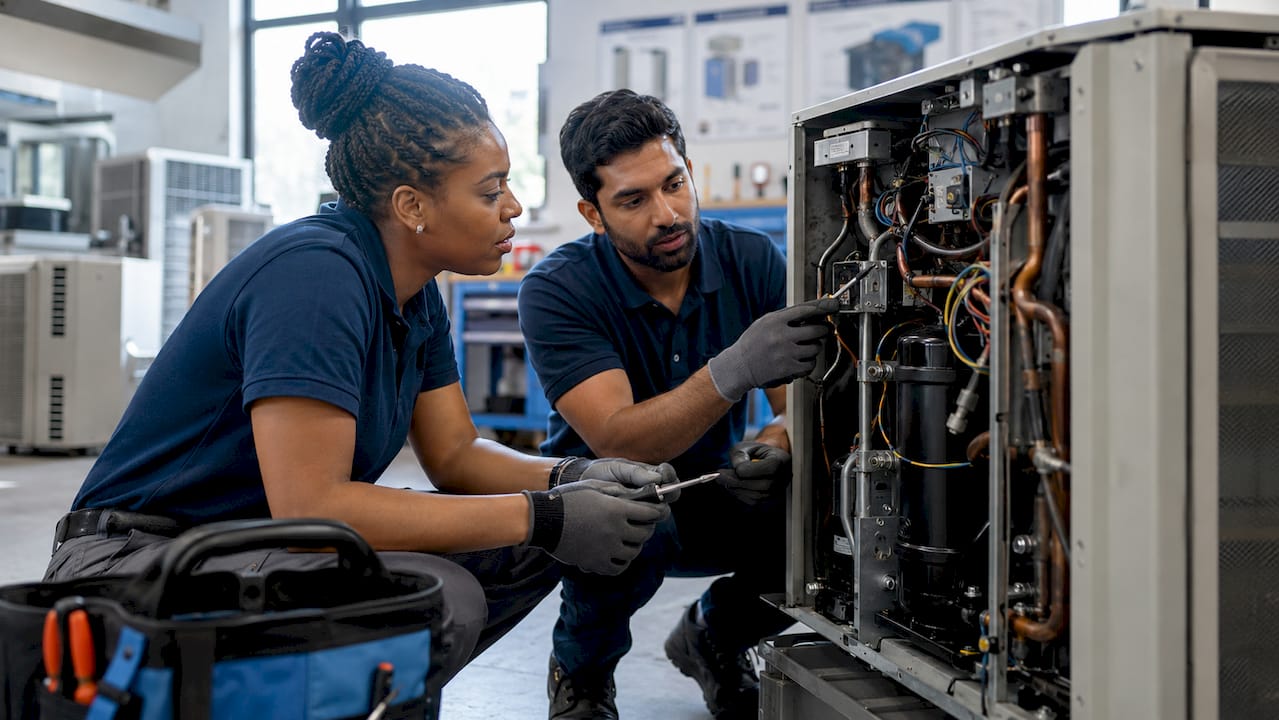
Cross-training your core technicians is the force multiplier most owners overlook. Cross-trained technicians who service both heating and cooling systems reduce your dependence on seasonal hires altogether. A tech who can run a furnace tune-up in october and a refrigerant recharge in june is worth two specialists. Cross-training also improves retention because technicians see a broader career path.
The tiered model also creates a natural audition process. Seasonal contractors who perform well become candidates for full-time roles. That pipeline reduces future recruiting costs and builds loyalty before you even make a permanent offer.
Key components of the tiered model:
- Core full-time team: Covers baseline service calls and mentors seasonal hires
- Seasonal contractors: Sourced 8–12 weeks before peak for vetting and onboarding
- Temporary agency backup: Fills urgent gaps within 24–48 hours when volume spikes unexpectedly
- Cross-trained technicians: Reduce seasonal headcount needs and improve scheduling flexibility
Pro Tip: Cross-train at least two full-time technicians on both heating and cooling systems before each peak season. This gives you scheduling flexibility without adding headcount.
How do HVAC companies find quality seasonal workers?
Trade-specific job boards and referral programs produce far better candidates than general platforms like Indeed or ZipRecruiter. Military veteran pipelines, partnerships with HVAC trade schools, and regional contractor association boards consistently deliver candidates with real mechanical aptitude and work ethic. Veterans in particular bring discipline and hands-on technical training that translates directly to field service work.
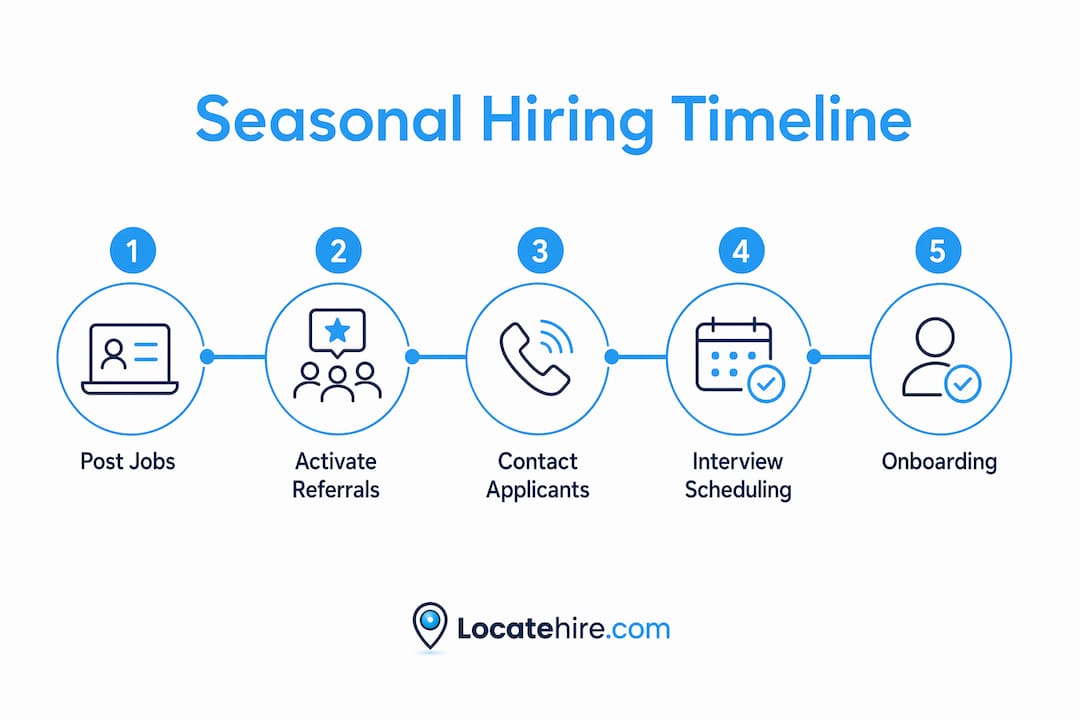
Employee referral programs are the single highest-yield sourcing channel in competitive HVAC labor markets. Referral bonuses between $1,000 and $2,500 are standard and highly effective at motivating your current crew to recruit from their networks. Your best technicians know other good technicians. Pay them to make introductions. The math is simple: a $1,500 referral bonus costs far less than a bad hire or an unfilled route.
For a complete picture of how to write postings that attract the right candidates, targeted HVAC job descriptions make a measurable difference in application quality. Vague postings attract vague applicants.
Proven sourcing channels for seasonal HVAC recruitment:
- iHireConstruction and trade-specific boards: Filter for candidates with HVAC certifications and field experience
- HVAC trade school partnerships: Access graduates and students seeking seasonal work before full-time placement
- Military veteran hiring programs: Tap into disciplined candidates with transferable mechanical skills
- Facebook local trades groups: Post directly in regional contractor communities where active techs congregate
- Competitor poaching: Identify dissatisfied technicians at competing firms through LinkedIn and direct outreach
- Employee referral program: Offer $1,000–$2,500 bonuses and track referral sources to identify your best recruiters
Speed of response separates companies that win talent from those that lose it. Personalized text outreach converts better than email because technicians check their phones constantly. Skilled HVAC techs are typically evaluating multiple offers simultaneously. A slow follow-up means a lost hire. Contact every qualified applicant within 24 hours of application.
Pro Tip: Text candidates directly with a personalized message referencing their specific experience. A message that says "Hey Mike, saw your AC diagnostic background, we'd love to talk" outperforms any generic email template.
Understanding why referral programs work for small businesses gives you the framework to build one that actually pays off rather than one that sits in an employee handbook nobody reads.
What hiring mistakes drive seasonal worker turnover?
The three most damaging mistakes in hiring seasonal HVAC staff are interviewing without structure, skipping assessments, and rushing onboarding. Unstructured interviews and poor onboarding increase turnover and reduce seasonal productivity. Each of these mistakes is preventable, and each one costs you money every time it happens.
Validated employee assessments and skills testing give you objective data before you make an offer. Validated benchmarks from thousands of hires can predict motivation and role fit better than gut judgment. A 20-minute assessment that flags a candidate's attitude toward customer service is worth more than a 90-minute interview that never gets past resume review.
"Rushing the interview process without assessment risks costly poor cultural fits and high turnover, especially under seasonal hiring pressures." — ACCA HVAC Blog
Onboarding is where most small HVAC companies lose the gains they made in recruiting. Structured onboarding with at least one week of formal training and regular check-ins reduces turnover and improves readiness. A seasonal tech who spends their first week shadowing a senior technician, learning your dispatch system, and understanding your service standards will outperform one thrown into a van with a tablet and a route.
Onboarding practices that reduce seasonal turnover:
- Structured first week: Shadow a senior tech, review safety protocols, and learn dispatch software
- Skills assessment before hire: Use validated tools to test refrigerant knowledge, electrical basics, and customer communication
- 30-day check-ins: Schedule brief one-on-ones to catch problems before they become resignations
- Career pathing conversation: Tell seasonal hires explicitly what a path to full-time looks like
- Onboarding video content: Video-based onboarding accelerates training and keeps content consistent across multiple new hires
Predefined career pathing matters more than most owners realize. A seasonal technician who sees a clear route to a full-time role with benefits will work harder and stay longer. That conversation costs you nothing and pays back in retention.
When should HVAC companies start seasonal hiring?
Starting recruitment 8–12 weeks before peak season is the industry standard for effective seasonal staffing. Most HVAC operators wait too long. By the time the heat wave hits or the first cold snap arrives, every competitor is fishing the same shallow pool of available candidates.
The table below maps a practical hiring timeline for a company targeting a june 1 peak start:
| Weeks Before Peak | Action |
|---|---|
| 12 weeks out | Post job listings, activate referral program, contact trade schools |
| 10 weeks out | Conduct phone screens, send assessments to qualified candidates |
| 8 weeks out | Complete in-person interviews, extend offers within one week |
| 6 weeks out | Begin structured onboarding for confirmed hires |
| 4 weeks out | Complete skills training, assign routes, test dispatch readiness |
| 2 weeks out | Final check-ins, confirm scheduling, identify backup agency contacts |
Building a year-round recruiting bench is the move that separates growing HVAC companies from ones that scramble every season. Maintaining regular candidate relationships year-round dramatically shortens hiring timelines when peak demand arrives. Keep a list of strong candidates who were not hired due to timing. Reach out every few months. That relationship costs you one text message and can save you weeks of recruiting.
Technology also plays a direct role in maximizing technician productivity during peak periods. ServiceTitan and similar field service platforms improve scheduling efficiency so each technician handles more calls per day. Fewer wasted hours in transit means your seasonal headcount goes further.
Speeding up your hiring process is not about cutting corners. It is about removing unnecessary delays between steps so qualified candidates do not accept competing offers while waiting on you.
Key Takeaways
The most effective approach to hiring seasonal HVAC workers combines a tiered workforce model, trade-specific sourcing, and structured onboarding that starts 8–12 weeks before peak demand.
| Point | Details |
|---|---|
| Start hiring early | Begin recruitment 8–12 weeks before peak season to avoid competing for a depleted candidate pool. |
| Use the tiered model | Pair a full-time core team with vetted seasonal contractors and agency backup for rapid scaling. |
| Prioritize referrals | Offer $1,000–$2,500 referral bonuses to tap your existing crew's professional networks. |
| Assess before you hire | Use validated skills tests and structured interviews to reduce bad hires and seasonal turnover. |
| Build a year-round bench | Maintain candidate relationships between seasons to shorten future hiring timelines. |
What I've learned about seasonal HVAC hiring after watching companies get it wrong
Most HVAC owners treat seasonal hiring as a once-a-year fire drill. They post a job in may, panic when the calls come in june, and hire whoever shows up. Then they wonder why their seasonal techs quit by july 4th.
The companies that consistently staff well treat recruiting as a relationship business, not a transaction. They stay in contact with strong candidates who were not the right fit last season. They attend local trade school events in the off-season. They know the names of technicians at competing firms who have complained about management on Facebook. That intelligence is free. Most owners just do not collect it.
Speed matters more than most people admit. Skilled HVAC technicians are not sitting at home waiting for your call. They are evaluating multiple offers simultaneously, and the company that moves fastest usually wins. I have seen owners lose excellent candidates because they waited three days to schedule a second interview. Three days is an eternity in a tight labor market.
The other thing I would push back on is the instinct to hire fast when you are desperate. Desperation hires almost always cost more than the vacancy did. A technician who is a poor cultural fit will frustrate your core team, generate customer complaints, and leave anyway. Discipline in the process, even under pressure, produces better outcomes every time.
Finally, do not underestimate what non-monetary benefits can do in a competitive market. Flexible scheduling, clear advancement paths, and a reputation for treating technicians well are recruiting tools. Smaller HVAC companies cannot always win on base pay. They can win on culture and growth.
— Jeff
Locatehire makes seasonal HVAC staffing less chaotic
Seasonal hiring moves fast, and tracking applicants across email threads and spreadsheets slows you down at exactly the wrong moment.
Locatehire is an applicant tracking system built for small businesses with ongoing hiring needs, including HVAC, plumbing, electrical, and field service companies. It centralizes your job postings, applicant communications, and hiring pipeline so nothing falls through the cracks during peak season. You can post to multiple job boards from one place, track every candidate's status, and move quickly from screen to offer. For HVAC businesses that hire seasonal workers every year, Locatehire's hiring tools give you a repeatable process instead of a seasonal scramble. Visit Locatehire to see how it fits your operation.
FAQ
How far in advance should HVAC companies start seasonal hiring?
HVAC companies should start seasonal hiring 8–12 weeks before peak demand. This timeline allows adequate time for candidate vetting, assessments, and structured onboarding before the busy season begins.
What is the best source for finding seasonal HVAC workers?
Employee referral programs and trade-specific job boards like iHireConstruction produce the highest-quality candidates. Referral bonuses between $1,000 and $2,500 are standard and consistently outperform general job boards.
How can HVAC companies reduce seasonal worker turnover?
Structured onboarding with at least one week of formal training, validated pre-hire assessments, and regular 30-day check-ins significantly reduce seasonal turnover. Predefined career pathing also improves retention by giving seasonal techs a reason to stay.
What is the tiered workforce model in HVAC staffing?
The tiered model pairs a core full-time team with a second tier of part-time or seasonal contractors. Specialist agencies can fill urgent gaps within 24–48 hours, giving companies flexible scaling capacity without inflating fixed labor costs.
How quickly should HVAC companies respond to seasonal job applicants?
Companies should contact qualified applicants within 24 hours and complete the full hiring process within one week of the initial screen. Skilled technicians evaluate multiple offers simultaneously, and slow follow-up consistently results in lost hires.