

A talent pipeline is a pool of pre-qualified candidates your business can hire from quickly, without starting from scratch every time a role opens. For small teams of 5–50 people, building this pipeline is the single most effective way to cut hiring time and avoid desperate, last-minute decisions. Proactive pipeline building reduces time-to-shortlist to 3–7 days compared to 14–30 days for reactive hiring. That gap matters enormously when you run a pool service company, an HVAC crew, or a retail shop where one empty seat costs real money. Locatehire is built specifically to help small businesses manage this process without a dedicated HR department.
What do you need before you build a talent pipeline for a small team?
The industry term for this practice is "proactive talent acquisition," and it starts with two things: a clear picture of your roles and a simple system to track candidates. Most small business owners skip the first step and pay for it later with mismatched hires.
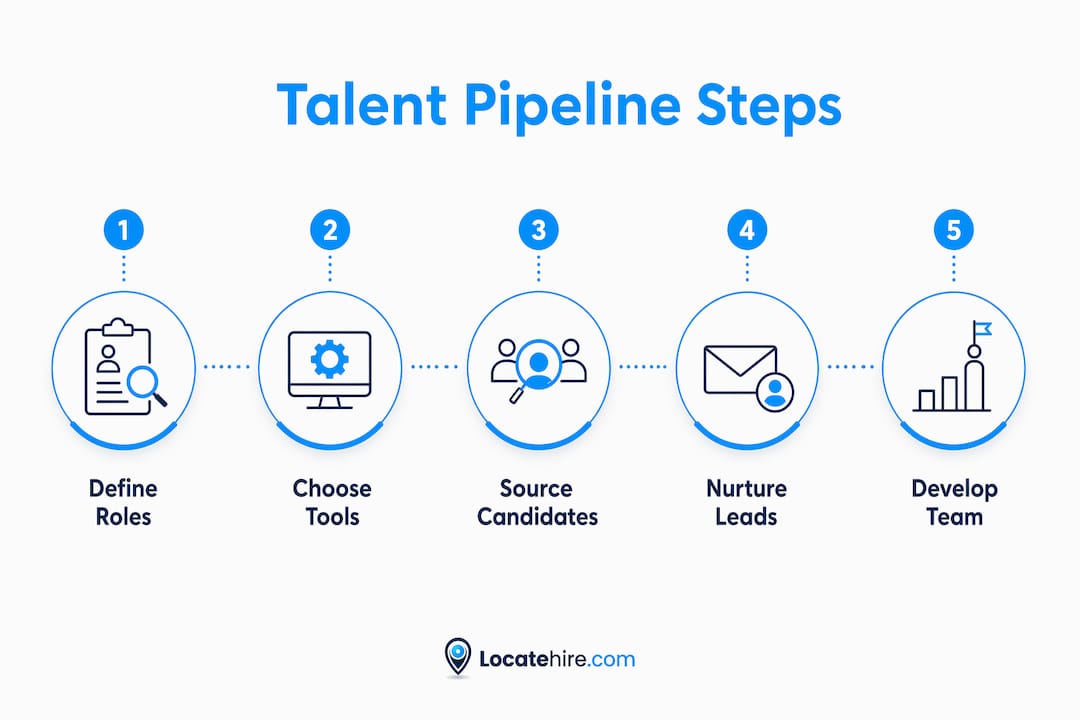
Define your roles before you source anyone
Write a one-page role profile for every position you hire repeatedly. Include the three or four skills that actually predict success, the pay range, and the schedule. A janitorial company that hires site supervisors, for example, should document exactly what separates a good supervisor from a great one before reaching out to a single candidate. Without this, your pipeline fills with people who look fine on paper but fail in practice.
Choose the right tracking tool for your team size
Simple spreadsheets manage pipelines effectively for teams under 50, tracking key fields like candidate name, role, last contact date, and status. You do not need enterprise software at this stage. A shared Google Sheet with five columns beats a complex applicant tracking system you never actually use. Once your candidate pool grows beyond 100 active contacts, purpose-built tools like Locatehire become worth the investment.

The table below shows how different tracking approaches fit different team sizes and hiring volumes.
| Tool type | Best for | Key advantage | Main limitation |
|---|---|---|---|
| Shared spreadsheet | Teams under 30, low volume | Free, fast to set up | Manual updates, no automation |
| Entry-level ATS | Teams of 30–50, moderate volume | Structured tracking, reminders | Monthly cost, setup time |
| Locatehire | Ongoing hiring, field service teams | Built for small business workflows | Requires consistent data entry |
Pro Tip: Before picking any tool, count how many open roles you fill per year. If the answer is fewer than 10, a spreadsheet works fine. If you hire constantly, like most HVAC or plumbing companies do, move to a dedicated system from the start.
How do you find and attract candidates for your pipeline?
Sourcing for a small team pipeline is not about casting the widest net. Focusing on two sourcing channels produces better results than spreading effort thin across five or six. Pick the two that fit your industry and work them consistently.
Employee referrals: your highest-return channel
Employee referrals deliver the best hiring outcomes for small businesses, and the reward structure matters more than most owners realize. Referral bonuses of $2,000–$3,000 produce significantly stronger participation than the typical $250–$500 range. Public recognition also drives engagement. Announce referral hires at team meetings. Post a thank-you on your company group chat. Your team knows people who would fit your culture, and a real incentive motivates them to make the introduction. Read more about how referral programs work for small businesses before setting your bonus amount.
LinkedIn and trade school outreach
Personalized LinkedIn outreach generates a 15–25% response rate compared to 5–10% for generic messages. The difference is specificity. Reference something real: a project they posted, a certification they earned, or a mutual connection. One sentence of genuine context doubles your reply rate. For trade roles in electrical, plumbing, or HVAC, partnerships with local trade schools and community colleges give you access to candidates before they hit the open market. Offer to speak at a class or sponsor a tool. The relationship costs almost nothing and produces a steady stream of entry-level candidates.
- Lead with referrals and offer a meaningful bonus ($2,000 or more for skilled roles)
- Choose one digital channel (LinkedIn, Indeed, or a trade-specific board) and post consistently
- Contact two or three trade schools or community colleges in your area
- Track every outreach attempt in your spreadsheet or ATS so nothing falls through the cracks
Pro Tip: When you reach out to a passive candidate, pitch a conversation, not a job. Say "I'd love to learn more about your work" instead of "We have an opening." That framing doubles response rates compared to a generic opportunity pitch.
How do you nurture relationships in your talent pipeline?
Sourcing gets candidates into your pipeline. Nurturing keeps them there. Most small business owners build a list and then ignore it until they have an opening. By then, the best candidates have moved on.
Three light touchpoints per year keep 71% of passive candidates engaged for up to 18 months. That is one message every four months, which takes less than 30 minutes of total effort per candidate per year. The content of each touchpoint matters. A generic "just checking in" message signals that you have nothing real to offer. A specific message, such as sharing a relevant industry article or mentioning a project your team just completed, signals that you remember who they are.
What good pipeline communication looks like
- Month 1: Send a personalized note after your first conversation. Reference something specific they mentioned.
- Month 5: Share a short update about your company. A new contract, a team milestone, or a relevant industry development works well.
- Month 9: Ask a genuine question. "We're thinking about adding a second crew. What's your take on the labor market right now?" This keeps the dialogue two-way.
Track the last contact date for every candidate in your pipeline. If a candidate goes more than five months without contact, they are at risk of going cold. Set a calendar reminder or use Locatehire's outreach scheduling to flag overdue contacts automatically.
Pro Tip: Treat your pipeline like a professional network, not a waiting list. Candidates who feel respected and remembered will call you first when they are ready to move. Candidates who feel like a number will ignore your message when the time comes.
The most common mistake is treating pipeline building as a one-time project. You spend a weekend building a list, then return to daily operations and never touch it again. A 15–30 minute weekly maintenance block prevents this. Put it on your calendar like any other recurring task.
How do you develop talent within your existing team?
The strongest talent pipeline includes the people already on your payroll. Internal development reduces the number of external hires you need and builds loyalty that cuts voluntary turnover.
Quarterly development conversations prevent most voluntary departures by surfacing growth needs before they become resignation letters. These are not performance reviews. They are 20-minute conversations about where each person wants to go and what they need to get there. A technician who wants to move into a lead role tells you that in a quarterly conversation. Without it, they tell their next employer.
Here is a simple four-step process for building internal pipeline strength:
- Schedule quarterly one-on-ones. Block 20 minutes per employee every quarter. Ask two questions: "What's going well?" and "What do you want to learn or do more of?"
- Assign stretch tasks. Give your best performers work that is slightly above their current role. A billing coordinator who wants to move into operations management can shadow your dispatcher for one day a week.
- Cross-train across roles. Cross-training employees across roles eliminates single points of failure. If your only licensed electrician leaves, you need someone who can cover basic tasks while you hire. Cross-training is informal succession planning.
- Document what you learn. Keep a simple note for each employee: their goals, their strengths, and the skills they are building. Review it before every quarterly conversation.
Practices of development integrated into daily work deliver more impact than expensive external training programs. A five-minute debrief after a tough job teaches more than a half-day seminar. Build the habit of brief, specific feedback into your normal operations.
What are the common challenges when building a pipeline for a small team?
Small teams face specific obstacles that larger companies do not. Knowing them in advance keeps your pipeline from stalling.
The biggest trap in small team hiring is the "warm body" hire. A role sits open for six weeks, pressure builds, and you hire the first available person instead of the right one. A maintained pipeline gives you the patience to wait for fit.
- The warm body trap: Resist filling a role with whoever is available. A bad hire on a 10-person team affects every other person on that team. Your pipeline exists precisely so you have options when pressure is high.
- Time scarcity: 15–30 minutes per week is all the maintenance your pipeline needs. Protect that block. Treat it as non-negotiable, the same way you treat payroll or client calls.
- Almost-perfect candidates: When someone is close but not quite right for the current opening, keep them warm. They may be perfect for the next role, or for the same role in six months when their situation changes.
- Knowing when to scale: A spreadsheet works until it does not. When you are managing more than 50 active candidates or hiring for three or more roles at once, move to a purpose-built tool. Learn more about hiring software options built for small teams before you hit that wall.
Key takeaways
A proactive talent pipeline cuts time-to-shortlist from weeks to days and gives small teams the hiring confidence to wait for the right candidate instead of settling for the available one.
| Point | Details |
|---|---|
| Start with role clarity | Define success criteria for each role before sourcing a single candidate. |
| Use two sourcing channels | Master referrals and one digital channel rather than spreading effort thin. |
| Nurture with three touches per year | Light, personalized contact every four months keeps passive candidates engaged for 18 months. |
| Develop from within | Quarterly conversations and cross-training build internal successors and cut voluntary turnover. |
| Maintain weekly rhythm | Fifteen to thirty minutes per week prevents the pipeline from going cold and avoids emergency hires. |
What I've learned from watching small teams hire the hard way
Most small business owners treat hiring like a fire drill. Something breaks, they scramble, and they hire whoever shows up. I have seen this pattern in pool service companies, electrical contractors, and retail chains alike. The result is always the same: a mediocre hire, a frustrated team, and the same fire drill six months later.
The owners who break this cycle share one habit. They treat their talent pipeline like a client relationship. They check in regularly, they remember details, and they invest before they need anything in return. That mindset shift is harder than any tool or tactic.
Consistency beats coverage every time. I would rather see a business owner send three thoughtful messages to 10 candidates than blast 100 people with a generic job post. The first approach builds a real pipeline. The second builds a list that goes nowhere.
The internal development piece surprises most people. Quarterly conversations feel like overhead until the day they prevent a key person from walking out the door. On a 15-person team, losing your best technician or your top salesperson is not just an HR problem. It is an operational crisis. Twenty minutes per quarter per person is cheap insurance.
Start small. Pick one sourcing channel, schedule your first round of quarterly conversations, and block 20 minutes on Friday to update your candidate list. The pipeline builds itself from there.
— Jeff
How Locatehire helps small teams hire without the chaos
Small business owners who hire repeatedly, whether for HVAC crews, janitorial teams, or retail staff, need a system that keeps up with their pace without requiring a full HR department.
Locatehire is built for exactly this situation. It tracks candidates, logs contact history, and flags who needs a follow-up, all without the cost or complexity of enterprise software. You can manage your entire hiring process from one place, from first contact through onboarding. For teams that hire in cycles or maintain a rolling pipeline, Locatehire removes the manual work that causes pipelines to go cold. If you are ready to stop hiring reactively, Locatehire gives you the structure to make proactive hiring a normal part of running your business.
FAQ
What is a talent pipeline for a small business?
A talent pipeline is a pool of pre-qualified candidates your business can contact quickly when a role opens. It replaces reactive, from-scratch hiring with a proactive process that cuts time-to-shortlist from weeks to days.
How often should I contact candidates in my pipeline?
Three touchpoints per year keep most passive candidates engaged for up to 18 months. Space them roughly four months apart and make each message specific and personal.
Do I need special software to build a talent pipeline?
Not at first. A simple spreadsheet works well for teams under 50 employees tracking fewer than 100 candidates. Purpose-built tools like Locatehire become worth the investment when hiring volume increases or manual tracking breaks down.
How do employee referrals fit into a small team pipeline?
Referrals are the highest-return sourcing channel for small businesses. Bonuses of $2,000–$3,000 produce significantly more participation than smaller rewards, and public recognition reinforces the behavior across your team.
How much time does pipeline maintenance actually take?
Fifteen to thirty minutes per week is enough to keep an active pipeline healthy. That block covers follow-up messages, status updates, and flagging candidates who are overdue for contact.