
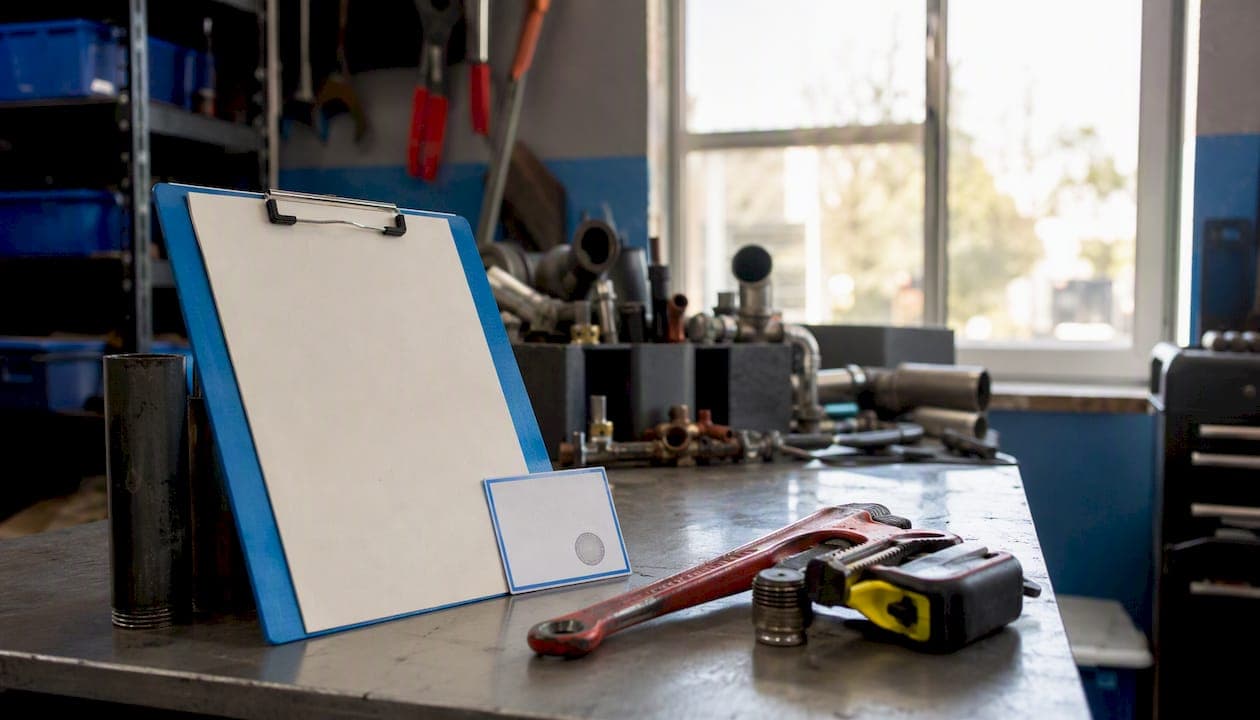
When screening plumbing candidates, you'll encounter six core license tiers: apprentice/trainee, journeyman, master plumber, tradesman/plumber-limited, plumbing inspector, and plumbing contractor (business-level). Specialty endorsements such as gas fitting, backflow prevention, and medical gas also appear on records and carry their own verification requirements.
Your first move is always the issuing state's public license search. The Texas State Board of Plumbing Examiners, for example, maintains a searchable database covering all four of its individual license categories. The Bureau of Labor Statistics occupational profile helps you map license level to job duties, and OSHA guidance clarifies which tasks carry safety obligations regardless of license status. Locatehire, an ATS built for small trade businesses, lets you store verification records and set expiration reminders directly in the candidate file.
License tiers employers most often verify:
- Apprentice/Trainee (supervised work only)
- Journeyman Plumber (independent field work)
- Master Plumber (full scope, permit-pulling, supervision)
- Tradesman Plumber-Limited (restricted scope)
- Plumbing Inspector
- Plumbing Contractor / Business License
- Specialty endorsements: gas fitter, backflow tester, medical gas
Table of Contents
- What are the main plumbing license types employers verify?
- What should you check on every plumbing license record?
- How do you verify a plumbing license step by step?
- What do you do when hiring a plumber licensed in another state?
- When can plumbing work be done without a license?
- How Locatehire helps you track plumbing license verification
- Key Takeaways
- Why consistent license verification matters more than most employers realize
- Locatehire makes plumbing license verification repeatable
- Authoritative sources for plumbing license verification
What are the main plumbing license types employers verify?
Plumbing licensing in the U.S. follows a tiered progression, but the exact titles and thresholds vary by state. Here are the tiers you'll encounter on resumes and license records, along with what each one actually permits.
Apprentice/Trainee. An apprentice works under direct supervision of a journeyman or master plumber. No independent work, no permit-pulling. Most states require formal enrollment in an apprenticeship program combining on-the-job hours with classroom instruction over several years. This tier does not qualify a candidate to work unsupervised on your jobs.
Journeyman Plumber. The journeyman license is the standard field credential. Holders can perform most plumbing installations and repairs independently. They generally cannot pull permits in their own name or supervise other plumbers without a master license. Typical requirements: completion of apprenticeship hours plus a written exam.
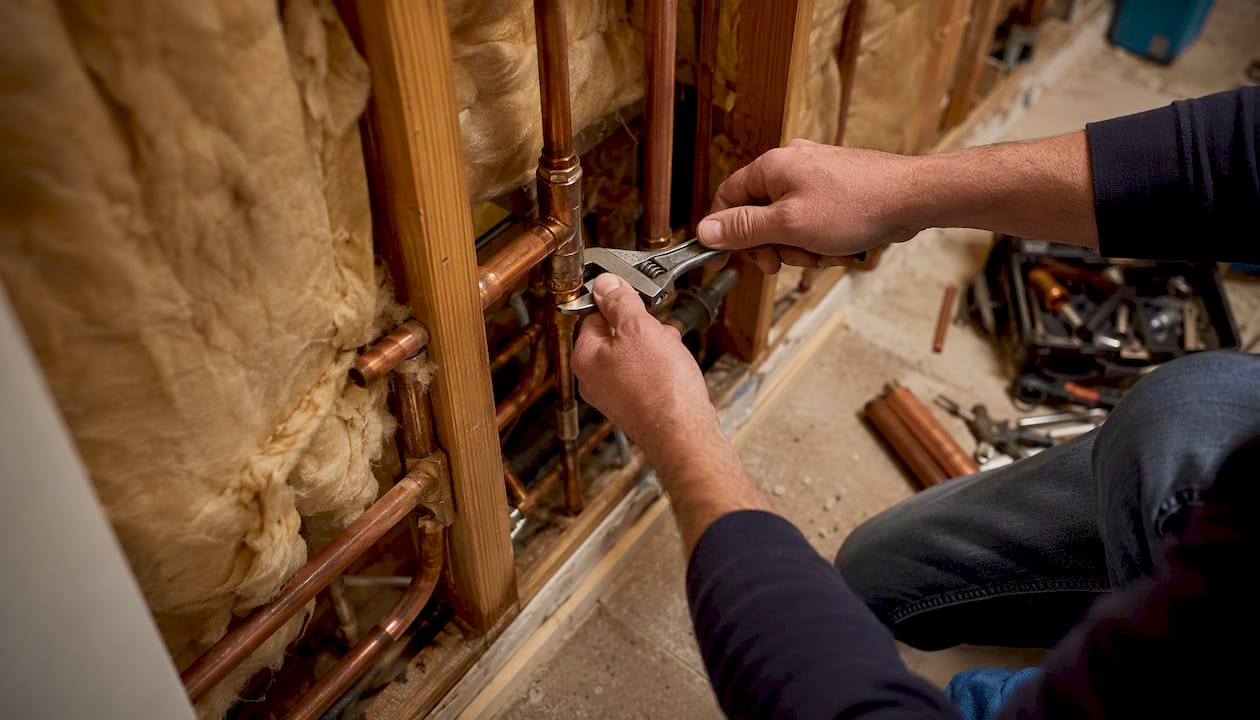
Master Plumber. The master license is the highest individual credential. Masters can pull permits, supervise journeymen and apprentices, and take full responsibility for a plumbing system. Most states require additional years of journeyman experience (often 2–4 years) plus a more rigorous exam before issuing a master license.
Tradesman Plumber-Limited. Texas specifically lists this tier, which authorizes a narrower scope of work than a full journeyman. Holders can perform defined tasks but cannot work independently on all plumbing systems. If you're hiring in Texas, confirm whether the candidate's scope matches your project requirements.
Plumbing Inspector. This credential authorizes the holder to inspect plumbing installations for code compliance. It's relevant when hiring for municipal or third-party inspection roles, not field installation work.
Plumbing Contractor (Business License). This is a business-level license, not an individual credential. In California, the Contractors State License Board issues a C-36 plumbing contractor classification that authorizes a company to perform water supply, drainage, gas piping, and water heater work. Most states require a licensed master plumber to serve as the qualifying agent for the contractor entity.
Specialty endorsements. Gas fitter, backflow prevention tester, medical gas installer, and fire sprinkler certifications appear as add-ons to a base license. Always verify these separately when the job requires them.
State variance is real. Minnesota's licensing framework includes restricted master, restricted journeyworker, and certified pipelayer tiers alongside the standard progression. Oregon uses a Residential Plumber classification distinct from a full journeyman. State-by-state requirements differ enough that you should always confirm with the issuing state's board before making a hiring decision.
| License Level | Typical Scope | Experience (Typical) | Exam Required | Individual vs. Business |
|---|---|---|---|---|
| Apprentice/Trainee | Supervised work only | Enrolled in program | No | Individual |
| Journeyman | Independent field work | Completion of an apprenticeship program | Yes | Individual |
| Master Plumber | Full scope, permits, supervision | Additional journeyman experience plus apprenticeship | Yes | Individual |
| Tradesman-Limited | Restricted scope (state-specific) | Varies by state | Yes | Individual |
| Plumbing Inspector | Code compliance inspections | Varies | Yes | Individual |
| Plumbing Contractor | Business-level authorization | Qualifying agent required | Via qualifying agent | Business entity |
Pro Tip: When a candidate lists a specialty endorsement on their resume, always verify it separately on the license record. Endorsements sometimes expire on a different schedule than the base license.
What should you check on every plumbing license record?
A license number on a resume is not verification. Here is the exact checklist to run before any plumbing hire.
Fields to confirm on the license record:
- License number — matches what the candidate provided
- Full legal name on record — must match the government-issued ID you collect
- Issuing state and board — confirms jurisdiction
- License classification/type — journeyman, master, contractor, endorsement
- Status — Active or In Good Standing (anything else requires follow-up)
- Issue date and expiration date — confirm the license is current
- Disciplinary history — complaints, suspensions, revocations
- Specialty endorsements or restrictions — gas, backflow, medical gas, or scope limitations
- Qualifying agent status — for contractor-level hires, confirm the individual is listed as the qualifying agent on the business license
Documents to request from the candidate:
- Current printed or digital license certificate
- Government-issued photo ID matching the name on the license
- Proof of specialty certification (gas fitter card, backflow tester certificate)
- Employer-verified experience documentation where required. Oregon's plumbing experience verification form is a good example of the task-category breakdowns states may require. Texas uses a separate Employer Certification Form (ECF) for each employer, listing specific hour categories.
- Proof of insurance and bond for contractor-level hires
Pro Tip: If the state board record doesn't match the candidate's documents, call the board directly before proceeding. Most boards have a verification line and can confirm active status, name, and license number in under five minutes.
Red flags to stop the process:
- Expired license status
- Disciplinary actions, suspensions, or revocations on record
- Name mismatch between the license record and the ID provided
- Candidate cannot produce the original license certificate
For a complete plumbing staffing checklist, including pre-hire documentation steps, Locatehire's hiring blog covers the full onboarding sequence.
How do you verify a plumbing license step by step?
The process is straightforward when you know where to look. Here's a repeatable workflow your hiring team can follow for any U.S. jurisdiction.
Step 1: Identify the issuing state. Ask the candidate which state issued the license and confirm the license number. Most licenses list the issuing board on the certificate.
Step 2: Run the state public license lookup. Go to the issuing state's board website and use the public search tool. Common search fields include license number, licensee name, business name, and profession filter. The Texas State Board of Plumbing Examiners lookup, for example, returns license type, status, expiration, and disciplinary history in a single result.
Step 3: Handle gaps. If you can't find the candidate in the statewide database, check whether the state uses local licensing instead. Some jurisdictions leave licensing to the city or county. Call the board's verification line to confirm.
Step 4: Verify the contractor license separately. Individual and business licenses are separate records. If you're hiring a contractor or a qualifying agent, run both lookups.
Step 5: Capture and store the record. Screenshot or download the lookup result and attach it to the candidate file. Record the date of verification.
| Lookup Field | Why It Matters | Evidence to Store |
|---|---|---|
| License number | Confirms identity match | Screenshot of result |
| License status | Confirms current authorization | Status field from lookup |
| Expiration date | Flags upcoming lapses | Date captured in ATS |
| Disciplinary history | Reveals past violations | Board record screenshot |
| Endorsements/restrictions | Confirms specialty scope | Endorsement fields from record |
Pro Tip: When calling a board, ask three specific questions: Is this license currently active? Does the name on record match [candidate name]? Is there any open disciplinary action? Boards answer these quickly and the answers are definitive.
For a deeper look at how plumbing companies onboard new techs, including documentation checklists, Locatehire's onboarding playbook covers the full sequence.
What do you do when hiring a plumber licensed in another state?
Out-of-state licenses require extra steps. Many states do not automatically accept credentials issued elsewhere, and the rules vary significantly. The LicensedCheck verification guide summarizes the typical reciprocity patterns and verification steps employers should follow.
Employer actions for out-of-state candidates:
- Confirm whether the receiving state has a formal reciprocity or endorsement agreement with the candidate's home state. Check the receiving state's board website directly.
- Require proof of equivalent exam and experience documentation, even when reciprocity exists.
- Determine whether the state offers a temporary permit or provisional registration that allows the candidate to work while a full license application is processed.
- Record any scope limitations or additional permitting requirements that apply during the provisional period.
- Do not schedule the candidate for permitted work until local registration is confirmed in writing.
A practical clause to add to job offers for out-of-state candidates: "This offer is contingent on the candidate obtaining any required state or local plumbing license or registration before the start date; the start date may be adjusted to accommodate the licensing timeline."
When can plumbing work be done without a license?
Not every plumbing-related task requires a licensed plumber, and knowing the exceptions protects you from two directions: assigning regulated work to unlicensed staff, and over-restricting tasks that don't require a license.
Common exceptions include:
- Minor repairs (replacing a faucet washer, clearing a drain) in some states
- Certain pipelaying tasks performed by certified pipelayers under supervision
- Work on private property exterior piping in select states
- Apprentice or trainee work performed under direct supervision of a licensed plumber
State variance is significant. Some states leave licensing entirely to municipalities, which means the threshold for what requires a license can differ by city. OSHA guidance is clear that licensing status does not remove employer safety obligations. Even for tasks that don't require a license, you remain responsible for safe task assignment.
Before assigning any plumbing-adjacent task to an unlicensed employee, confirm the local code for the work location. A useful phrase to include in job specs: "Work requiring a licensed plumber per [state/local board] must be performed only by a licensed individual."
One more consideration: even when local rules permit unlicensed minor work, confirm your insurance carrier will cover the activity. Some commercial general liability policies exclude plumbing work performed by unlicensed individuals, regardless of local code.
How Locatehire helps you track plumbing license verification
Verification is only useful if it's documented and repeatable. Locatehire is an ATS built for small trade businesses, including plumbing companies, and it gives hiring teams a structured place to manage the entire verification workflow.
Features that matter for license verification:
- Custom candidate fields for license number, issuing state, license type, and expiration date
- Document attachments to store license certificate scans and board lookup screenshots
- Automated expiration reminders so you're notified before a license lapses
- Audit trails that record who verified what and when
- Team notes for logging board call confirmations and reciprocity status
Practical use cases:
- Onboarding a journeyman with a backflow endorsement: attach the base license and the endorsement certificate separately, set two expiration reminders on different dates.
- Hiring a contractor-level qualifying agent: create a linked record for both the individual license and the business contractor license, with separate status fields.
- Managing a team with mixed license levels: use Locatehire's candidate tracking to filter active hires by license tier and flag anyone approaching renewal.
Pro Tip: Set expiration reminders 90 days before the license renewal date, not 30. Most state boards require continuing education or exam prep before renewal, and 30 days is rarely enough lead time.
For guidance on certifications in hiring skilled-trade techs, Locatehire's blog covers how to treat specialty endorsements during screening and onboarding.
Key Takeaways
Consistent employer plumbing verification starts with the state public license lookup and ends with a documented record in your ATS.
| Point | Details |
|---|---|
| Run the state lookup first | Always verify through the issuing state's public license search before any other step. |
| Check status, expiration, and discipline | These three fields on the license record carry the most hiring risk if overlooked. |
| Verify specialty endorsements separately | Gas fitter, backflow, and medical gas credentials expire independently of the base license. |
| Require extra steps for out-of-state hires | Confirm reciprocity status and delay permitted work until local registration is confirmed. |
| Use Locatehire to document and track | Store verification records, set renewal reminders, and maintain audit trails in one place. |
Why consistent license verification matters more than most employers realize
The conventional wisdom treats license verification as a compliance checkbox. Run the lookup, confirm it's active, move on. That framing misses the real operational risk.
A lapsed license discovered after a permit is pulled can void the permit and trigger a stop-work order. A disciplinary action on a candidate's record that you didn't catch can expose your business to liability if that individual causes damage on a job. These aren't edge cases. They're the predictable consequences of treating verification as a one-time event rather than an ongoing process.
The other underestimated issue is scope mismatch. Hiring a tradesman-limited when the job requires a master plumber isn't just a compliance problem. It affects what work can be inspected, what permits can be pulled, and whether your insurance covers the installation. The BLS occupational profile is a useful reference for mapping license level to job duties before you write the job spec, not after you've already made an offer.
The businesses that get this right treat verification as a structured workflow, not a gut check. They document every lookup, set renewal reminders, and build the process into onboarding rather than leaving it to individual hiring managers to remember. That's where the real efficiency gain is.
Locatehire makes plumbing license verification repeatable
Hiring a licensed plumber is only half the job. Keeping that license documented, current, and auditable is where most small trade businesses lose time. Locatehire gives you a purpose-built ATS that handles the verification workflow from first application through renewal.
With Locatehire, you can attach license scans directly to candidate records, set automated expiration alerts, and maintain a full audit trail of every board verification your team runs. Custom fields for license number, issuing state, and endorsement type mean nothing gets buried in an email thread. For plumbing companies managing journeymen, masters, and contractor-level qualifying agents across multiple jobs, that structure pays off fast. ServlyPro's job management tools pair well with Locatehire for teams that also need field scheduling and work order tracking in one operational stack.
See how Locatehire fits your hiring process at locatehire.com.
Authoritative sources for plumbing license verification
Bookmark these resources for direct access to license lookup tools and regulatory guidance.
State boards and license portals:
- Plumbers, pipefitters, and steamfitters — Occupational Outlook — BLS
- OSHA plumbing guidance
- License Types - Texas State Board of Plumbing Examiners
- How to Verify a Plumber License — Complete Guide (2026) — LicensedCheck
- Plumber License Requirements by State (2026)
- Plumbing license types and credentials | Minnesota Department of Labor and Industry
- C-36 Plumbing Contractor License California | CSLS
- Plumbing Experience Verification Form
Federal resources:
- OSHA Plumbing Guidance — safety requirements and employer obligations for plumbing task assignment.
- BLS Occupational Outlook: Plumbers, Pipefitters, and Steamfitters — role definitions and labor market data for workforce planning.
Verification and documentation:
- LicensedCheck — How to Verify a Plumber License — step-by-step verification process and specialty endorsement guidance.
- Oregon Plumbing Experience Verification Form — example of an employer-signed form documenting task-category hours for license applications.
When to call a board: If a candidate's record doesn't appear in the public database, call the board's verification line. Ask for active status confirmation, name and number match, and whether any temporary registration or reciprocity process is available. Capture the call date, the staff member's name, and the answers in your ATS record.