

Customer communication is a core plumber skill, not a soft add-on to technical ability. The role of customer communication in plumber skills determines whether a technically sound job becomes a five-star review or a complaint. The Plumbing, Heating, Cooling Contractors Association (PHCC) now offers online courses in communication specifically to move field labor toward professional service standards. Plumbers who master client interaction earn more referrals, handle fewer callbacks, and build businesses that grow on reputation alone.
How does communication affect customer trust in plumbing?
Communication is a stronger differentiator than technical skill alone. Two plumbers can fix the same pipe, but only one earns a glowing review. The difference is almost always how they spoke to the customer.
Customers remember how they felt during a service call far more than the specific repair performed. Respect for the home, clear explanations, and a sense of being cared for drive reviews and referrals more than any technical fix. That means emotional intelligence is not optional. It is a revenue driver.
Clear explanations also prevent misunderstandings that lead to costly callbacks. When a plumber explains what was found, what was done, and what to watch for, the customer feels informed. Informed customers rarely call back confused or upset.
"The best plumbers don't just fix problems. They make customers feel like their home is in good hands. That feeling is what gets shared with neighbors."
Personalized communication produces higher review rates and more referrals. Proactive transparency, such as automated appointment confirmations, technician arrival windows, and upfront pricing, sets expectations before the truck even pulls up. Customers who feel respected before the job starts are far more likely to leave a positive review when it ends.
Key ways communication builds trust:
- Confirming appointments with a personal or automated message the day before
- Explaining findings in plain language before starting any work
- Offering written estimates so customers can review costs without pressure
- Following up after the job to confirm satisfaction
What key communication skills should plumbers develop?
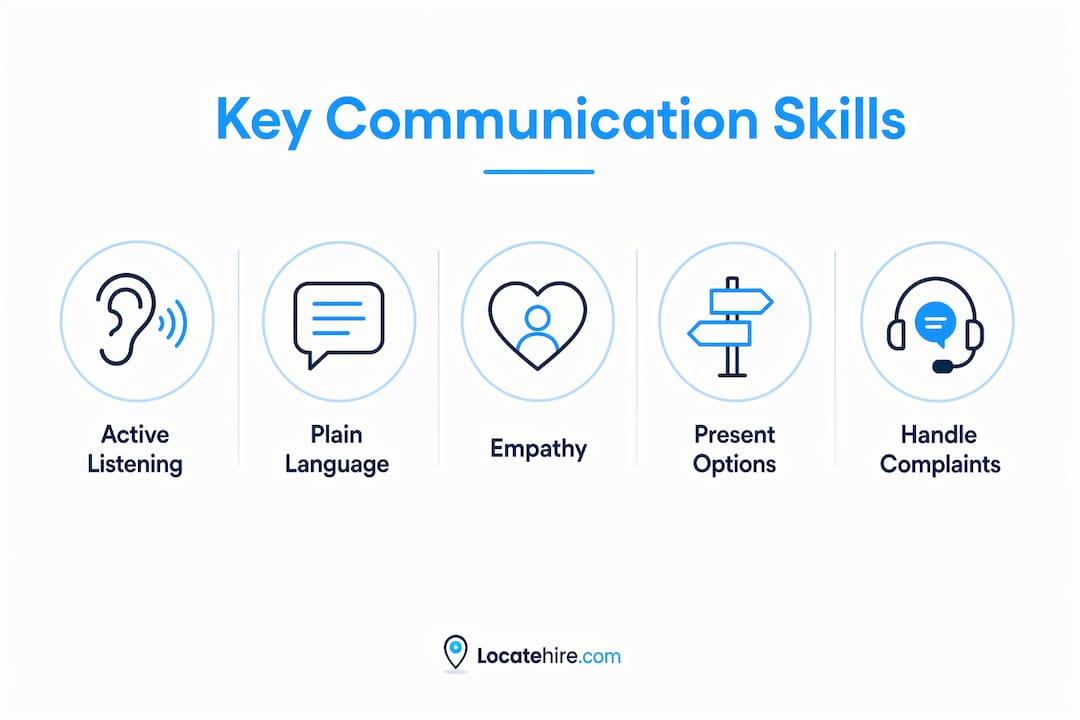
Effective communication in plumbing is a set of learnable skills, not a personality trait. Plumbers who treat these competencies like technical certifications, practicing and refining them, consistently outperform peers who rely on technical skill alone.
-
Active listening. Stop talking and let the customer finish. Most customers describe symptoms, not causes. Listening fully before diagnosing prevents assumptions and builds immediate rapport.
-
Plain language translation. Replace "backflow preventer" with "a valve that stops dirty water from flowing back into your clean supply." Customers do not need to understand plumbing. They need to understand their situation.
-
Framing options clearly. Offering three repair options at different price points lets customers choose based on their budget and priorities. This removes pressure and increases satisfaction because the customer feels in control.
-
Empathy and expectation management. Acknowledge the inconvenience before jumping to solutions. "I know a burst pipe is stressful. Here's exactly what we're going to do" is more reassuring than a technical monologue.
-
Handling objections. When a customer pushes back on price, the right response is not a discount. It is a clearer explanation of value. "This repair protects your floors and prevents mold" reframes cost as protection.
Pro Tip: Practice these conversations out loud before your next job. Role-playing objections and explanations with a colleague sharpens your delivery faster than any classroom course.
How can plumbers bridge the technical language gap?
The best plumbers act as translators. Converting technical diagnostics into simple language is the single skill that separates top technicians from average ones. Customers recall the communication experience, not the repair details.
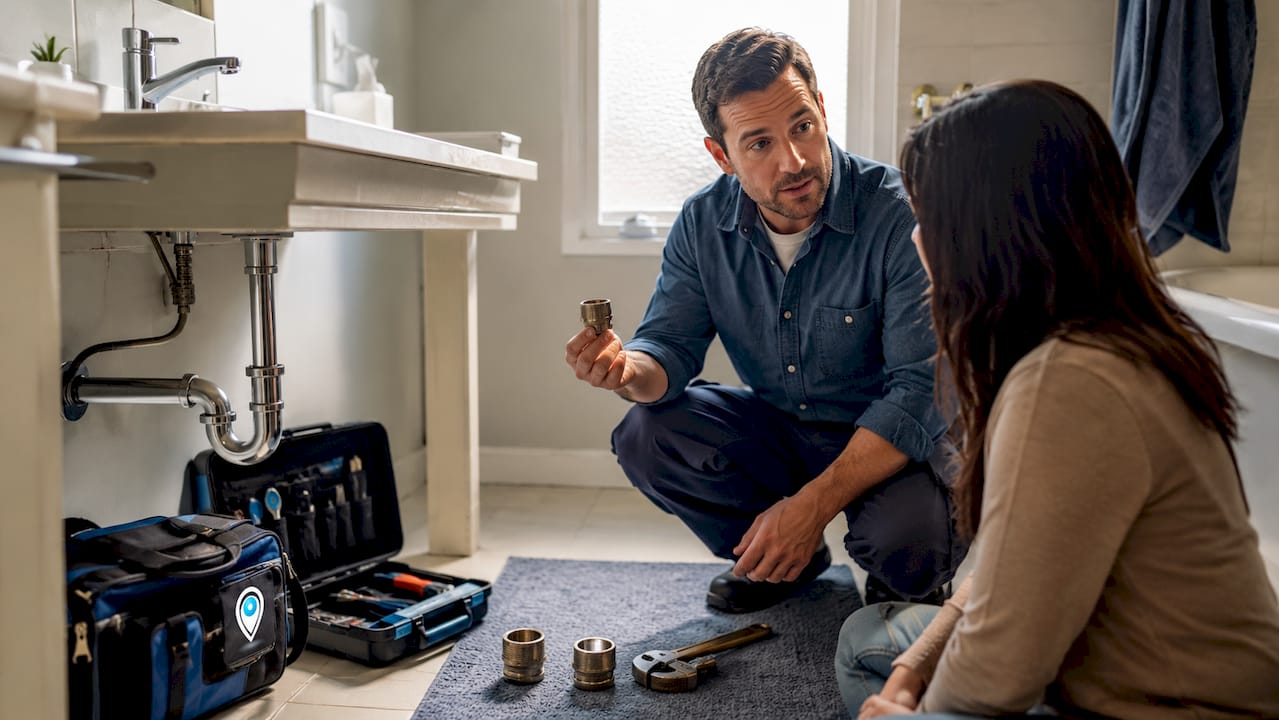
Analogies work better than definitions. Instead of explaining water pressure in PSI, say "your water pressure is like a garden hose with a kink. We need to remove the kink so water flows freely." That image sticks. A PSI reading does not.
Role-playing customer conversations is as important as practicing technical skills. Run through common scenarios: explaining a slab leak, presenting a water heater replacement, or discussing a pipe reline. The goal is to reduce hesitation and eliminate jargon automatically.
The "Always Be Serving" approach replaces the old sales mindset with a question-based structure. Ask what the customer values most. Ask what concerns them about the repair. Then match your explanation to those priorities. This approach consistently produces better outcomes than high-pressure sales tactics.
Key techniques for bridging the language gap:
- Use before-and-after visuals or photos on a tablet to show the problem
- Frame repairs as home protection, not just pipe fixes
- Avoid acronyms and brand-specific part names
- Summarize the job in two sentences at the end of every call
Pro Tip: Build a short "translation cheat sheet" for your five most common repairs. Write the jargon term on one side and the customer-friendly explanation on the other. Review it before each job until plain language becomes automatic.
| Communication approach | Customer outcome |
|---|---|
| Jargon-heavy explanation | Confusion, distrust, price objections |
| Plain language with analogy | Understanding, confidence, faster approval |
| Three-option pricing presentation | Customer feels in control, higher satisfaction |
| Question-based serving structure | Stronger rapport, fewer callbacks |
What are the best practices for complaint handling in plumbing?
Complaint handling is where plumbing businesses either build lasting loyalty or lose customers permanently. The difference between the two outcomes is almost always speed and personal accountability.
Same-day response by the business owner is the standard that earns trust back. A personal message from the owner signals accountability in a way that a generic team reply never can. Customers who feel heard by someone with authority are far more likely to give the business a second chance.
Offering a no-qualification fix within a 30-day window removes the friction that turns complaints into bad reviews. Prompt, personal complaint management with a straightforward fix offer converts negative experiences into loyalty. The customer does not need to argue or prove anything. The business simply shows up and makes it right.
Moving complaints offline is non-negotiable. A public back-and-forth on a review platform damages your reputation with every reader. A private message that resolves the issue quickly protects your brand and often results in the customer updating their review.
Follow-up communication after a complaint resolution is the step most plumbing businesses skip. A short call or text two days later asking "Is everything working well?" closes the loop and demonstrates genuine care. That final touch is what converts a recovered complaint into a referral.
Best practices for complaint resolution:
- Respond the same day, personally, from the owner or manager
- Offer to return and fix any issue within 30 days, no questions asked
- Move the conversation to a private channel immediately
- Follow up two days after the fix to confirm satisfaction
- Send a personalized review request once the issue is resolved
Key Takeaways
Strong customer communication is the skill that turns a technically competent plumber into a trusted service professional and a growing business.
| Point | Details |
|---|---|
| Communication drives reviews | Customers remember how they felt, not what was fixed. Clear, respectful interaction generates referrals. |
| Plain language builds trust | Replace jargon with analogies and plain explanations to reduce confusion and speed up approvals. |
| Three-option pricing empowers customers | Presenting repair options at different price points increases satisfaction and reduces objections. |
| Complaint handling requires personal ownership | Same-day owner response and a no-qualification fix offer convert complaints into loyalty. |
| Practice sharpens communication | Role-playing common scenarios reduces hesitation and eliminates jargon automatically. |
What I've learned about communication and the trades
Most plumbing businesses invest heavily in tools, trucks, and technical training. Communication training gets a fraction of that budget, and the gap shows up directly in online reviews and repeat business rates.
The shift I see working is moving from a selling mindset to a serving mindset. Technicians who ask questions and listen consistently outperform technically superior peers. They close more jobs, generate more referrals, and produce fewer complaints. The numbers are not subtle.
Behavioral assessment tools like DiSC are underused in the trades. Understanding communication styles within a team reduces internal friction between dispatch, management, and field staff. That internal clarity shows up in how technicians interact with customers. A team that communicates well internally delivers a more consistent customer experience. For plumbing businesses looking to build that kind of team, candidate assessment practices are worth adopting early in the hiring process.
The most common pitfall I see is plumbers who assume customers want technical detail. They do not. Customers want to feel safe, informed, and respected. The plumber who delivers that experience wins the job, the review, and the referral, every time.
— Jeff
Locatehire helps you hire plumbers who communicate
Plumbing businesses that prioritize communication skills need a hiring process that screens for those skills from the start. Locatehire is built for exactly that.
Locatehire is an applicant tracking system designed for small businesses with ongoing hiring needs, including plumbing companies. The platform helps you post targeted job listings that attract candidates with both technical ability and strong client interaction skills. You can review applicants, track your pipeline, and hire faster without losing quality. For plumbing businesses building a team around service excellence, Locatehire gives you the structure to hire with confidence and keep your roster filled with the right people.
FAQ
What is the role of customer communication in plumber skills?
Customer communication is the skill that converts technical work into trusted service. Plumbers who communicate clearly earn more referrals, fewer complaints, and higher review ratings than technically skilled peers who do not.
Why do plumbing customers remember communication more than repairs?
Customers experience a service call emotionally, not technically. Research shows that respect for the home, clear explanations, and feeling cared for drive reviews and referrals more than the specific repair performed.
How should a plumber handle a customer complaint?
The business owner should respond the same day with a personal message and offer to return and fix any issue within 30 days, no questions asked. Moving the conversation offline immediately prevents public escalation.
What communication skills matter most for plumbing professionals?
Active listening, plain language translation, empathy, and the ability to present multiple repair options are the four skills that most directly impact customer satisfaction and repeat business in plumbing.
How can plumbing businesses screen for communication skills when hiring?
Write job postings that describe communication expectations clearly, and use structured interviews with scenario-based questions. Behavioral assessments can also identify candidates whose communication style fits your team and customer base. Locatehire helps plumbing businesses build job postings that attract candidates with both technical and interpersonal strengths.