
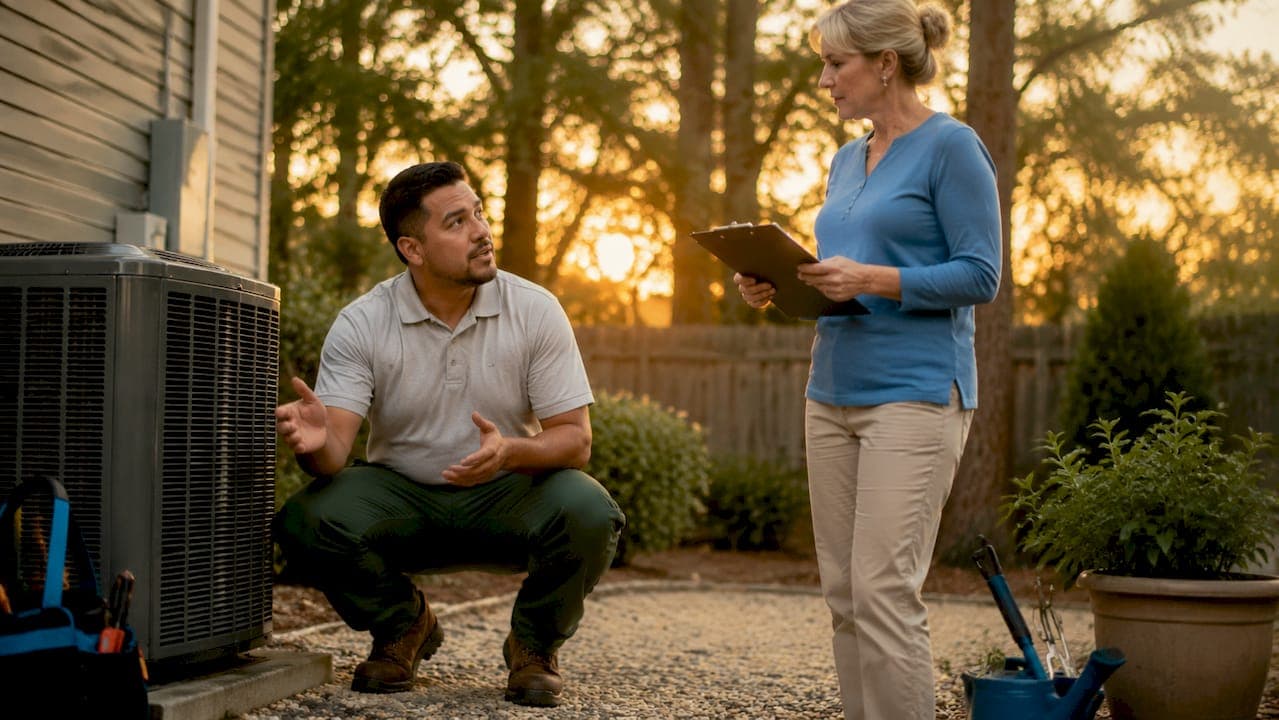
Customer service HVAC technicians are defined by their ability to combine technical repairs with direct client communication that builds trust, drives referrals, and protects a company's online reputation. The role of customer service HVAC techs goes far beyond fixing equipment. Every service call is a client relationship moment that shapes whether a homeowner calls you back next season or leaves a one-star review. 93% of homeowners read online reviews before hiring an HVAC contractor. That single fact means your technicians are your brand, not just your workforce.
What customer service skills do HVAC technicians need to succeed?
Technical certification gets a technician in the door. Client communication skills determine whether they stay on your payroll and keep customers coming back. The industry term for this skill set is "soft skills," and eagerness to help and calm, clear explanations are the defining traits that separate top performers from average ones.
The core customer service skills every HVAC technician needs include:
- Active listening. Technicians must hear the full complaint before diagnosing. Cutting a homeowner off mid-sentence signals impatience and erodes trust immediately.
- Plain-language explanations. Telling a customer their "capacitor failed" means nothing. Saying "the part that starts your compressor wore out" gives them context and confidence.
- Time respect. Arriving in the promised window and calling ahead if running late shows professionalism. Homeowners remember this more than the repair itself.
- Empathy under pressure. A broken AC in July is a crisis for a family with young kids. Technicians who acknowledge the stress before reaching for their tools build rapport faster.
- Structured questioning. Asking "When did you first notice the problem?" and "Has this happened before?" uncovers patterns that speed diagnosis and impress customers with thoroughness.
Pro Tip: Train technicians to repeat back the customer's concern before starting any inspection. This one habit, called reflective listening, reduces miscommunication and makes clients feel heard before a single tool is touched.
Customer-focused selling improves customer receptiveness by reflecting back concerns and addressing them before proposing solutions. Technicians who practice this approach close more repair approvals and generate fewer post-visit complaints.

How do HVAC techs influence repeat business and online reputation?
A service call is a sales and retention opportunity disguised as a repair visit. Failing to communicate during that visit leaves customers unsatisfied even when the repair itself is technically perfect. The connection between technician behavior and business outcomes is direct and measurable.
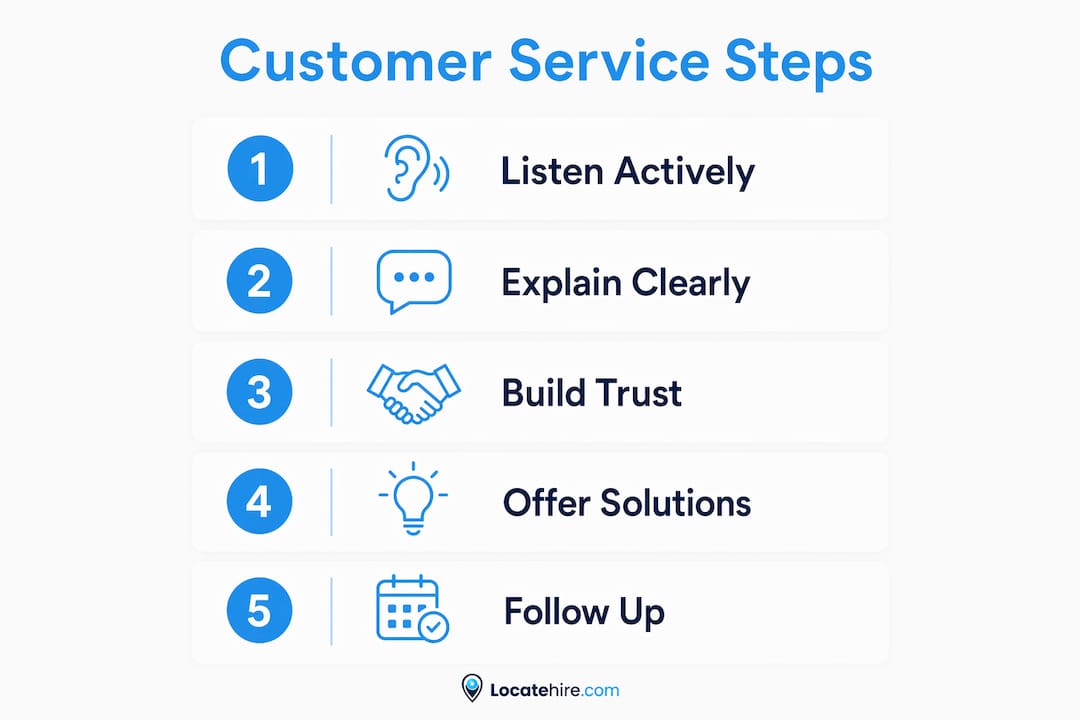
93% of homeowners read reviews before choosing a contractor. That means the review a technician earns on Tuesday afternoon determines whether your phone rings on Wednesday morning. One poor interaction can erase months of good work.
The business outcomes tied to technician client interactions include:
- Repeat bookings. Customers who feel respected and informed are far more likely to call the same company for their next maintenance visit or system replacement.
- Referrals. A homeowner who says "the tech explained everything clearly" tells their neighbor. Word-of-mouth from a positive service call costs nothing and converts at a high rate.
- Fewer disputes. Technicians who narrate their inspection steps prevent customers from perceiving fees as opaque. Transparent communication reduces invoice disputes before they start.
- Upsell acceptance. A customer who trusts the technician's judgment is more likely to approve a recommended part replacement or maintenance agreement on the spot.
Preventive maintenance agreements act as insurance policies for equipment warranties and provide priority emergency responses. Technicians who explain this value clearly during a service call convert one-time customers into long-term contract clients. That shift changes your revenue model from unpredictable to recurring.
What are best practices for training HVAC technicians in customer service?
Training customer service skills requires a different approach than technical training. You cannot teach empathy with a manual. The most effective programs combine structured practice with real-world accountability.
-
Go beyond onboarding. One-time orientation training fades within weeks. Schedule quarterly customer service refreshers that address real complaints your team has received. Use actual negative reviews as training material.
-
Run role-play scenarios. Pair technicians and have one play an angry customer whose system failed during a heat wave. The other must de-escalate, diagnose, and explain the repair plan. Discomfort in practice prevents failure in the field.
-
Give technicians decision-making authority. A tech who must call the office to approve a $50 goodwill gesture looks powerless to the customer. Empower field staff to waive a diagnostic fee or offer a discount within a defined limit. That autonomy produces faster resolutions and better reviews.
-
Model the behavior from the top. Leadership modeling of respect internally influences customer service culture externally. If managers treat technicians with impatience, technicians mirror that behavior with clients. The culture you build inside your company shows up at every front door your team knocks on.
-
Incorporate customer-focused selling into every call. Train technicians to present repair options as choices, not directives. "You have two options here" gives the customer control and increases acceptance rates.
Pro Tip: When reviewing HVAC job posting descriptions, include soft skill requirements explicitly. Candidates who see "strong communication skills required" self-select more accurately, saving you training time on the wrong hires.
Hiring for character over technical skill produces technicians who deliver genuine empathy that cannot be easily trained after the fact. Technical skills are teachable. Genuine care for customers is not. Screen for it at the hiring stage, not after a complaint arrives.
How does transparent communication during service calls build customer trust?
A standard residential HVAC service call lasts 45 to 60 minutes, including inspection and written diagnosis, with diagnostic fees typically ranging from $65 to $150. Customers who do not understand what happened during those 45 minutes often feel the fee was unjustified. Narrating the process eliminates that perception entirely.
The inspection sequence a technician should explain out loud includes:
- Visual inspection. "I'm checking for obvious damage, corrosion, or debris that could affect airflow or connections."
- Electrical testing. "I'm testing voltage and amperage to confirm your capacitor and contactor are within spec."
- Refrigerant analysis. "I'm checking refrigerant pressure to see if your system is running at the right charge level."
Each of these narrated steps transforms the diagnostic fee into a perceived consultation. The customer is no longer paying for a stranger to poke around their equipment. They are paying for a professional to walk them through a structured assessment.
Viewing service agreements as wellness plans rather than break-fix contracts improves client trust and long-term relationships. A technician who frames a maintenance agreement this way during a service call positions your company as a health partner for the home, not just a repair vendor. That framing changes the entire client relationship.
Regular commercial maintenance programs reduce unexpected system breakdowns by up to 75% and cut repair costs by 30%. When a technician communicates this data to a commercial client during a service visit, the maintenance agreement practically sells itself.
| Communication action | Customer outcome |
|---|---|
| Narrate inspection steps aloud | Customer understands the value of the diagnostic fee |
| Explain repair options as choices | Customer feels in control and accepts repairs faster |
| Frame maintenance as a wellness plan | Customer sees long-term value and signs service agreements |
| Call ahead when running late | Customer feels respected and rates the visit more positively |
| Repeat back the customer's concern | Customer feels heard before the work begins |
Key takeaways
HVAC technicians who combine technical skill with clear, transparent communication directly drive customer retention, online reputation, and recurring revenue for their companies.
| Point | Details |
|---|---|
| Soft skills drive retention | Empathy and plain-language explanations keep customers coming back more reliably than technical skill alone. |
| Reviews depend on technician behavior | 93% of homeowners read reviews first, making every service call a direct input to your company's online reputation. |
| Narrate the inspection | Walking customers through each diagnostic step turns a $65–$150 fee into a perceived consultation, reducing disputes. |
| Hire for character | Genuine empathy cannot be trained after the fact; screen for it during the hiring process. |
| Training must be ongoing | Quarterly role-play scenarios and real complaint reviews outperform one-time onboarding programs. |
Why customer service is the real competitive edge in HVAC
I have watched HVAC companies with average technicians outperform technically superior competitors for one consistent reason: their field staff made customers feel valued. The repair itself was almost secondary.
The HVAC industry has spent decades focused on certifications, equipment knowledge, and diagnostic tools. Those things matter. But the companies winning market share in 2026 are the ones treating emotional intelligence as a core competency, not a soft afterthought. A technician who can explain a refrigerant issue in plain English, acknowledge a frustrated homeowner's stress, and present repair options clearly is worth more to your business than one who can diagnose faster but communicates poorly.
The uncomfortable truth is that most customer complaints are not about the repair. They are about feeling ignored, confused, or overcharged without explanation. Every one of those complaints is a communication failure, not a technical one. That means the fix is in your training program and your hiring criteria, not your equipment budget.
Competing for talent in 2026 means attracting candidates who already value client relationships. The companies that build this into their hiring process now will have a measurable advantage as the labor market tightens. Invest in the people who can do both: fix the system and win the customer.
— Jeff
How Locatehire helps HVAC companies hire for customer service
Finding HVAC technicians who combine technical ability with strong client communication skills is one of the hardest parts of running a service business.
Locatehire is an applicant tracking system built specifically for small businesses with ongoing hiring needs, including HVAC companies. It helps you screen candidates for the soft skills that drive customer satisfaction, not just the certifications that get equipment running. With Locatehire, you can build a consistent hiring process that filters for communication ability, empathy, and professionalism from the first application. When your HVAC hiring process is built around the traits that produce great customer experiences, every technician you add to your team strengthens your reputation.
FAQ
What is the role of customer service in HVAC technician work?
Customer service is the communication layer that makes technical repairs meaningful to clients. HVAC technicians who explain their work clearly, respect customer schedules, and handle complaints professionally drive repeat business and positive reviews.
What soft skills do HVAC technicians need most?
Active listening, plain-language explanations, and empathy under pressure are the most critical soft skills. Eagerness to help and calm communication are the defining traits that separate top-performing technicians from average ones.
How do HVAC technicians affect online reviews?
Technician behavior during service calls is the primary driver of customer reviews. Since 93% of homeowners read reviews before hiring a contractor, each interaction directly shapes whether your company earns new business.
How should HVAC companies train technicians in customer service?
Ongoing training works better than one-time onboarding. Quarterly role-play scenarios, real complaint reviews, and giving technicians onsite decision-making authority produce the fastest and most durable improvements in client satisfaction.
Why does transparent communication reduce invoice disputes?
When technicians narrate each inspection step out loud, customers understand what they are paying for. Explaining visual, electrical, and pressure checks transforms the diagnostic fee from an opaque charge into a clear, justified service.