

Certifications are the single most reliable proof of technical competence when hiring pool technicians. The role of certifications in hiring pool techs goes far beyond a line on a resume. Credentials like the Certified Pool Operator (CPO), issued through the Pool & Hot Tub Alliance (PHTA), verify that a technician understands water chemistry, chemical safety, and regulatory compliance. For pool service business owners, certifications cut screening time, reduce liability exposure, and justify higher pay scales. This guide breaks down exactly how certifications affect your hiring decisions, your bottom line, and your team's safety record.
How do certifications affect hiring decisions for pool techs?
Certifications function as an objective competency signal in a field where candidates routinely overstate their skills. A technician who claims to "know water chemistry" is making a subjective assertion. A technician holding a CPO credential has passed a 16-hour course and a written exam. That distinction matters when you are screening 20 applicants for two open routes.
The CPO certification is legally required in 24 states plus Washington, D.C. for maintaining public or semi-public aquatic facilities. That legal weight means a certified candidate arrives ready to work commercial accounts without triggering compliance violations on day one.
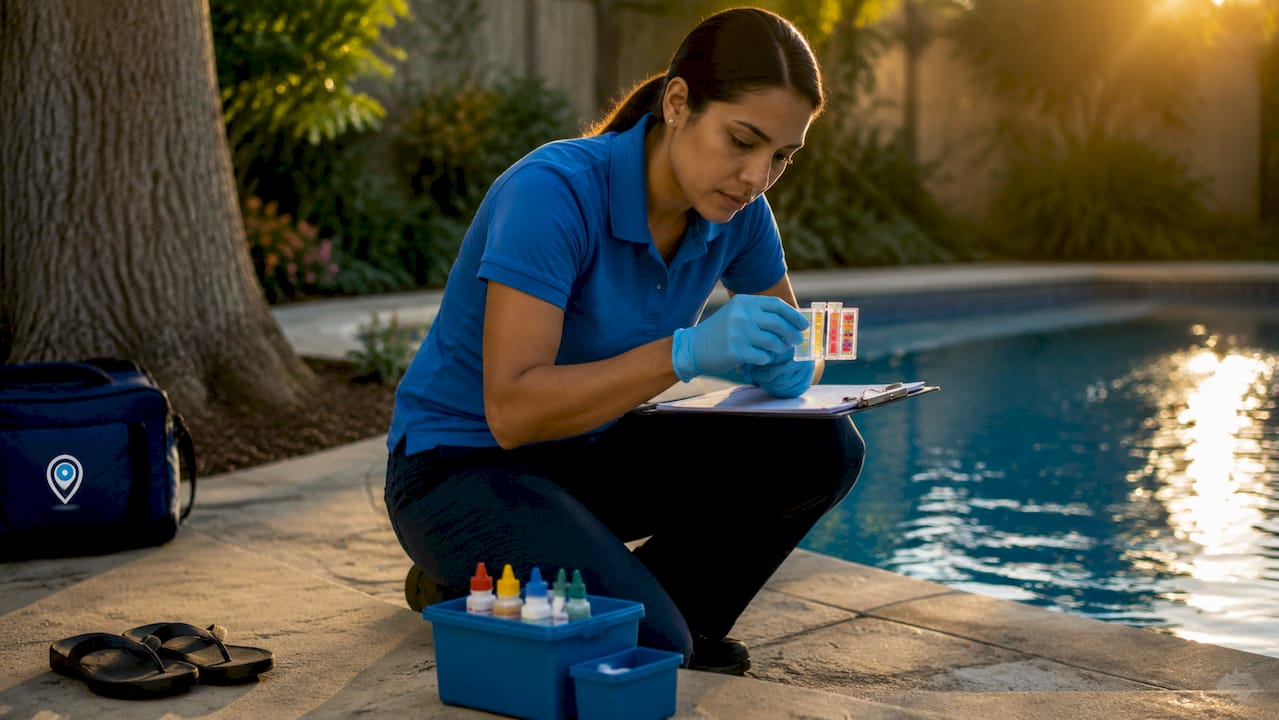
Certifications also reduce hiring risk in a measurable way. Organizations mandating certifications report a 70% competitive advantage rate versus 57% for those that do not require them. That gap reflects better employee performance, lower error rates, and stronger client retention.
Many pool service companies now require CPO certification within 60 days of hire as a screening mechanism. This policy filters out candidates who lack the motivation to complete a structured course. It also gives you a clear milestone to build your onboarding timeline around.
- Verified skill: CPO holders demonstrate tested knowledge of water chemistry and chemical handling, not just claimed experience.
- Compliance readiness: Certified techs can legally service commercial accounts in 24 states from day one.
- Turnover reduction: A 60-day certification requirement screens for motivation, weeding out low-commitment hires before they cost you training dollars.
- Pay scale clarity: Certification creates a defensible basis for tiered wages, reducing internal pay disputes.
Pro Tip: Post your job listings with a clear note that CPO certification or enrollment within 60 days is required. This single line filters your applicant pool before you read a single resume, saving hours of screening time. Locatehire lets you add custom qualification filters directly to your job postings.
What are the financial benefits of hiring certified pool technicians?
Certified technicians cost more per hour. They also generate more revenue per account. That math consistently works in favor of certification for pool service businesses with commercial contracts.
CPO-certified technicians earn $2–$4 more per hour than uncertified peers with comparable experience. Entry-level techs without certification typically earn $18–$24 per hour. CPO-certified techs operating independently earn $24–$32 per hour, with median annual pay around $48,000. In Sunbelt regions with year-round service demand, earnings run higher.
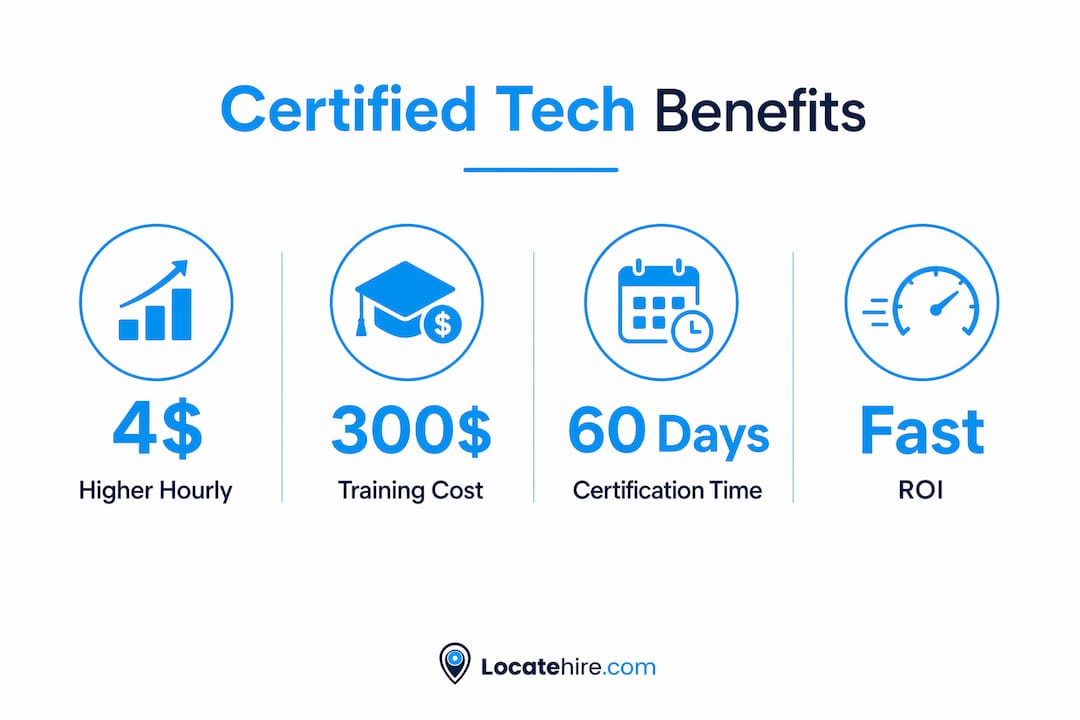
The wage premium pays for itself through account access. Certified status allows pool service operators to bid on and win commercial contracts at premium rates. Hotels, apartment complexes, and fitness centers require certified technicians by law in most states. Without certified staff, those contracts are simply unavailable to you.
| Technician type | Typical hourly rate | Annual earnings estimate |
|---|---|---|
| Entry-level, uncertified | $18–$24/hr | $37,440–$49,920 |
| CPO-certified, independent | $24–$32/hr | $49,920–$66,560 |
| Senior tech, Sunbelt market | $32+/hr | $66,560+ |
The return on certification training is fast. The PHTA CPO course costs approximately $300 and takes 16 hours to complete. A single commercial contract won because of certified staff can recover that cost within days. Many business owners pay the certification fee as part of onboarding and recoup it through a simple wage agreement tied to the 60-day milestone.
Pro Tip: If you cover the $300 CPO exam fee upfront, structure a simple agreement where the tech repays it if they leave within 90 days. This protects your investment and signals that the certification is a mutual commitment, not a gift.
How do certifications improve safety and reduce risk?
Chemical mishandling is the leading cause of preventable injuries in pool service work. Chlorine gas exposure, acid burns, and improper storage of oxidizers send technicians to emergency rooms every year. Certification programs address this directly through structured safety training.
Certification programs reduce workplace injuries by providing standardized protocols for chemical handling, storage, and emergency response. Certified techs statistically have fewer accidents. That record matters to your insurance provider and to your clients.
"Certifications serve as a critical risk-management tool beyond skill proof, reducing workplace accidents and chemical hazards in pool service. Certified technicians signal professionalism to insurance providers, directly lowering liability exposure for the businesses that employ them."
Legal exposure is the other side of this equation. In states where CPO certification is required for commercial pools, sending an uncertified tech to a hotel property is a compliance violation. That violation can result in fines, loss of contract, or worse, a liability claim if an incident occurs.
- Chemical safety training: CPO coursework covers safe handling of chlorine, muriatic acid, and other pool chemicals, reducing mishandling incidents.
- Regulatory compliance: Certified techs meet the legal standard in 24 states plus D.C. for commercial aquatic facility maintenance.
- Insurance signaling: Certified staff lower perceived liability risk, which can translate to better coverage terms.
- Client confidence: Commercial clients, especially in hospitality, require proof of certification before signing service agreements.
What are the gaps in certifications for residential pool techs?
The residential pool market has a significant blind spot. No widely recognized, standardized certification currently exists for residential pool technicians. This creates real problems for hiring managers trying to evaluate candidates for home service routes.
Without a residential standard, you are left comparing subjective experience claims. One candidate says they have "three years of pool experience." Another says they "know how to balance water." Neither claim is verifiable without a test or credential. This is where smart hiring policies fill the gap.
The most effective approach combines internal training with CPO requirements, even for residential-focused roles. Here is a phased onboarding structure that works:
- Week 1–2: Pair the new hire with an experienced tech on basic maintenance tasks. Skimming, brushing, filter checks, and equipment inspection come before chemistry.
- Week 3–4: Introduce water chemistry fundamentals with direct supervision. Let the tech test and adjust under guidance before working independently.
- Day 60: CPO certification deadline. The tech completes the course and exam. Passing unlocks independent route assignments and the associated pay increase.
- Month 3 onward: Assign progressively complex accounts, including pools with automation systems or specialty equipment.
Phased onboarding that moves from basic tasks to advanced water chemistry after certification reduces errors and builds genuine competence. It also gives you a clear observation window to assess a tech's reliability before they work solo.
Pro Tip: For residential hiring, treat the 60-day CPO requirement as your de facto residential standard. It does not perfectly map to home pool service, but it tests the water chemistry knowledge that matters most. Pair it with your internal route checklist and you have a defensible competency baseline.
The hiring challenges pool service companies face around residential techs are real, but a structured certification policy closes most of the gap. The key is consistency. Apply the same CPO requirement to every new hire regardless of whether their routes are commercial or residential.
Key Takeaways
Certifications are the most reliable hiring filter in pool service, validating technical skill, reducing liability, and unlocking commercial revenue that uncertified staff cannot access.
| Point | Details |
|---|---|
| CPO is the hiring standard | Require CPO certification or enrollment within 60 days for every new tech hire. |
| Wage premium pays off | Certified techs earn $2–$4 more per hour but generate higher revenue through commercial account access. |
| Safety and compliance | CPO certification is legally required in 24 states for commercial pools, reducing liability and injury risk. |
| Residential gap exists | No standardized residential credential exists; use CPO plus phased onboarding as your internal standard. |
| Certification screens motivation | A 60-day certification deadline filters out low-commitment candidates before they cost you training dollars. |
Certifications reveal more than skill
The conventional wisdom is that certifications prove competence. That is true, but it misses the more useful insight for hiring managers. Certifications reveal character.
A technician who completes a 16-hour CPO course within 60 days of hire while learning a new job, new routes, and a new team is showing you something about how they operate under pressure. They manage their time. They follow through on commitments. They invest in their own development. Those traits predict retention far better than any interview answer.
I have seen pool service businesses with identical pay scales and working conditions have wildly different turnover rates. The ones with lower turnover almost always have a formal certification requirement baked into their onboarding. The ones with high turnover hire on experience claims alone and wonder why techs leave after three months.
The other mistake I see regularly is treating certification as a one-time checkbox. The CPO credential is valid for five years before renewal. Build renewal tracking into your HR process. A tech whose certification lapses is a compliance risk on commercial accounts, and most business owners do not catch it until a client asks for proof of credentials.
The pool industry hiring season creates pressure to fill roles fast. That pressure tempts owners to skip the certification requirement for candidates who seem experienced. Resist it. The short-term convenience of a warm body on a route is not worth the long-term cost of a tech who cannot pass a basic water chemistry exam.
Use certifications as a career development ladder, not just a hiring filter. Techs who earn CPO and then pursue additional credentials in pool systems or electrical work become your most valuable employees. They are also the ones most likely to stay.
— Jeff
Locatehire helps you find certified pool techs faster
Finding certified pool technicians is harder than it should be, especially during peak hiring season when every service company is competing for the same small pool of qualified candidates.
Locatehire is an applicant tracking system built specifically for small service businesses with ongoing hiring needs, including pool service companies. You can filter applicants by certification status, set automatic qualification questions about CPO credentials, and track where each candidate stands in your 60-day certification timeline. Instead of sorting through unqualified resumes, you spend your time on candidates who already meet your standards. Post your next pool tech job on Locatehire and start building a certified team that can handle both residential and commercial accounts.
FAQ
What is the CPO certification and why does it matter for hiring?
The Certified Pool Operator (CPO) credential, issued by the Pool & Hot Tub Alliance, requires a 16-hour course and written exam costing approximately $300. It is legally required in 24 states plus Washington, D.C. for commercial pool maintenance and serves as the primary competency standard in pool service hiring.
Do certifications improve job prospects for pool technicians?
Yes. CPO-certified techs earn $2–$4 more per hour than uncertified peers and qualify for commercial accounts that uncertified technicians cannot legally service in most states.
Is there a certification for residential pool technicians?
No widely recognized residential pool technician certification currently exists. Most pool service businesses address this gap by requiring CPO certification within 60 days of hire, even for residential routes, as a baseline competency standard.
How does requiring certification reduce turnover?
Requiring CPO certification within 60 days screens out low-motivation candidates early in the employment cycle, before the business has invested heavily in training. Techs who complete the requirement on time consistently show higher retention rates.
How should I screen applicants for certification status?
Add a direct qualification question to your job posting asking whether the applicant holds a current CPO credential or is willing to obtain one within 60 days. Tools like applicant screening systems let you filter on this answer automatically, so only qualified candidates reach your review queue.