

Hiring mistakes small business owners make are the leading cause of costly employee turnover and lost productivity. 74% of employers admit to making a bad hire, and 80% of turnover traces directly back to poor initial hiring decisions. A single bad hire can cost up to 30% of that employee's first-year salary, with total damage reaching $150,000 when you factor in lost productivity, management time, and replacement costs. The good news is that most of these errors are not judgment failures. They are process failures, and process problems have process solutions.
1. What are the top hiring mistakes small business owners make?
The most damaging small business hiring errors share one root cause: a process that feels normal but produces bad outcomes. Owners often treat hiring as a one-time event rather than a repeatable system. That mindset creates the same mistakes over and over.
Skipping a structured intake call. Before you post a single job ad, you need a clear picture of what success looks like in the role. Employers who skip this step routinely waste two weeks sourcing candidates who were never right for the job. A 30-minute intake conversation with the hiring manager prevents that entirely.

Writing vague job descriptions. A job posting that lists duties instead of outcomes attracts the wrong applicants. Outcome-based descriptions, such as "manage 15 service routes with zero missed appointments," give candidates a real test of fit before they apply. For a deeper look at where most owners go wrong here, the common job posting mistakes guide covers the most frequent errors in detail.
Rushing the process under pressure. An IBM study found that speed-prioritized hiring increases mistakes by 11%. When a technician quits on a Friday and you need someone Monday, the pressure to fill the seat fast overrides good judgment. That urgency is exactly when process discipline matters most.
Relying on gut feelings. Gut-based hiring is not intuition. It is pattern-matching on irrelevant signals like appearance, accent, or shared interests. Standardized behavioral questions and evidence-based scoring remove that noise and produce more consistent results.
Skipping reference and background checks. Owners in trades like HVAC, electrical, and plumbing often skip this step to save time. A single reference call asking behavioral questions, such as "Tell me about a time this person handled a difficult customer," reveals more than a full interview.
Ignoring candidate experience. Slow responses, unclear timelines, and disorganized interviews push qualified candidates to accept other offers. Candidate experience directly affects your ability to close the people you actually want.
Pro Tip: Set a 48-hour response rule for every applicant. Candidates who hear back within two days are far more likely to stay engaged through your full process.
2. How do hiring mistakes financially impact small businesses?
The financial cost of a bad hire goes well beyond the obvious. Most owners calculate the direct cost: recruiting fees, job board spend, and onboarding time. Few calculate the indirect cost, and that is where the real damage hides.
A bad hire costs between $30,000 and $150,000 depending on the role and seniority level. That range accounts for lost productivity, manager time spent covering gaps, training investment, and the cost of starting the search over. For a small business running on thin margins, one bad hire in a client-facing role can wipe out months of profit.
| Cost Category | What It Includes |
|---|---|
| Direct recruiting costs | Job ads, screening time, background checks |
| Onboarding and training | Time spent training someone who leaves early |
| Lost productivity | Output gap while the role sits unfilled or underperforms |
| Manager time | Hours spent managing, coaching, or covering a bad hire |
| Customer impact | Lost accounts or damaged reputation from poor service |
| Replacement cost | Starting the entire search over from scratch |
The productivity drain is often invisible. When a pool service technician underperforms, the owner or a senior tech absorbs the extra routes. That hidden labor cost never appears on a P&L, but it compounds fast. A hiring budget plan that accounts for these indirect costs gives you a more honest picture of what bad hires actually cost your business.
Poor hires also create a vicious cycle. One bad hire lowers team morale. High performers notice and start looking elsewhere. You lose your best people because of someone you should never have hired. That secondary turnover is the most expensive consequence of all.
3. What evidence-based hiring practices prevent these mistakes?
Structured hiring is the single most effective fix for avoiding recruitment mistakes. The research is clear: unstructured interviews are 50% less predictive of job performance than structured ones. That gap is not small. It means your gut-based interview is essentially a coin flip.
Here is how to build a structured process that works for a small business:
- Write outcome-based job descriptions. Define what the person needs to accomplish in 30, 60, and 90 days. Map those outcomes to three to five core competencies the role requires.
- Build a consistent question set. Every candidate for the same role answers the same questions in the same order. This makes comparisons honest and defensible.
- Use a standardized scorecard. Rate each competency on a defined scale with behavioral anchors. "Meets expectations" means nothing. "Resolved a customer complaint without manager involvement" means something.
- Require evidence for every rating. If an interviewer scores a candidate a 4 out of 5 on communication, they must cite a specific example from the interview. No evidence, no score.
- Run a synchronous debrief within 24 hours. Live debrief discussions surface objections and concerns that written feedback consistently misses. One strong objection from a credible interviewer should carry real weight.
- Conduct targeted reference checks. Ask references behavioral questions, not "Was this person a good employee?" Ask instead, "Describe a situation where this person had to manage a difficult deadline."
Pro Tip: Treat your scorecard as a living document. After each hire, note which competencies predicted success and which did not. Adjust the scorecard every six months based on what you learn.
4. Which subtle pitfalls do small business owners often overlook?
Beyond the obvious process gaps, several less visible mistakes quietly undermine hiring quality. These are the errors that feel like good decisions at the time.
Overweighting resumes and pedigree. A candidate with ten years of experience at a large company often struggles in a small business environment where they must follow systems, adapt quickly, and work without support staff. Process fit, meaning the ability to follow documented procedures, communicate clearly, and adapt to constraints, predicts success in small businesses far better than tenure or employer name.
Neglecting compensation benchmarking. Outdated salary data causes two problems at once. You lose candidates to competitors offering market rates, and you create internal equity issues when existing employees discover the gap. Check market rates at least once a year, especially in trades where labor markets shift fast.
Failing to set clear role boundaries. Owners often hire without defining working hours, budget authority, or decision-making limits. New employees then either overstep or underperform because no one told them where the lines were. Write these boundaries into the offer letter, not just the onboarding conversation.
Underestimating ramp-up time. A new HVAC technician or retail associate does not hit full productivity on day one. Many small business owners don't document internal processes before hiring, which leaves new employees guessing at how things work. A written onboarding checklist covering the first 30 days cuts ramp-up time significantly.
Hiring for cultural fit instead of cultural contribution. Hiring people who think exactly like you feels safe. It produces teams that are comfortable but stagnant. Look for candidates who share your core values but bring different perspectives and problem-solving approaches.
5. How can small business owners redesign their hiring process?
Building a repeatable hiring process does not require an HR department. It requires clarity, documentation, and a commitment to running the same steps every time. Here is how to build one that works for a lean operation.
Start with a captured intake call before you source anyone. Spend 30 minutes with whoever will manage the new hire. Define the top three outcomes the role must deliver in the first 90 days. That conversation shapes everything downstream, from the job post to the interview questions.
Write outcome-based job descriptions and post them where your candidates actually look. For trades and service businesses, that often means local job boards, industry-specific sites, and referral programs, not just general platforms. A well-written post filters out poor fits before they apply, which saves screening time.
Set internal deadlines for every stage of the process. Decide in advance how many days you will spend sourcing, how many candidates you will interview, and when you will make a decision. Deadlines reduce candidate drop-off and force disciplined decision-making. A structured small business hiring process also signals professionalism to candidates, which improves your offer acceptance rate.
Track quality of hire after the fact. Measure 90-day retention, performance ratings at six months, and manager satisfaction scores. These metrics tell you whether your process is working or just feeling like it is working. Run a six-month retrospective on every hire to identify what the process got right and what it missed.
Key Takeaways
The most costly hiring mistakes small business owners make are process failures, not judgment failures, and fixing the process is the fastest path to better hires and lower turnover.
| Point | Details |
|---|---|
| Process beats intuition | Structured interviews are 50% more predictive than unstructured ones. |
| Bad hires are expensive | A single poor hire can cost between $30,000 and $150,000 in total damage. |
| Speed is a liability | Rushing the hiring process increases mistakes by 11%, per IBM research. |
| Pedigree misleads | Process fit predicts small business success better than resume credentials. |
| Retrospectives matter | Six-month post-hire reviews reveal systemic issues that gut checks never catch. |
What I've learned from watching small businesses hire the same way twice
The pattern I see most often is not ignorance. It is urgency. An owner loses a technician, a cleaner, or a retail associate, and the pressure to fill the seat immediately overrides every good intention. They skip the intake call, post a vague job description, interview two people in one afternoon, and hire the one who seemed friendlier. Six weeks later, they are starting over.
The second pattern is the delayed exit. Rushing a hire and delaying an exit is the most common one-two punch that disrupts small business teams. Owners know a hire is not working within the first 30 days. They wait three months to act because the conversation feels hard. Meanwhile, the rest of the team absorbs the slack and starts to resent it.
What actually works is treating hiring as a system you improve over time, not a problem you solve once. The owners who hire well are not smarter. They are more disciplined. They run the same intake call every time. They use the same scorecard. They debrief within 24 hours. And they review every hire at six months to ask what the process missed. That discipline compounds. Each hire gets a little better than the last.
Patience upfront is the cheapest investment you can make. Two extra weeks to find the right person costs far less than six months managing the wrong one.
— Jeff
Locatehire helps small businesses hire with a process, not a prayer
Small business owners in pool service, janitorial, HVAC, electrical, plumbing, and retail deal with ongoing hiring needs that never stop. One-off hiring decisions made under pressure produce one-off results. Locatehire is built for exactly this kind of operation.
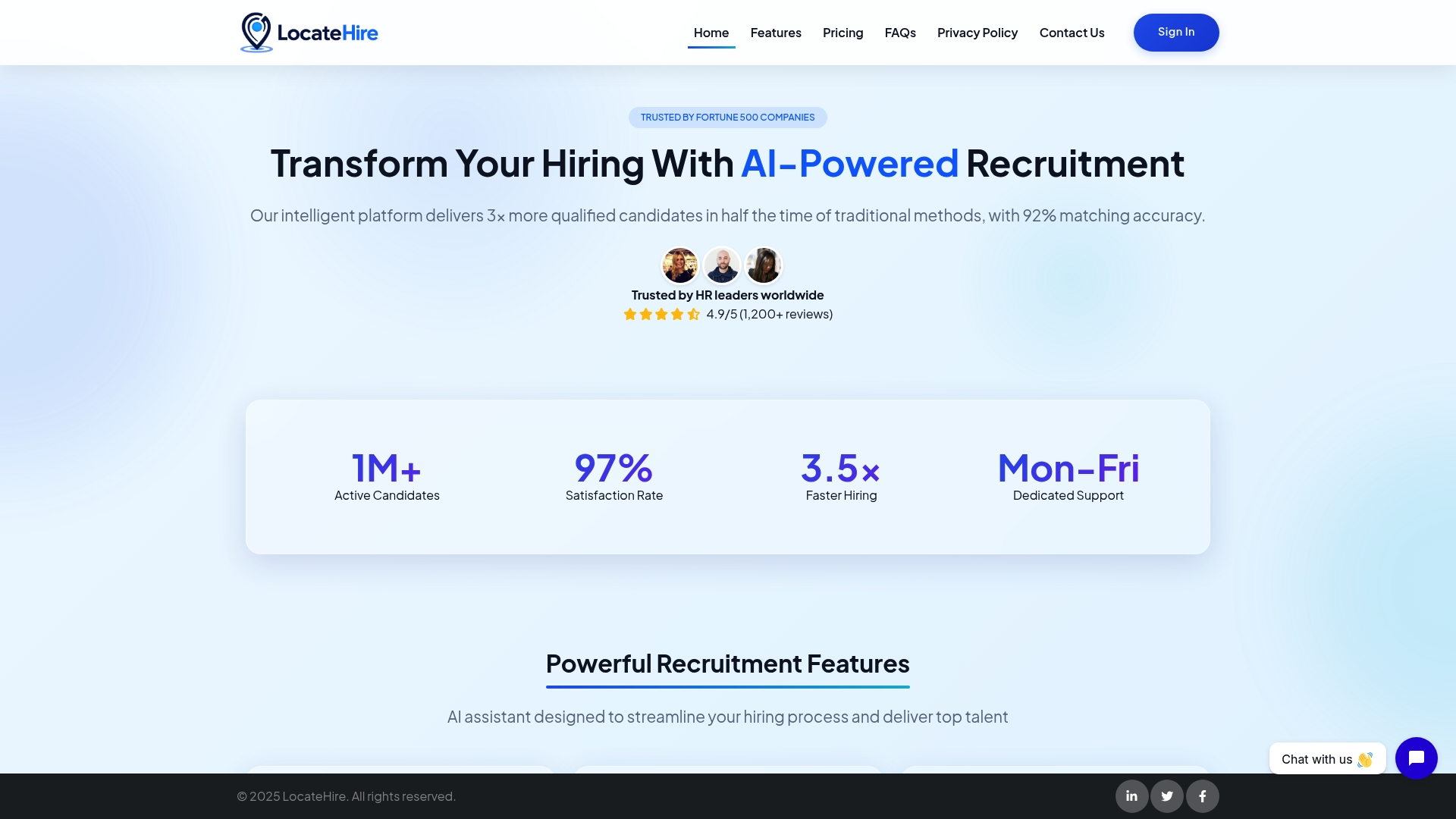
Locatehire gives you the tools to manage candidate flow from first application to hire, with structured interview features that reduce bias and save time. You get visibility into where candidates drop off, which sources produce your best hires, and how your team performs after onboarding. No dedicated HR team required. If you want to stop repeating the same small business hiring errors, Locatehire gives you the process to do it right the first time.
FAQ
What is the most common hiring mistake small business owners make?
Rushing the hiring process is the most common error. An IBM study found that speed-prioritized hiring increases mistakes by 11%, and the resulting turnover costs far more than a slower, structured search would have.
How much does a bad hire cost a small business?
A bad hire costs between $30,000 and $150,000 in total damage, including lost productivity, manager time, training investment, and replacement recruiting costs.
Do structured interviews actually make a difference?
Structured interviews are 50% more predictive of job performance than unstructured ones. Using consistent questions and a standardized scorecard removes bias and produces more reliable hiring decisions.
How do I know if my hiring process is working?
Track 90-day retention rates and run a six-month retrospective on every hire. These metrics reveal whether your process is selecting the right people or just the most available ones.
What is process fit and why does it matter?
Process fit refers to a candidate's ability to follow documented systems, communicate clearly, and adapt to constraints. For small businesses, process fit predicts job success more reliably than resume credentials or years of experience.