

The plumbing industry labor crisis comes down to four converging forces: a retirement wave draining experienced workers, a shrunken training pipeline, a cultural bias toward four-year degrees, and demand that keeps climbing. The result is a structural deficit that won't self-correct without deliberate employer action.
- A LIXIL-commissioned study projects a very large number of unfilled plumbing positions by 2027, constraining economic growth across nearly every U.S. sector.
- The Bureau of Labor Statistics projects many annual openings for plumbers, pipefitters, and steamfitters, with multi-year training timelines required to reach full competency.
- HBI's Construction Labor Market Report documents persistent shortages and long average time-to-fill for plumbing roles, placing direct operational strain on contractors.
For owners, the bottom line is immediate: the talent pool is shrinking faster than the industry is replenishing it, and companies that don't change how they recruit and retain will keep losing work to the shortage.
Key Takeaways
The plumbing workforce shortage is structural, driven by demographics, a depleted training pipeline, and cultural bias, and it requires both immediate hiring fixes and long-term pipeline investment to resolve.
| Point | Details |
|---|---|
| Scale of the shortage | Roughly 550,000 unfilled plumbing positions are projected by 2027, per the LIXIL "Blocked Pipes" study. |
| Root causes | Retiring workforce, shrunken CTE pipeline, college-first stigma, and rising demand all compound simultaneously. |
| Highest-leverage quick action | Rewrite job posts to lead with paid training and tech complexity; this alone changes applicant quality. |
| Flexible entry models work | Competency-based and accelerated training routes fill roles faster than relying solely on four-year apprenticeships. |
| Locatehire's role | AI matching, smart scoring, and job distribution help small plumbing companies reduce time-to-fill and improve hire quality. |
Table of Contents
- Why plumbing companies face a skills shortage: the root causes
- How the shortage hits your business right now
- Why training and entry routes aren't keeping up
- What plumbing companies can do to recruit and retain technicians
- What trade associations and public programs are doing
- Short-term fixes vs. long-term pipeline investments
- Diversity and inclusion: an underused lever for the shortage
- What owners usually get wrong about fixing the shortage
- Locatehire helps plumbing companies hire faster and smarter
- Sources
Why plumbing companies face a skills shortage: the root causes
The causes of the plumbing skills gap are structural, not cyclical. They've been building for decades, and no single fix addresses all of them.
An aging workforce with no replacement wave
The single largest driver is demographics. A large cohort of experienced tradespeople is retiring, and experts attribute the shortage primarily to this dynamic: retirements are outpacing new entrants by a wide margin. Many master plumbers who entered the trade in the 1980s and 1990s are now in their 60s, and their exit takes decades of institutional knowledge with it.
A training pipeline that never recovered
The Great Recession gutted vocational education budgets. Schools cut Career and Technical Education (CTE) programs, enrollment dropped, and the capacity to train new plumbers shrank. That capacity has not yet recovered. The pandemic compounded the problem: hands-on apprenticeship training stalled, enrollment in trade programs fell further, and the cohort that should have entered the workforce in 2021 and 2022 arrived late or not at all.
The "college-first" cultural bias
High school counselors, parents, and institutional messaging have pushed four-year college as the default path for two generations of students. Trades carry a persistent stigma, even as plumbers routinely out-earn many college graduates in their first decade of work. That perception gap directly reduces the applicant pool for every plumbing company posting a job today.
Demand-side pressure and geographic mismatch
Post-recession construction growth, aging infrastructure requiring constant service, and a housing market that keeps adding units have all pushed demand up. Meanwhile, the skills deficit in plumbing is not evenly distributed. High-growth metros and Sun Belt states face acute shortages, while rural markets struggle with different constraints: fewer training programs and limited mobility incentives. Competition from HVAC, electrical, and other trades for the same pool of technically inclined workers makes the challenge in plumbing hiring even sharper.
How the shortage hits your business right now
The plumbing workforce shortage isn't an abstract industry statistic. It shows up in your dispatch queue, your margins, and your customer reviews.
Operational strain is the most immediate impact. When you can't staff a job, you either turn it down or push your existing crew into overtime. Burnout follows. Experienced technicians who carry the team start looking for employers who won't overload them, and the cycle accelerates.
Financial pressure compounds quickly. Wages for licensed plumbers have risen as companies compete for a shrinking pool. Higher labor costs flow into bid prices, which can price smaller shops out of commercial contracts. Margins compress even as revenue holds steady.
Quality and safety risks are the most serious long-term consequence. Rushed hiring, thin onboarding, and understaffed crews increase the probability of code violations, callbacks, and liability exposure. One failed inspection or water-damage claim can cost more than a year of recruiting investment.
- Longer lead times push customers to competitors.
- Overtime costs erode project margins.
- Inexperienced hires without structured mentorship create safety exposure.
- Turned-down work is revenue that never appears on your books.
The HBI data on long time-to-fill for plumbing roles confirms what most owners already feel: open positions stay open far longer than they should, and every week a role is unfilled has a measurable cost.
Why training and entry routes aren't keeping up
The barriers to entry in plumbing are real, and they slow the pipeline at every stage.
Time-to-competency is the most stubborn barrier. The BLS documents multi-year training pathways: most journeyman licenses require 4–5 years of apprenticeship plus passing a state exam. That timeline is a deterrent for career changers and younger workers who want faster returns on their training investment.
Apprenticeship capacity limits mean the system can't scale quickly even when demand is high. Programs have fixed cohort sizes, rigid schedules, and high dropout rates. A candidate who struggles with the classroom component of a traditional apprenticeship may be perfectly capable in the field, but the program structure doesn't accommodate that.
CTE funding variability creates geographic inequity. States with strong CTE investment produce more trade-ready graduates; states that cut those budgets a decade ago are still feeling the deficit. Federal CTE policy and funding changes affect program capacity in ways most individual employers can't control.
Here's a quick audit checklist for your local hiring environment:
- How many active apprenticeship programs operate within 50 miles of your shop?
- Does your state offer a pre-apprenticeship or accelerated entry pathway?
- Are local community colleges running plumbing or pipefitting courses?
- Does your state licensing board accept portfolio-based or competency-based assessment?
- Are there workforce development board grants available for employer-sponsored training?
If you answered "no" or "I don't know" to three or more of those, your local pipeline has structural gaps that recruiting tactics alone won't fix.
What plumbing companies can do to recruit and retain technicians
Knowing how to attract plumbing talent requires a different playbook than posting on job boards and waiting. Here's a prioritized approach.
-
Rewrite your job posts to lead with the tech. Modern plumbing involves diagnostics, water treatment systems, smart fixtures, and hydronics. Recruiting materials that foreground technical complexity and paid training attract younger applicants who want a skilled career, not just a job. Lead with what the work actually involves, then list the pay.
-
Offer flexible entry models. Don't require a journeyman license as a prerequisite for every role. Hire pre-apprentices, offer paid in-house training, and build a competency ladder that lets people earn their way up. Employers who add accelerated, competency-based routes fill roles faster and reduce dropout risk compared to those relying solely on traditional four-year programs.
-
Build a structured onboarding and mentorship program. Pair every new hire with a senior technician for the first 90 days. Set timed competency milestones. Use assessment-based promotion so technicians know exactly what they need to demonstrate to move up. A clear onboarding playbook for new techs reduces early turnover sharply.
-
Compete on total compensation, not just hourly rate. Pay bands matter, but so do scheduling predictability, tool allowances, paid training time, and a visible career ladder. Many technicians leave not because of pay but because they see no path forward.
-
Use recruitment technology to move faster. AI candidate matching, smart scoring, and automated job distribution cut the time between posting and first interview. Speed matters when qualified candidates are fielding multiple offers simultaneously.
-
Partner with local schools and workforce boards. Sponsor a CTE program, offer job shadows, or co-develop a pre-apprenticeship with a community college. These relationships take months to build but produce a consistent pipeline. Improving your online presence through plumber SEO services also increases organic applicant flow from candidates actively searching for trade careers.
Pro Tip: Instead of posting a generic "Plumber Wanted" ad, write a post titled "Paid Training + Career Path: Plumbing Technician." That framing alone changes who applies. Candidates who want a career, not just a paycheck, self-select in. Review the tactics for small plumbing shops for more specific language.
For retention, the highest-leverage actions are predictable scheduling, a skills development budget (even $500 per technician per year signals commitment), and a leadership track that turns your best field techs into mentors or lead technicians.
What trade associations and public programs are doing
Industry organizations and manufacturers have recognized the plumbing industry labor crisis and are responding, though the scale of their programs still falls well short of the projected shortfall.
- PHCC (Plumbing-Heating-Cooling Contractors Association) offers training and education resources including curriculum toolkits, apprenticeship program support, and workforce development advocacy. Owners can access these directly.
- PMI (Plumbing Manufacturers International) has backed research and outreach campaigns to raise awareness of trade careers among younger demographics.
- LIXIL's TradeUp and GIVE programs represent the manufacturer side: corporate-funded training support and workforce development initiatives. A Contractor Magazine analysis notes that expanding the plumbing workforce could generate substantial economic benefits for the U.S., which explains why manufacturers have financial incentives to invest in pipeline development.
Where the gaps remain: CTE funding is inconsistent across states, apprenticeship capacity takes years to scale, and most manufacturer programs reach only a fraction of the employers who need support. Owners who want to influence local conditions can engage their state workforce development board, join PHCC's advocacy efforts, and approach local high schools directly about job shadow or co-op programs. These aren't passive options; they're the most durable pipeline investments available.
Short-term fixes vs. long-term pipeline investments
Not every response to the skills deficit in plumbing requires a multi-year commitment. Here's how to prioritize by timeline.
- Days 1–30: Audit your current job posts using the guidance at how to create a plumbing technician job posting that works. Rewrite them to lead with tech complexity and paid training. Activate AI-powered candidate matching to increase applicant volume immediately.
- Days 30–90: Introduce a paid pre-apprenticeship or helper track. Patch immediate capacity gaps with temporary staffing while you build the pipeline. Review your onboarding process for early-turnover risks.
- Months 3–12: Launch a mentorship program. Revise compensation bands to include non-wage incentives. Form at least one partnership with a local CTE program or community college.
- Year 1 and beyond: Sponsor an apprenticeship cohort. Explore employer-led training center options with peer companies. Engage your state workforce board on CTE funding advocacy.
| Timeline | Owner Action | Expected Business Impact |
|---|---|---|
| 30 days | Rewrite job posts; activate AI matching | More qualified applicants, faster first interviews |
| 90 days | Launch paid helper/pre-apprentice track | Wider candidate pool, reduced time-to-fill |
| 6 months | Mentorship program + compensation review | Lower early turnover, stronger retention |
| 12 months | Local education partnership | Consistent entry-level pipeline |
| 2+ years | Apprenticeship sponsorship | Self-sustaining talent supply |
Diversity and inclusion: an underused lever for the shortage
The plumbing workforce is among the least demographically diverse in the skilled trades. Women represent a small fraction of working plumbers, and Hispanic, Black, and other minority workers are underrepresented relative to their share of the overall labor force. That's not just an equity issue. It's a capacity issue.
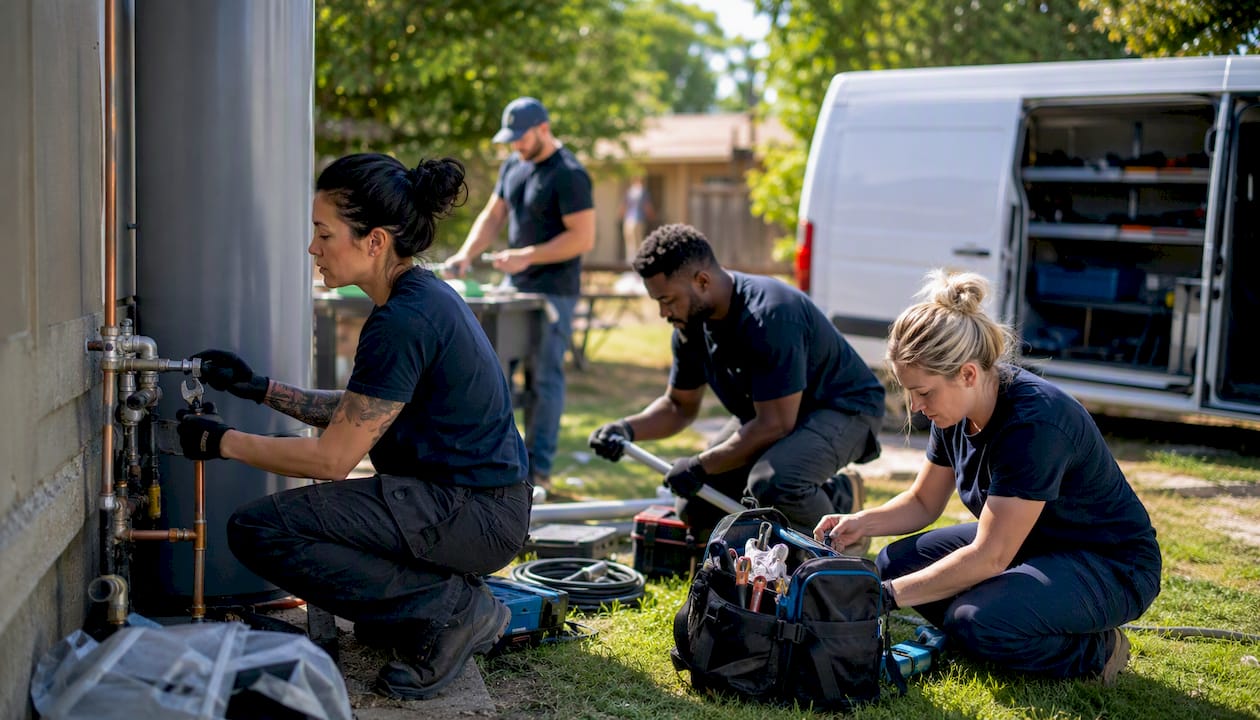
Employers who actively recruit from underrepresented groups access a larger candidate pool. Targeted outreach through community organizations, Spanish-language job postings, and partnerships with programs that serve women in trades (such as Nontraditional Employment for Women, or NEW) can materially increase applicant volume. Flexible scheduling and clear anti-harassment policies aren't just retention tools for diverse hires; they improve retention across the entire workforce.
The structural barriers are real: trade culture has historically been unwelcoming, and some candidates from underrepresented groups face additional licensing and financial hurdles. Employers who address those barriers directly, through paid training, mentorship matching, and transparent promotion criteria, build a competitive advantage that most shops haven't yet recognized.
What owners usually get wrong about fixing the shortage
The most common mistake is treating the skills deficit in plumbing as a job-board problem. Owners post on Indeed, get few qualified applicants, and conclude the talent doesn't exist. The talent exists. The recruiting message is wrong.
Most plumbing job posts lead with license requirements and years of experience. They read like a screening filter, not an opportunity. Younger workers and career changers, the two groups most likely to enter the trade, need to see what the work actually involves, what they'll earn while they learn, and where the career goes. A post that leads with "Paid Training + Career Path" outperforms a post that leads with "5 Years Experience Required" in nearly every market.
The second mistake is overrelying on traditional apprenticeship timelines as the only entry route. A four-year program is valuable, but it's not the only way to produce a competent technician. Employers who build modular, competency-based tracks can have a helper performing billable work within weeks and a fully licensed technician within two years rather than five.
Recruitment marketing also gets underinvested. Most small shops spend nothing on employer branding. A simple, well-maintained career page that shows real technicians, real pay ranges, and a clear career ladder does more for applicant quality than doubling the job-board budget.
Locatehire helps plumbing companies hire faster and smarter
Filling plumbing roles faster starts with a hiring process built for the pace and volume the shortage demands. Locatehire is an AI-powered applicant tracking system designed specifically for small service businesses, including plumbing companies with 5–50 employees that need to hire continuously, not just occasionally.
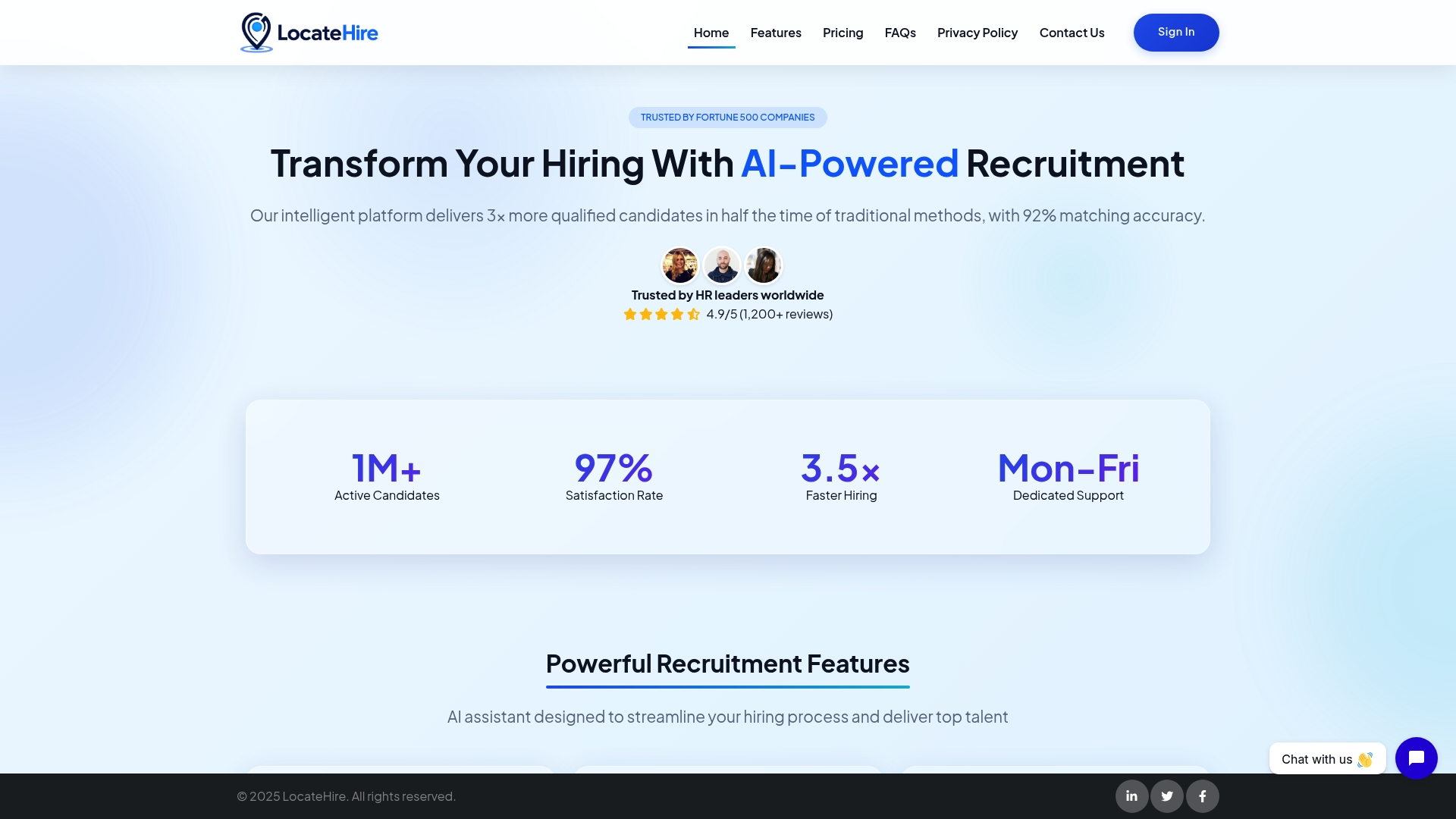
The platform maps directly to the problems this article describes. AI candidate matching and smart scoring cut the time between posting and first interview. Automated job distribution pushes your openings to major boards and social media simultaneously, increasing applicant volume without additional manual effort. Custom career pages let you present your paid training program and career ladder to candidates before they apply, which improves the quality of who comes through the door. Built-in assessments help you evaluate technical aptitude early, so you're not discovering fit problems after the first week on the job.
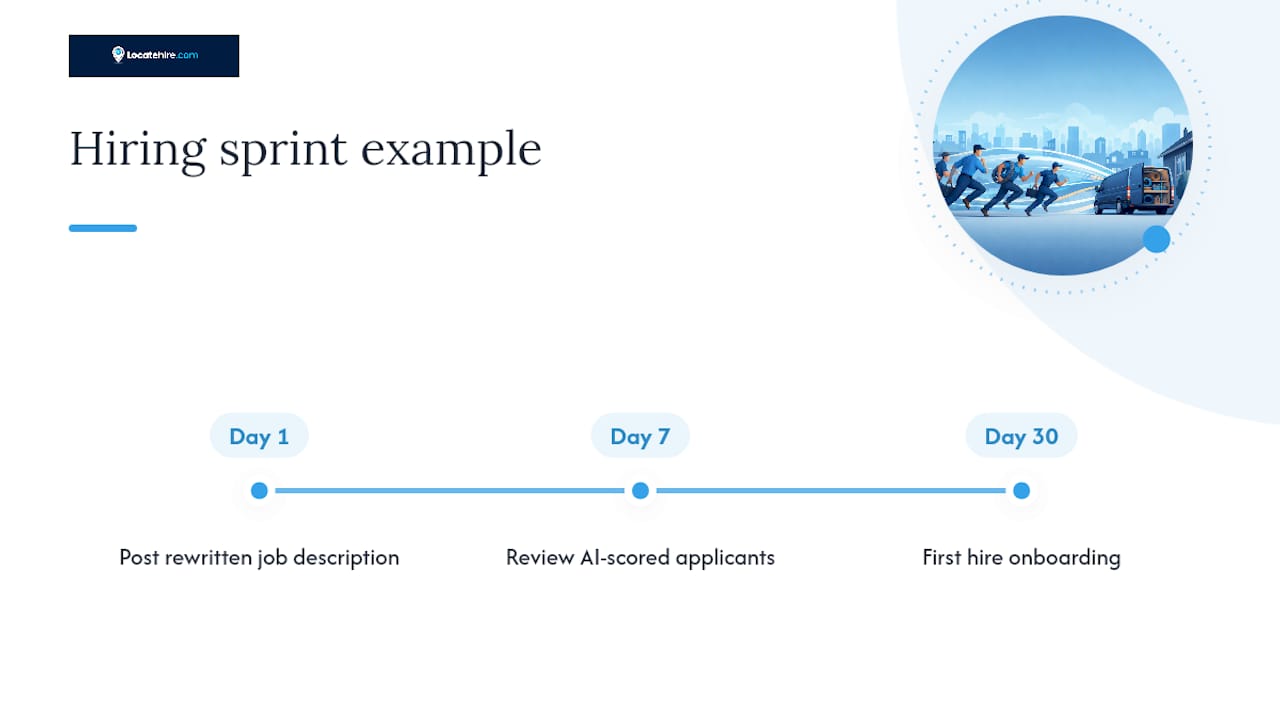
A small plumbing firm running a 7/30/60 sprint would use Locatehire to post and distribute a rewritten job description on day one, review AI-scored applicants by day seven, and have a first hire in onboarding by day thirty. The analytics dashboard tracks where applicants are coming from and which sources produce the best hires, so you can stop spending on channels that don't convert.
Start hiring smarter with Locatehire and reduce the time your roles stay open.
Sources
- Labor crisis: Why is there a shortage of plumbers and electricians? | The Hill
- Plumbers, pipefitters, and steamfitters — Occupational Outlook Handbook | BLS
- HBI Construction Labor Market Report