
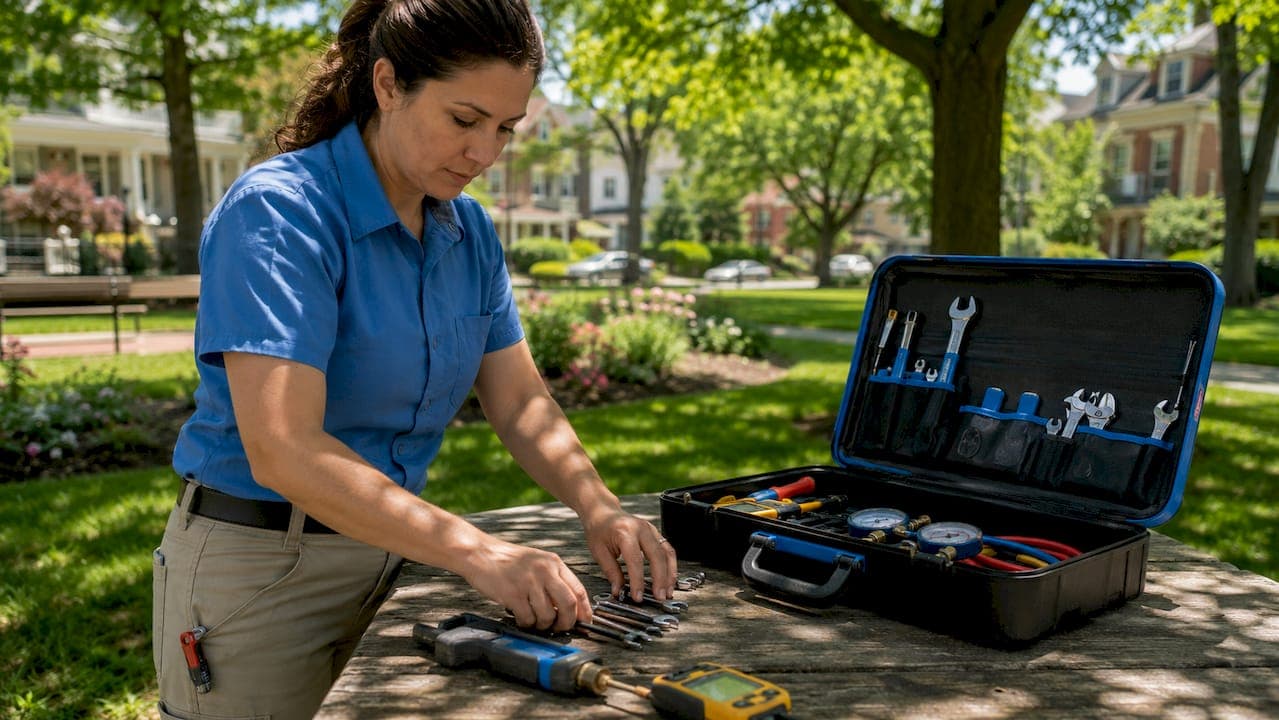
Tool ownership is a direct hiring variable in HVAC businesses, shaping which technicians apply, how long they stay, and how efficiently your operation runs. The role of tools ownership in HVAC hiring goes beyond a line item on a budget sheet. With annual tool depreciation running around $2,500 per technician, and legal exposure rising when policies change without warning, the decisions you make about tools affect your bottom line and your workforce. Industry standards draw a clear line between apprentice starter kits and journeyman allowances, and that distinction carries real consequences for recruitment, retention, and day-to-day operations. Locatehire works with small HVAC businesses that face these exact decisions every hiring cycle.
What are the common models of tool ownership in HVAC businesses?
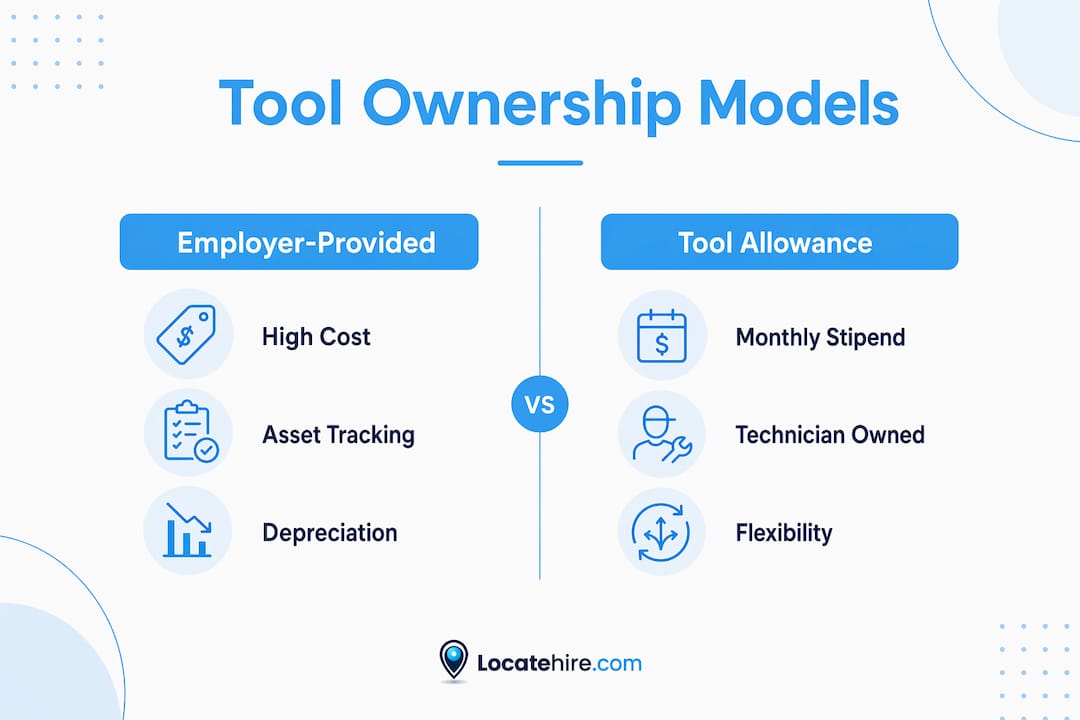
Two models dominate HVAC tool ownership: employer-provided tools and tool allowances. Each carries distinct cost structures, management demands, and effects on technician behavior.
Employer-provided tools
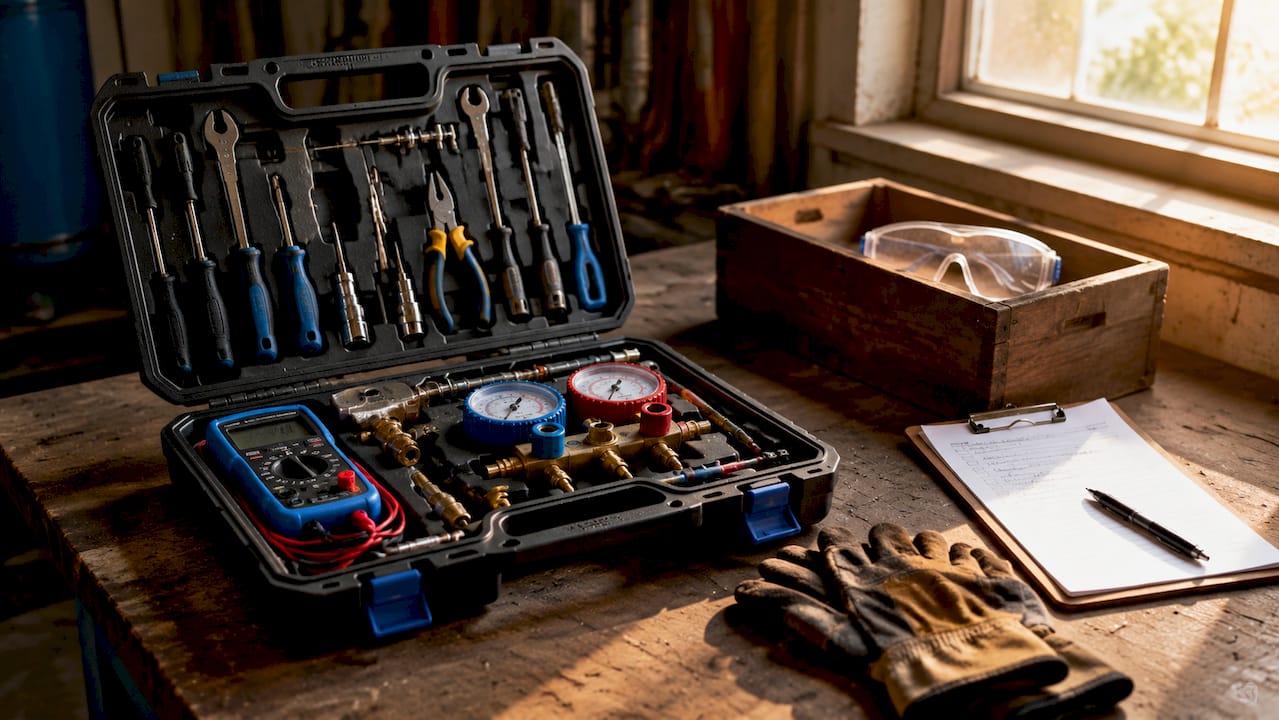
The employer purchases a full kit, tracks it as a company asset, and absorbs depreciation. This model works well for apprentices who lack the capital to buy their own equipment and need standardized tools to learn on. The downside is administrative overhead. Every wrench, manifold gauge set, and refrigerant scale must be logged, maintained, and replaced on the company's dime. Liability also shifts to the employer when tools are lost or damaged.
Tool allowances
The tool allowance model pays technicians a monthly stipend, typically $600–$900 annually for journeymen, and lets them buy and own their own equipment. Technicians treat personally owned tools with more care. That behavioral shift reduces replacement costs and cuts the administrative burden of asset tracking. For shops running four or more trucks, switching to allowances is a turning point that improves tool care and reduces overhead simultaneously.
| Feature | Employer-provided tools | Tool allowance model |
|---|---|---|
| Upfront cost | High (full kit purchase) | Low (monthly stipend) |
| Asset tracking | Required | Not required |
| Technician care | Lower (not personal property) | Higher (personal ownership) |
| Best fit | Apprentices, first year | Journeymen, experienced techs |
| Annual cost range | ~$2,500 depreciation | $600–$900 per technician |
| Legal risk on change | Low (established from hire) | Low if introduced correctly |
Pro Tip: Start apprentices on employer-provided starter kits valued around $1,200, then transition them to a monthly allowance once they reach journeyman status. This protects your equipment investment during the learning curve.
How does tool ownership affect hiring, retention, and technician performance?
Tool ownership policy is part of your total compensation offer, and skilled technicians evaluate it that way. Modern HVAC hiring treats tool quality and ownership structure as signals of company maturity. A business that provides up-to-date equipment or a fair allowance signals that it respects its workforce. One that hands a journeyman a worn-out kit and calls it a benefit sends the opposite message.
The financial math matters to technicians too. A $600–$900 annual tool allowance functions as post-tax compensation worth more than $1,500 in equivalent gross wages. That gap makes allowances a cost-effective retention lever compared to raising base pay. You get more retention value per dollar spent.
Tool quality also connects directly to work quality. Low-quality refrigeration tools increase callback rates and warranty repairs. Brands like Fieldpiece, Yellow Jacket, and Robinair deliver accurate diagnostics that protect your reputation and reduce rework costs. When technicians own their tools, they tend to invest in better equipment, which benefits your customers.
Key behavioral and operational impacts of tool ownership policy:
- Technicians with personal tool ownership take fewer sick days related to equipment failures on the job.
- Journeymen offered allowances report higher job satisfaction than those given employer-controlled kits.
- Apprentices given allowances too early show higher rates of tool misuse and equipment loss.
- Companies with clear tool policies attract more applicants when those policies appear in HVAC job postings.
- Senior technicians rank tool quality and reimbursement among their top three factors when choosing an employer.
Pro Tip: List your tool allowance or starter kit value in every job posting. Candidates compare total compensation packages, and a visible tool benefit sets you apart from employers who leave it vague.
What legal and contractual considerations apply to tool ownership changes?
Changing your tool ownership policy after hiring someone carries real legal risk. Unilateral mandates requiring technicians to suddenly purchase their own tools can constitute a constructive modification of pay. If the change conflicts with an existing employment contract or established industry custom, you may face wage claims or breach of contract actions.
Courts have sided with employees in cases where employers shifted tool costs without written agreement or adequate notice. The key legal principle is that what you've consistently provided becomes part of the implied employment terms. Changing those terms without consent creates exposure.
Legal experts recommend transparent communication and gradual policy transitions to avoid wage disputes. Written addenda to employment agreements, signed by both parties, are the safest path when modifying tool policies.
Legal do's and don'ts for HVAC business owners:
- Do document your tool ownership policy in writing before the first day of employment.
- Do use signed written addenda when changing an existing policy for current employees.
- Do give adequate notice, typically 30–60 days, before any policy shift takes effect.
- Do consult an employment attorney before mandating tool purchases for existing staff.
- Don't assume verbal agreements protect you from wage claims.
- Don't implement allowance cuts or tool-cost shifts as a disciplinary measure.
- Don't treat industry custom as irrelevant. Courts consider it when evaluating implied contract terms.
How to build a tool ownership strategy that supports scalable HVAC hiring
A well-structured tool ownership strategy reduces costs, supports hiring, and scales with your business. The framework below works for shops at any stage, from two trucks to twenty.
Set the right policy by experience level
Fund apprentice starter kits outright for at least the first year. A $1,200 kit is a controlled investment that prevents misuse and keeps quality consistent. Once a technician reaches journeyman status, transition them to a monthly allowance. That shift rewards growth, reduces your tracking burden, and gives the technician a financial stake in their own equipment.
Budget for depreciation and replacement
The fully loaded cost of an HVAC technician runs $120,000–$140,000 annually. Tools account for roughly $2,500 of that figure, assuming a full kit replacement every five years at $12,500. Build that number into your per-technician budget before you post a job. Surprises in tool costs often come from skipping this step.
Incorporate tool policy into your recruitment messaging
Tool benefits belong in your job descriptions, not buried in an onboarding packet. Candidates who see a clear tool allowance or starter kit offer in a posting are more likely to apply and more likely to accept an offer. Companies that compete for HVAC talent in tight labor markets use every compensation element as a differentiator, and tool policy is one of the easiest to communicate.
Use allowances as a retention lever
A tool allowance costs less than an equivalent base wage increase but delivers more perceived value because it is post-tax. Structuring it as a named benefit, rather than folding it into base pay, makes it visible and valued. Technicians who see a line item for "tool allowance" on their offer letter remember it. Those who receive the same amount buried in a salary number often don't.
Operational checklist for building your tool strategy:
- Define which tools the company provides versus which the technician owns.
- Set a clear transition point from starter kit to allowance, tied to certification or tenure.
- Track employer-owned tools with a simple asset log, even a spreadsheet, to prevent loss.
- Review allowance amounts annually against inflation and tool price changes.
- Include tool policy language in every employment agreement from day one.
Key takeaways
Tool ownership policy is one of the most cost-effective levers HVAC business owners have for improving hiring outcomes, reducing overhead, and retaining skilled technicians.
| Point | Details |
|---|---|
| Tool depreciation is a real cost | Budget $2,500 per technician annually for tool depreciation to avoid budget surprises. |
| Match policy to experience level | Provide starter kits for apprentices and shift journeymen to a $600–$900 annual allowance. |
| Allowances outperform wage hikes | A tool allowance delivers post-tax value worth more than an equivalent base pay increase. |
| Legal risk is real | Document tool policies in writing before hire and use signed addenda for any changes. |
| Tool policy belongs in job postings | Listing tool benefits in job descriptions increases applicant quality and offer acceptance rates. |
Why I think most HVAC shops get tool policy backwards
Most HVAC business owners I've seen either give everyone the same tool setup regardless of experience, or they wing it and deal with the fallout later. Both approaches cost more than a clear policy would.
The shops that get it right treat tool ownership as a career progression signal. Apprentices get a kit. Journeymen get an allowance. That structure tells technicians exactly where they stand and what they're working toward. It also protects the business during the first year when misuse risk is highest.
The allowance model surprises owners with how much goodwill it generates relative to its cost. A $75 monthly allowance feels significant to a technician because it's theirs. That same $75 folded into a paycheck disappears. The framing matters as much as the dollar amount.
The legal piece is where I see the most avoidable damage. Owners change tool policies without documentation and then face wage disputes that cost far more than the tools ever would have. Write it down. Get it signed. Do it before day one, not after a problem surfaces.
— Jeff
How Locatehire supports HVAC hiring and workforce management
Hiring HVAC technicians with the right expectations around tools, compensation, and job requirements starts with a clear and consistent process. Locatehire is an applicant tracking system built for small businesses with ongoing hiring needs, including HVAC, plumbing, electrical, and field service companies.

When you build a hiring process that includes tool policy from the first touchpoint, you attract better candidates and reduce early turnover. Locatehire helps you manage that process without the administrative overhead that slows small shops down. Visit Locatehire to see how it fits your operation.
FAQ
What is the standard tool allowance for HVAC journeymen?
The industry standard tool allowance for journeymen runs $600–$900 per year, typically paid as a monthly stipend. This amount covers routine tool replacement and maintenance costs that technicians would otherwise pay out of pocket.
Should HVAC employers provide tools to apprentices?
Employers should provide apprentice starter kits outright, valued around $1,200, for at least the first year. Giving apprentices a cash allowance too early increases the risk of misuse and equipment loss.
Can an employer legally require technicians to buy their own tools?
Requiring technicians to purchase their own tools after hiring can constitute a constructive modification of pay if it conflicts with prior agreements or industry custom. Written documentation and mutual agreement are required before changing any existing tool policy.
How does tool ownership affect HVAC technician retention?
A tool allowance functions as post-tax compensation worth significantly more than its face value in gross wages, making it one of the most cost-effective retention tools available to HVAC employers. Technicians who own their tools also report higher job satisfaction and take better care of their equipment.
Where should tool policy appear in the hiring process?
Tool policy should appear in the job posting, the offer letter, and the employment agreement. Candidates who see tool benefits listed upfront are more likely to apply and more likely to accept an offer when it arrives.