
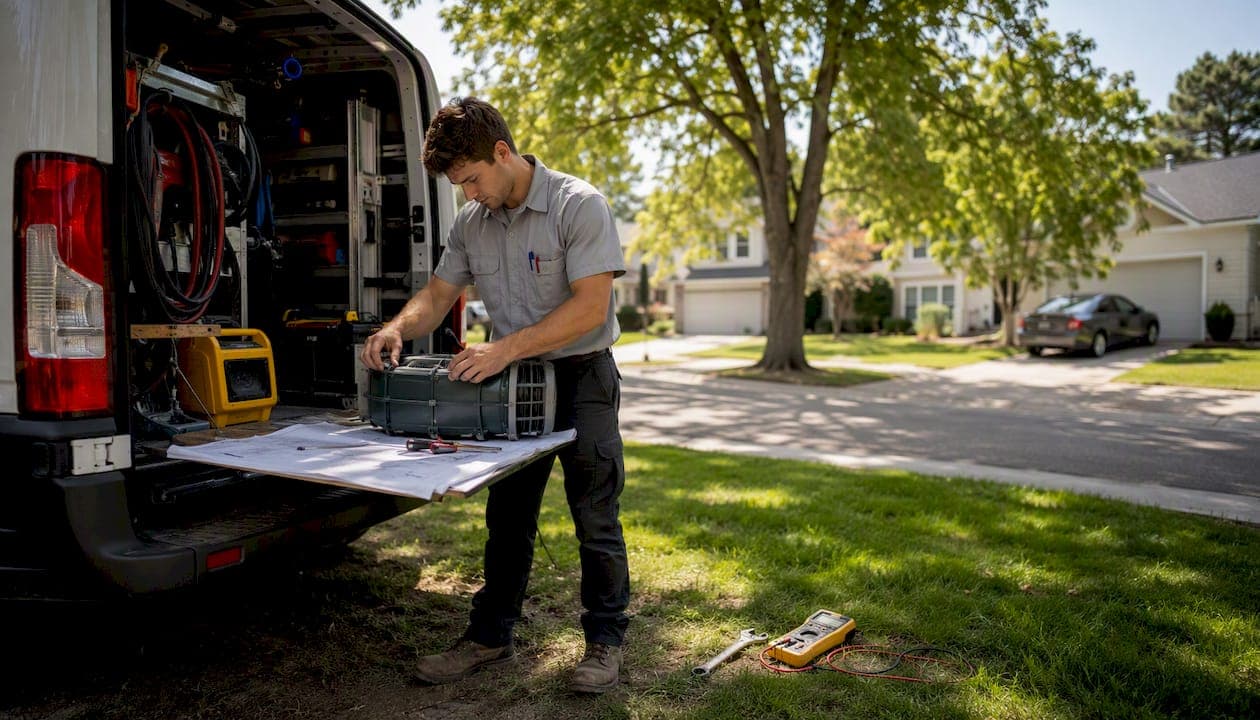
HVAC installation and service are two distinct career tracks: installers place and configure new systems, while service technicians diagnose, repair, and maintain existing equipment. If you prefer structured project work with a team, installation fits — see this HVAC Google Ads for Contractors guide for marketing insights aimed at HVAC contractors. If you like solving problems independently and working directly with customers, service is the better match. Both paths require EPA Section 608 certification for refrigerant handling, and the Bureau of Labor Statistics tracks both under the same HVAC occupational category. Understanding how HVAC installation differs from service roles is the first step to choosing the right path.
Table of Contents
- What installers do vs. what service technicians do
- Where you work and when: settings, schedules, and seasonality
- Skills and tools each role emphasizes
- Training paths, apprenticeships, and certifications in the U.S.
- Pay ranges, career progression, and the highest-paid HVAC roles
- Pros, cons, and a decision checklist for choosing installation or service
- What hiring managers look for and how candidates stand out
- Key Takeaways
- Which path would I actually recommend?
- Locatehire helps small HVAC businesses hire faster
- Useful sources and where to learn more
What installers do vs. what service technicians do
The day-to-day work looks very different between these two roles, even though both require core HVAC knowledge.
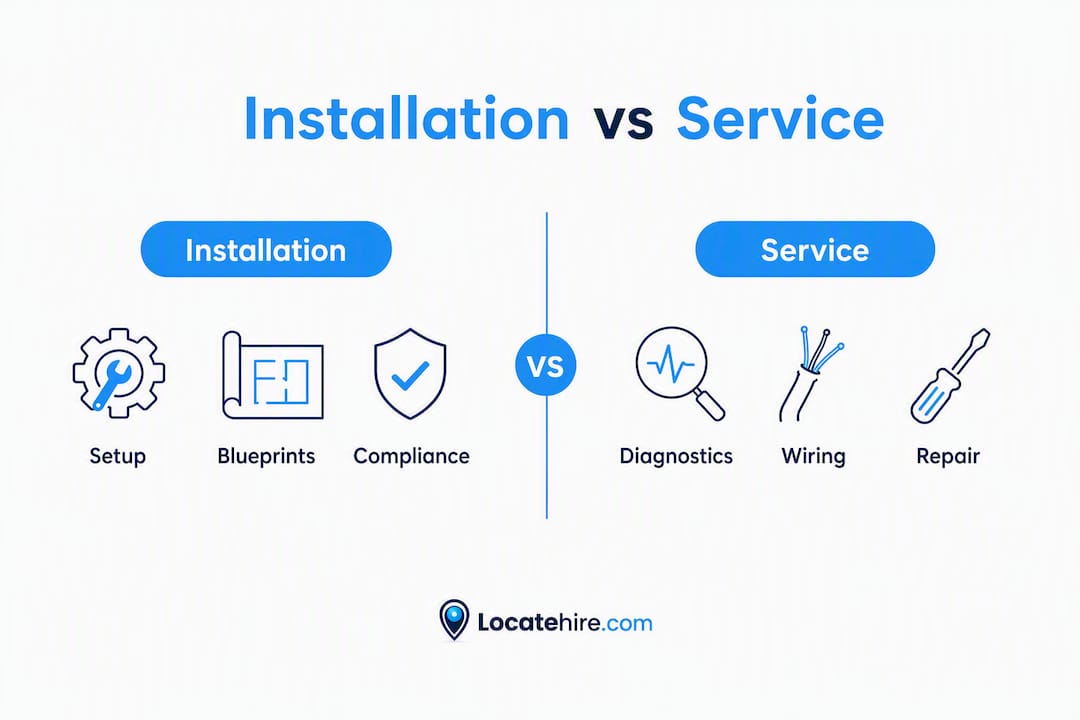
HVAC installers typically handle:
- Reading blueprints and laying out system designs on new construction or retrofit projects
- Cutting and hanging ductwork, mounting air handlers, condensers, and furnaces
- Running refrigerant lines, making electrical connections, and setting up controls
- Pressure-testing and commissioning new systems before handoff
- Coordinating with general contractors, electricians, and plumbers on job sites
HVAC service technicians typically handle:
- Diagnosing system failures using multimeters, manifold gauges, and diagnostic software
- Charging or recovering refrigerant and replacing failed components
- Performing scheduled preventative maintenance on active systems
- Troubleshooting across multiple brands and system types in a single day
- Communicating repair options and cost estimates directly to homeowners or facility managers
There is real overlap. Both roles handle basic maintenance tasks, and many professionals start in installation to learn system fundamentals before moving into service for higher pay and more variety. That progression is common enough that most experienced service techs have strong installation backgrounds.
Where you work and when: settings, schedules, and seasonality
Pro Tip: Before accepting an HVAC job offer, ask specifically whether the role is install-only, service-only, or mixed. The answer shapes your entire schedule and lifestyle.
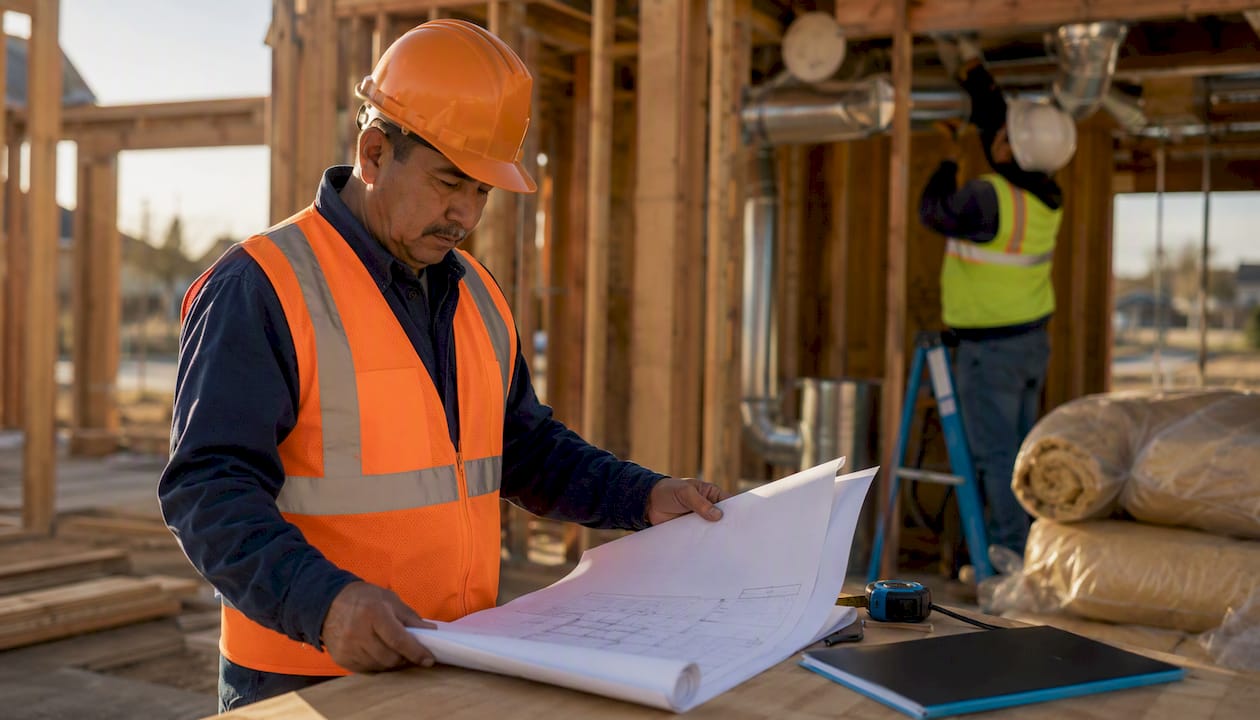
Installers spend most of their time on job sites: new residential construction, commercial builds, or planned retrofit projects. The work follows project timelines, which means predictable start times and defined end dates. You typically work alongside a crew, and the physical demands are high because you are moving heavy equipment, working in attics and crawl spaces, and spending long stretches on your feet.
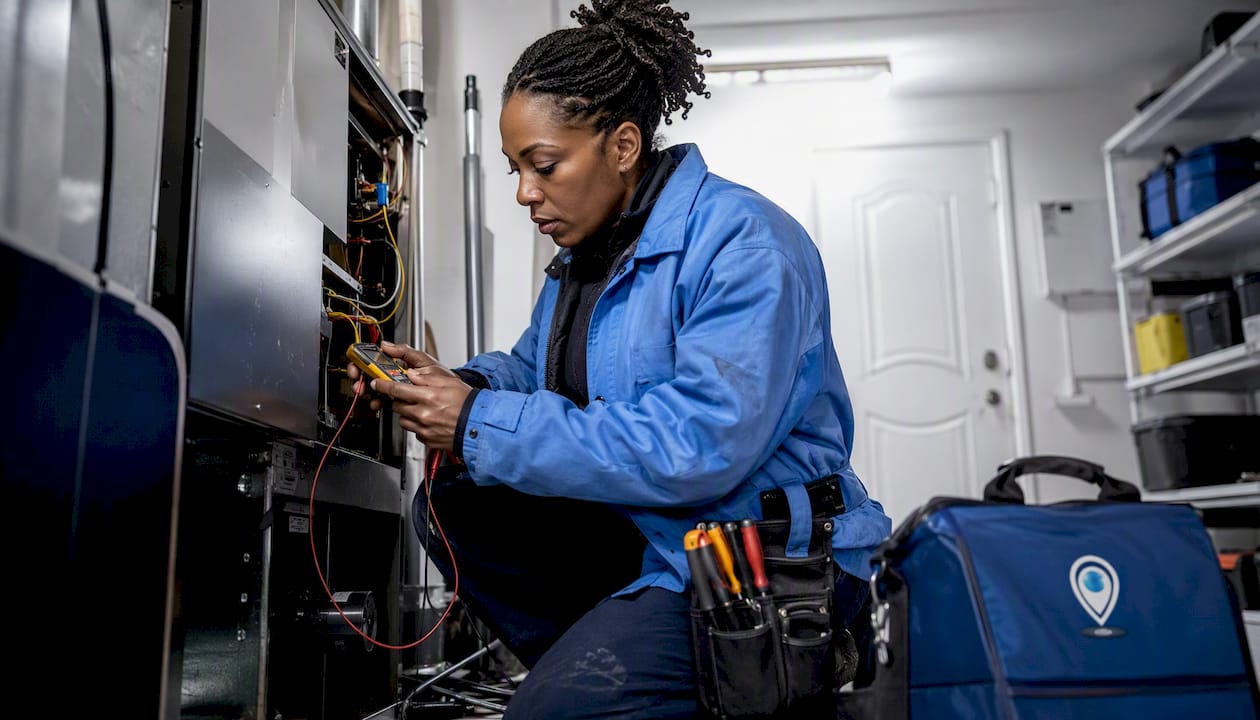
Service technicians work in occupied homes, apartment buildings, and commercial facilities. Their schedule is driven by customer calls, not project plans. During peak cooling and heating seasons, a service tech might run five to eight calls per day across different locations. On-call rotations are standard at most service companies, which means weekend and evening availability is often expected.
Service-focused businesses tend to offer steadier year-round work, while installation demand tracks housing starts and construction cycles. A slow construction market can cut installer hours significantly, while a heat wave generates immediate service call volume regardless of the economy. Geographic market matters too: high-growth metros with active building permits favor installers, while established suburban markets with aging equipment favor service.
Skills and tools each role emphasizes
The technical overlap is real, but each role sharpens a different set of abilities over time.
Installer-focused skills center on physical setup and code compliance. Blueprint reading is non-negotiable. You need to understand load calculations, duct sizing, and equipment placement before a single bolt goes in. Brazing and soldering copper refrigerant lines, safe rigging and lifting of rooftop units, and following local building codes are daily requirements. The primary tools are tin snips, sheet metal brakes, pipe benders, vacuum pumps, and torque wrenches.
Service technician skills lean heavily toward diagnostics and electrical systems. A service tech reads wiring diagrams, uses a digital multimeter to trace voltage and resistance problems, and interprets system pressures with manifold gauges. Service techs develop deeper expertise in electrical systems and complex troubleshooting across brands and system ages. Customer communication is also a genuine skill requirement: explaining a $2,400 compressor replacement to a homeowner is part of the job.
Cross-training pays off for both. An installer who understands diagnostics can validate a new system's performance without waiting for a service truck. A service tech who knows installation can spot a commissioning error that caused the failure in the first place. Employers actively prefer cross-trained workers because they reduce costly return visits and improve first-call resolution rates. For a deeper look at the customer-facing side of service work, see the real role of customer service HVAC techs.
Training paths, apprenticeships, and certifications in the U.S.
Entry into either track follows a similar starting point, then diverges based on employer focus.
Common entry routes:
Key certifications and legal requirements:
- EPA Section 608: — Legally required before handling refrigerants. Available in four types (Type I, II, III, and Universal); Universal certification covers all equipment categories and is the industry standard.
Suggested progression: apprentice → journeyman installer or service helper → specialist (controls, commercial, or refrigeration) → lead technician or service manager. The HVAC technician career path guide maps this stage by stage with realistic timelines.
Pay ranges, career progression, and the highest-paid HVAC roles
Starting wages for entry-level installers and service helpers are similar, but the pay curves diverge as experience accumulates. Service technicians with strong diagnostic skills and Universal EPA certification typically earn more than installers at the same experience level, because their skill set is harder to replace and their work generates direct revenue on every call.
Several factors push pay higher in both tracks: additional certifications, commercial or industrial system experience, controls and building automation knowledge, and leadership roles. A lead installer managing a commercial project crew earns significantly more than a residential installer working under supervision. A service manager overseeing a team of technicians earns more still, with compensation that often includes bonuses tied to contract renewal rates and first-call resolution.
The HVAC career map shows two distinct ladders:
- Installation track: installer → lead installer → project foreperson → operations manager or estimator → business owner
- Service track: service helper → service technician → senior tech or controls specialist → service manager
Cross-training increases long-term earnings and leadership opportunities because employers value technicians who can move between tracks as workload demands shift. Geographic market also matters: high cost-of-living metros in the Northeast and West Coast consistently pay above the national median for both roles.
Pros, cons, and a decision checklist for choosing installation or service
| Factor | Installation | Service |
|---|---|---|
| Schedule predictability | High: project-based timelines | Lower: on-call and reactive |
| Physical demands | Very high: heavy lifting, confined spaces | Moderate: varied by call type |
| Problem-solving variety | Lower: repeatable install tasks | High: different failures every day |
| Customer interaction | Minimal: mostly crew and contractors | High: direct homeowner contact |
| Seasonal demand risk | Higher: tied to construction cycles | Lower: steady maintenance contracts |
| Pay ceiling | Strong at lead/foreperson level | Higher for senior diagnostics specialists |
Decision checklist: questions to ask yourself
- Do you prefer a defined project with a clear start and finish, or do you like variety and unpredictability?
- Are you comfortable with on-call rotations and weekend availability?
- Do you enjoy talking through problems with customers, or do you prefer working with your hands and a crew?
- How much physical strain are you willing to manage long-term?
- Do you want to move into management, or stay technical?
Questions to ask employers in interviews:
- Is this role primarily installation, service, or mixed?
- What does the on-call rotation look like?
- What is your training budget for certifications and manufacturer courses?
- How do you handle warranty callbacks, and who is responsible for them?
- What does the career path look like for someone who starts in this role?
What hiring managers look for and how candidates stand out
Small HVAC businesses value versatility above almost everything else. A candidate who can complete a residential installation and then handle a service call on the same day reduces the owner's scheduling headaches and payroll overhead. Employers prefer technicians who can test, troubleshoot, and complete post-install validation without requiring a second dispatch.
Sample job description bullets that attract qualified candidates:
- EPA Universal 608 certification required; state journeyman license preferred
- Ability to read blueprints and perform load calculations for residential and light commercial systems
- Experience with refrigerant charging, electrical diagnostics, and control system setup
- Strong customer communication skills for service call environments
- Tool ownership preferred; company vehicle provided for service routes
For a full set of ready-to-use wording, see HVAC job posting description examples for small businesses.
90-day onboarding priorities for small HVAC employers:
- Days 1–30: Safety orientation, tool inventory, shadowing senior installers or service techs on live calls
- Days 31–60: Progressive responsibility: lead one install or service call per day under supervision
- Days 61–90: Independent call handling with manager review; identify certification gaps and schedule training
Pro Tip: Candidates who list specific certifications, tool ownership, and brand experience on their resume get significantly more interview callbacks from small HVAC contractors than those who list only job titles.
For a complete onboarding framework, the HVAC employee onboarding best practices guide covers the full 90-day plan employers can adopt directly.
Key Takeaways
HVAC installation and service are separate career tracks with different daily duties, schedules, and pay trajectories, but cross-training in both consistently produces the highest-earning and most promotable technicians.
| Point | Details |
|---|---|
| Role distinction | Installers configure new systems; service techs diagnose and repair existing ones. |
| Personality fit | Installation suits team-oriented project workers; service suits independent problem-solvers. |
| Certification requirement | EPA Section 608 is legally required for refrigerant work in both roles. |
| Career progression | Starting in installation and moving to service is the most common path to higher pay. |
| Hiring with Locatehire | Small HVAC employers use Locatehire to post jobs, match candidates, and track applicants efficiently. |
Which path would I actually recommend?
The conventional advice is to "try both and see what fits." That is not wrong, but it misses a more useful point. The technicians who earn the most and get promoted fastest are not the ones who picked the right track early. They are the ones who got good at diagnostics while still doing installation work.
If you are starting out, take the installation job. The physical repetition builds system knowledge faster than any classroom. But spend your first year asking your service tech colleagues to walk you through every callback and warranty repair that comes from your installs. That habit, more than any certification, is what separates a $25-an-hour installer from a $40-an-hour senior technician five years later.
One practical test: before committing to either track, ask to spend a day riding with a service technician and a day on an installation crew. The difference in pace, problem type, and team dynamic will tell you more than any career quiz.
Locatehire helps small HVAC businesses hire faster
Finding qualified HVAC installers and service technicians is one of the hardest parts of running a small HVAC company. Locatehire gives small HVAC employers a concrete hiring advantage: AI-powered candidate matching surfaces qualified applicants from major job boards and social media simultaneously, while smart scoring ranks them so you spend time on the right people, not résumé stacks.

Locatehire includes HVAC-specific job posting templates, custom career pages, and onboarding workflow tools built for businesses with 5–50 employees. You get new candidate alerts, advanced hiring analytics, and enterprise-grade security without the enterprise price tag. If you are competing for HVAC talent in a tight local market, see how HVAC companies compete for talent and then start your Locatehire trial to post your first job today.
Useful sources and where to learn more
- BLS: Heating, Air Conditioning, and Refrigeration Mechanics and Installers — national wage data, job outlook, and entry requirements
- EPA Section 608 Technician Certification Requirements — official certification rules for refrigerant handling
- HVAC Installer vs. Technician: Understanding the Difference — role comparison from a trade school perspective
- HVAC Career Map — visual career ladder for both installation and service tracks
- NCES College Navigator — find accredited HVAC programs at trade schools and community colleges near you
- Locatehire HVAC Hiring Resources — job posting templates, candidate tracking, and onboarding tools for small HVAC employers