
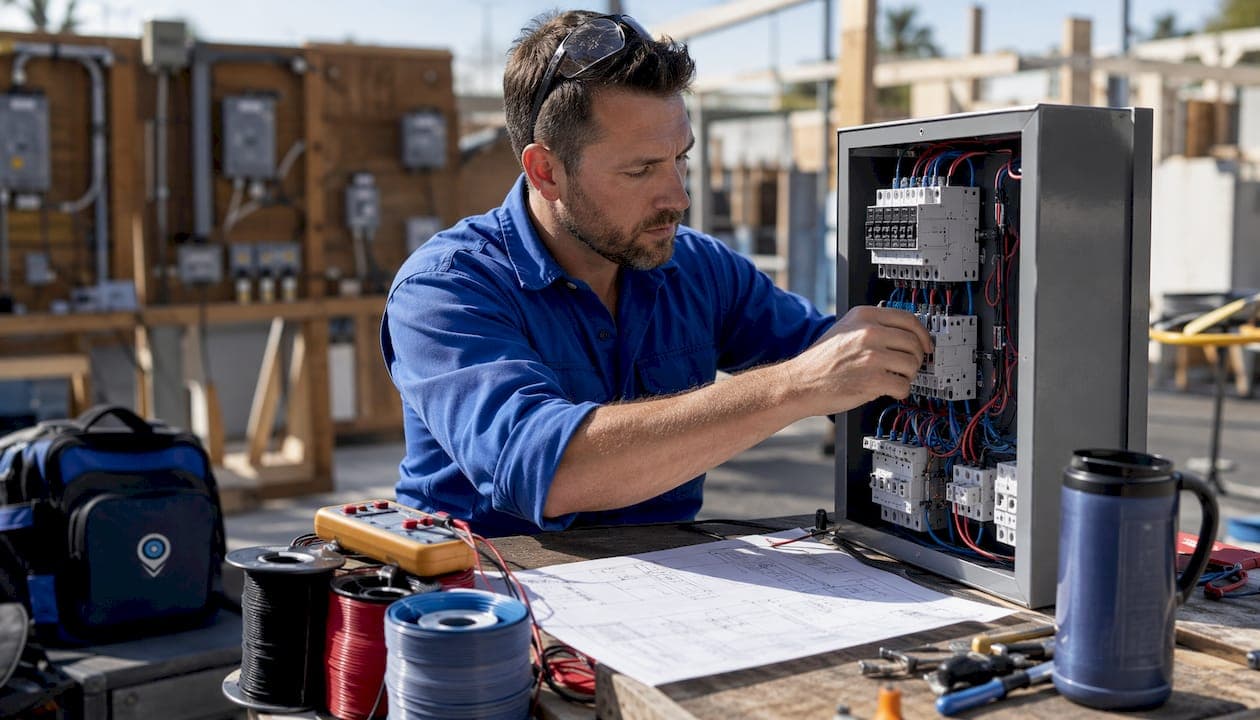
Effective electrician candidate screening starts with three non-negotiable steps: verify the license, test safety judgment, and run a hands-on skills assessment before the final interview. Employers who skip or compress any of these steps routinely hire candidates who look qualified on paper but struggle in the field. The good news is that a structured, multi-method process cuts that risk significantly while keeping your time-to-hire competitive.
Here is what a strong screening workflow covers:
- Verify active, unrestricted licenses directly with the issuing state or local board before advancing any candidate
- Test safety knowledge and NEC code comprehension as a disqualifier, not just an evaluation metric
- Administer a practical skills assessment such as a short diagnostic task to predict real field performance
- Conduct structured interviews with questions weighted heavily toward safety judgment and problem-solving
- Use a shared scorecard so every interviewer evaluates candidates against the same criteria
- Move fast — the average time to hire a skilled electrician is now about 56 days, longer than for software professionals, so delays cost you top candidates
Table of Contents
- 1. How do you design electrician tests that actually predict performance?
- 2. What makes a structured interview effective for electrician candidates?
- 3. How do you verify electrician licenses and certifications correctly?
- 4. How do you build an efficient electrician hiring workflow?
- 5. What does a skills-first screening approach look like in 2026?
- 6. What should background checks and reference verification cover?
- 7. How do you keep electrician hiring legally compliant?
- 8. Where do you find qualified electrician candidates?
- Locatehire Keeps Your Electrician Hiring on Track
- Key Takeaways
1. How do you design electrician tests that actually predict performance?
A well-designed electrician test does more than confirm a candidate read the NEC. It reveals how they think under pressure and whether their safety instincts are reliable.
The most effective pre-employment tests for electricians combine four components:
- Written knowledge checks: NEC code questions, load calculation problems, and circuit theory fundamentals
- Safety scenario questions: Situational prompts where the candidate must identify hazards, select correct PPE, or explain lockout/tagout procedures
- Diagnostic reasoning tasks: Short case studies where the candidate troubleshoots a described fault or wiring issue
- Hands-on practical assessments: A timed task such as wiring a panel section or reading a set of blueprints
Hands-on work samples better predict field performance than lengthy Q&A interviews where candidates may recite memorized answers. A 20-minute diagnostic challenge tells you more than an hour of open-ended questions.
Build your test around a standardized scoring rubric with defined pass/fail thresholds before you administer it to anyone. Pilot the test with a trusted journeyman or master electrician on your team to catch ambiguous questions. Adjust based on their feedback, then lock the format. Consistency across candidates is what makes the results meaningful.
Pro Tip: Weight safety scenario questions at 40% or more of the total test score. A candidate who aces load calculations but fails the lockout/tagout scenario is a liability, not an asset.
The Edison Electric Institute's Construction and Skilled Trades Selection System (CAST) is a validated battery used widely in the electrical industry, covering graphic arithmetic, reading comprehension, and mathematical usage. It is worth reviewing as a benchmark when designing your own assessment framework.
2. What makes a structured interview effective for electrician candidates?
Structure is the difference between a conversation and an evaluation. Without it, interviewers default to gut feel, and gut feel produces inconsistent hires.
Organize your interview questions into three categories:
- Technical depth: "Walk me through how you would size a branch circuit for a 240V, 20A load." "What NEC article governs GFCI requirements for commercial kitchens?"
- Safety judgment: "Describe a time you identified a safety hazard on a job site and what you did about it." "What is your process before working on any energized panel?"
- Problem-solving and situational judgment: "A GFI keeps tripping on a circuit you just installed. How do you diagnose it?" "A general contractor is pressuring you to skip a step to meet a deadline. What do you do?"
Safety questions should be weighted heavily, with failure on safety judgment grounds leading to disqualification. This is not a soft guideline. A candidate who cannot articulate a clear safety protocol in an interview will not suddenly develop one on a live job site.
Involve at least two interviewers and have each score independently using a shared scorecard before comparing notes. Structured interviews reduce hiring bias and improve consistency, and adding soft skill and cultural fit questions rounds out the evaluation. Ask about communication style, how they handle conflict with a foreman, and how they approach training a newer apprentice. These answers reveal whether the candidate will strengthen your team culture or create friction.

3. How do you verify electrician licenses and certifications correctly?
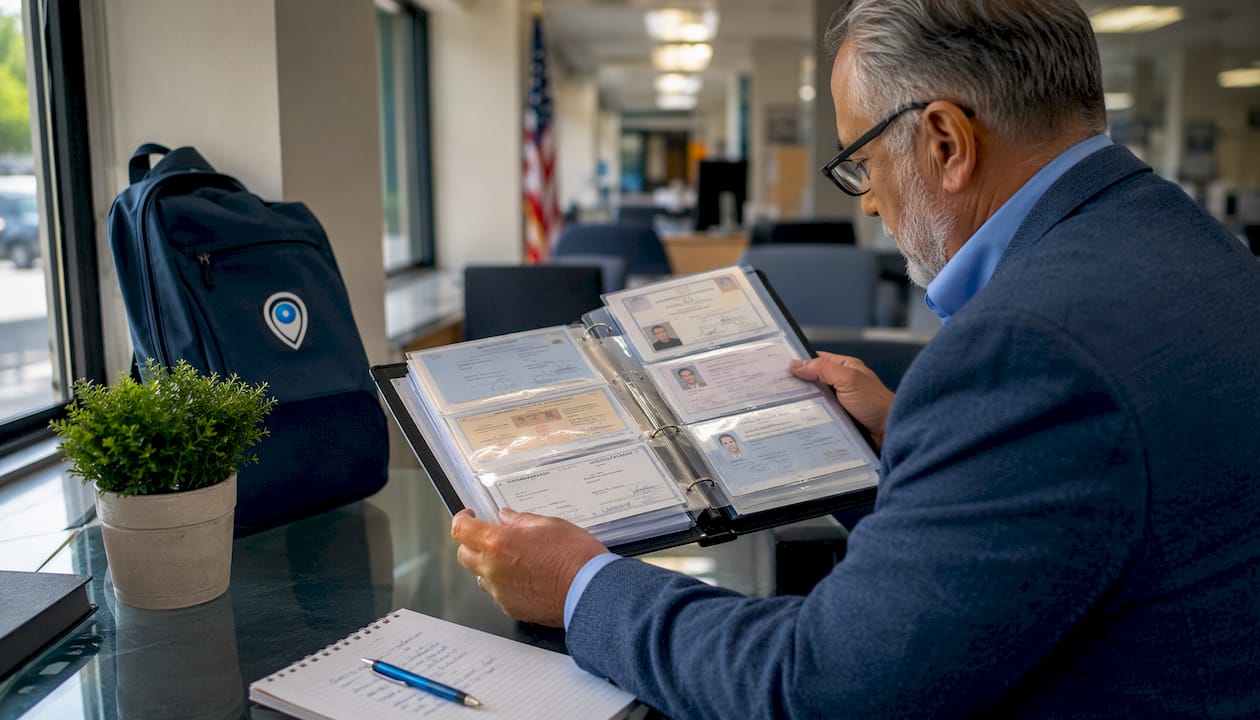
Self-reported credentials are not credentials. Candidates occasionally present expired licenses, licenses from states where they no longer hold active status, or OSHA cards from training they did not complete. Your verification process needs to catch all three.
Follow these steps for every candidate who advances past the initial screen:
- Journeyman or master electrician license: Verify directly with the issuing state or local licensing board. License requirements and reciprocity rules vary significantly by state, so never assume a license from one state is valid in another.
- OSHA 10 and OSHA 30 cards: There is no centralized OSHA database for these training cards. Contact the training provider listed on the card to confirm completion.
- Driver's license and motor vehicle record: Required for any role involving company vehicles. Pull the MVR directly through your state's DMV or a third-party screening provider.
- Specialty certifications: Arc flash training, confined space entry, and manufacturer-specific certifications should be verified with the issuing organization.
Keep all documentation in a standardized format and integrate it into your screening workflow so nothing falls through the cracks. An applicant tracking system built for small businesses can store credential records alongside candidate profiles, making audit trails simple.
4. How do you build an efficient electrician hiring workflow?
Speed and quality are not opposites in electrician hiring. A well-sequenced process delivers both. Here is a practical workflow that works for small electrical contracting businesses:
- Job posting with clear filters: Specify license tier, state, and any required certifications upfront. This reduces unqualified applications before they reach your inbox. Avoid the common job posting mistakes that attract the wrong candidates.
- Resume pre-screen: Confirm license tier, years of relevant experience, and any red flags such as frequent short-tenure jobs without explanation.
- License and credential verification: Run this before investing time in interviews. It takes 15–30 minutes and eliminates candidates with invalid credentials immediately.
- Practical test: Administer your skills assessment. Keep it under 30 minutes to respect the candidate's time and maintain their interest.
- Structured interview: Use your scored interview format with multiple evaluators.
- Background check and reference calls: Run these in parallel after the interview to avoid adding days to your timeline.
- Decision and offer: Consolidate scorecard results, make a team decision, and extend the offer the same day if possible.
Communicate with candidates at every stage. Top electricians receive multiple offers quickly, and silence reads as disinterest. A brief text or email update after each step keeps strong candidates engaged.
Combining sourcing strategies including trade job boards, employee referrals, trade school partnerships, and apprenticeship programs builds a stronger pipeline than relying on a single channel. Apprenticeship hiring also gives you a pathway to develop talent internally, which improves long-term retention.
5. What does a skills-first screening approach look like in 2026?
The shift away from resume-based screening toward demonstrated competency is the defining trend in skilled trades hiring right now. Years of experience on a resume tells you how long someone has been doing a job, not how well they do it.
Using multiple varied evaluation methods like structured interviews, practical simulations, and credential verification yields fairer, more accurate skills assessment. Relying on a single method risks missing important competencies and introduces bias. A candidate with 12 years of experience who cannot pass a basic NEC scenario test is a weaker hire than a 4-year journeyman who aces it.
Many US operational workers would leave their jobs without clear upskilling pathways, according to Randstad USA's Skilled Trades Hiring Framework. Building development roadmaps into your offer and onboarding process directly improves retention.
Standardize your scoring rubrics with explicit weights: safety judgment, NEC knowledge, and problem-solving should carry the most weight. Document the rationale for every hire and every pass. This protects you legally and sharpens your process over time.
Technology plays a real role here. Applicant tracking systems with built-in candidate matching and analytics help you manage multiple openings without losing track of where each candidate stands. The key is maintaining human oversight at every decision point. AI-assisted screening speeds up the early stages, but a human evaluator should always review safety-related assessment results before a candidate advances.
6. What should background checks and reference verification cover?
Background checks are standard practice in the electrical industry, and employment is typically contingent on passing them. Run criminal background checks through a compliant third-party provider that follows the Fair Credit Reporting Act (FCRA). For electrician roles, pay particular attention to any history involving theft, fraud, or workplace safety violations.
Drug testing is equally standard. Most electrical contractors conduct pre-employment drug screening after a conditional offer is made. Some also implement random testing programs for active employees, particularly on federally funded projects.
Reference checks are where many employers cut corners, and it shows in their hires. Call at least two former supervisors, not just the references the candidate provided. Ask specific questions: "How did this person handle a situation where a safety protocol was unclear?" and "Would you rehire them for an electrician role?" Vague or overly brief answers from a former supervisor are worth noting.
For candidates who will work in sensitive environments such as schools, hospitals, or government facilities, additional background screening such as sex offender registry checks or federal background clearances may be required. Confirm the specific requirements with the facility before the candidate starts.
7. How do you keep electrician hiring legally compliant?
Legal compliance in electrician hiring is not complicated, but it requires consistency. Apply the same screening criteria to every candidate for the same role. Inconsistent application of standards is one of the most common sources of discrimination claims.
Key compliance areas to cover:
- Equal Employment Opportunity (EEO): The Equal Employment Opportunity Commission (EEOC) prohibits discrimination based on race, color, religion, sex, national origin, age, disability, or genetic information. Your interview questions, test design, and scoring criteria must be job-related and applied uniformly.
- Ban-the-box laws: Many states and municipalities restrict when you can ask about criminal history. Know your state's rules before including criminal history questions on your application.
- ADA accommodations: The Americans with Disabilities Act requires reasonable accommodations during the hiring process. If a candidate requests a modification to your testing format, document the request and your response.
- FCRA compliance: Before running a background check, provide the required written disclosure and obtain signed authorization. If you take adverse action based on a background check result, follow the required pre-adverse and adverse action notice process.
- I-9 verification: Confirm work authorization for every new hire using Form I-9. Keep completed forms on file for the required retention period.
Document every step of your screening process. If a hiring decision is ever challenged, your records are your defense. An employment screening methods guide can help you build a compliant, consistent process from the start.
8. Where do you find qualified electrician candidates?
The best screening process in the world does not help if your pipeline is thin. Sourcing strategy and screening quality work together.
Effective sourcing channels for electrician candidates include:
- Trade-specific job boards: Platforms focused on skilled trades attract candidates who are actively looking for electrical work, not just browsing general job sites.
- IBEW and union halls: For union contractors, working directly with your local IBEW hall gives you access to a pre-vetted pool of licensed journeymen. The IBEW hiring process has its own structure worth understanding before you engage.
- Trade school and community college partnerships: Electrical programs at community colleges and vocational schools produce graduates who are ready to enter apprenticeships or journeyman roles. Building relationships with program coordinators gives you early access to top graduates.
- Employee referrals: Your current electricians know other electricians. A structured referral program with a modest incentive consistently produces high-quality candidates.
- Apprenticeship programs: Registered apprenticeship programs, including those affiliated with the electrical training ALLIANCE, provide a pipeline of candidates who have completed validated aptitude testing and structured training.
- Digital hiring platforms: Services like ChambaNow offer digital hiring frameworks that can complement your sourcing strategy for flexible or project-based staffing needs.
Diversify across at least three of these channels. A single-source pipeline creates hiring gaps whenever that channel slows down.
Locatehire Keeps Your Electrician Hiring on Track
Screening electrician candidates across multiple openings is hard to manage manually. Locatehire is an applicant tracking system built specifically for small businesses with ongoing hiring needs, including electrical contractors. Track every candidate's license verification status, test scores, interview scorecards, and background check results in one place. Move fast, stay organized, and never lose a strong candidate to a slow process.
Start hiring smarter with Locatehire
Key Takeaways
Effective electrician candidate screening combines license verification, safety-weighted testing, structured interviews, and a fast, consistent workflow to hire qualified candidates before competitors do.
| Point | Details |
|---|---|
| Verify licenses directly | Confirm active, unrestricted licenses with the issuing state board — never rely on self-reported credentials. |
| Weight safety heavily | Safety judgment questions should function as disqualifiers; a candidate who fails them should not advance. |
| Use practical tests | A short hands-on diagnostic task predicts field performance better than a long interview alone. |
| Standardize scoring | Shared scorecards weighted toward safety, NEC knowledge, and problem-solving keep evaluations consistent across interviewers. |
| Move fast | The average time to hire a skilled electrician is about 56 days — rapid communication at every stage keeps top candidates engaged. |