

Only certain U.S. employers are legally required to drug test. If your workforce includes roles regulated by the Department of Transportation (DOT), the Nuclear Regulatory Commission (NRC), or covered under a federal contract or grant, testing is mandatory. For most other private employers, testing is permitted but not federally compelled. Knowing which category you fall into is the first decision.
The core legal triggers at a glance:
- DOT-regulated safety-sensitive roles (CDL drivers, pilots, rail operators, pipeline workers, air traffic controllers) must follow 49 CFR Part 40 and its agency-specific rules
- NRC-covered positions at nuclear facilities carry their own mandatory testing requirements
- Federal contractors and grantees may be required to maintain a drug-free workplace under the Drug-Free Workplace Act
- Most private employers may test voluntarily, but must comply with state law, the ADA, EEOC guidance, and NLRA requirements where applicable
Locatehire helps small businesses in trades like HVAC, electrical, plumbing, and pool service build the hiring workflows that keep these steps organized and on time.
Table of Contents
- What federal law actually requires employers to drug test
- Which roles are typically covered or should be tested for safety reasons
- What types of drug tests and testing events you need to know
- What drug tests actually measure — and what they don't
- How to integrate drug testing into a broader safety program
- What a compliant drug-testing policy must include
- Step-by-step implementation for small businesses
- Key Takeaways
- Why balanced, safety-first testing programs actually work
- Locatehire keeps your testing workflow on track
- Authoritative sources and further reading
What federal law actually requires employers to drug test
SAMHSA's employer resources confirm that no single federal law requires all private employers to test. The mandates come from specific statutes and agency rules. Understanding which rules apply to you determines whether testing is a legal obligation or a risk-management choice.
DOT and 49 CFR Part 40 are the most significant federal drivers. DOT's rule covers employees in safety-sensitive transportation roles across five modal agencies: the Federal Motor Carrier Safety Administration (FMCSA), Federal Aviation Administration (FAA), Federal Railroad Administration (FRA), Federal Transit Administration (FTA), and Pipeline and Hazardous Materials Safety Administration (PHMSA). DOT rules preempt conflicting state laws for covered employees. DOT employer guidance specifies required testing events, approved specimen types, and procedural standards that go well beyond what most state laws require.
The Drug-Free Workplace Act applies to federal contractors receiving contracts of $100,000 or more and to federal grantees. It requires a written policy and employee notification but does not mandate individual testing. The NRC adds its own layer for certain nuclear facility workers.
| Federal Driver | Who It Covers | Testing Mandate |
|---|---|---|
| DOT / 49 CFR Part 40 | Safety-sensitive transportation employees (FMCSA, FAA, FRA, FTA, PHMSA) | Mandatory; SAMHSA-certified lab and MRO required |
| Nuclear Regulatory Commission | Certain nuclear facility personnel | Mandatory per NRC fitness-for-duty rules |
| Drug-Free Workplace Act | Federal contractors ($100K+) and grantees | Written policy required; individual testing not mandated |
| State law (voluntary employers) | All other private employers | Varies by state; no federal floor |
Civil-rights statutes add constraints regardless of which mandate applies. The ADA applies to employers with 15 or more employees and limits when and how you can ask about medical history. The EEOC requires consistent application across protected classes. Unionized workplaces must negotiate testing programs under the NLRA. And state laws increasingly restrict testing for off-duty marijuana use or require conditional-offer sequencing before a test can be initiated.
"Employers must follow a patchwork of state laws for voluntary testing; ADA applies to employers with 15 or more employees and unionized workplaces must negotiate testing under NLRA." — Pre Employment Drug Testing Employer Requirements Overview
Which roles are typically covered or should be tested for safety reasons
DOT's employees-covered guidance lists specific duties by agency. If a role appears there, testing is mandatory. Beyond that list, employers in safety-sensitive industries often choose to test based on risk exposure.
Roles commonly subject to mandatory testing:
- Commercial motor vehicle (CMV) drivers holding a CDL under FMCSA rules
- Pilots, flight crew, and air traffic controllers under FAA rules
- Railroad operating employees under FRA rules
- Transit vehicle operators and maintenance staff under FTA rules
- Pipeline operations and emergency response personnel under PHMSA
- Certain nuclear facility workers under NRC fitness-for-duty requirements
Decision criteria for voluntary testing in safety-sensitive roles:
- The employee directly controls public safety or operates heavy machinery
- A momentary lapse could cause serious injury, death, or property damage
- The role involves handling hazardous materials or operating in confined spaces
- The position requires a professional license or certification tied to public trust
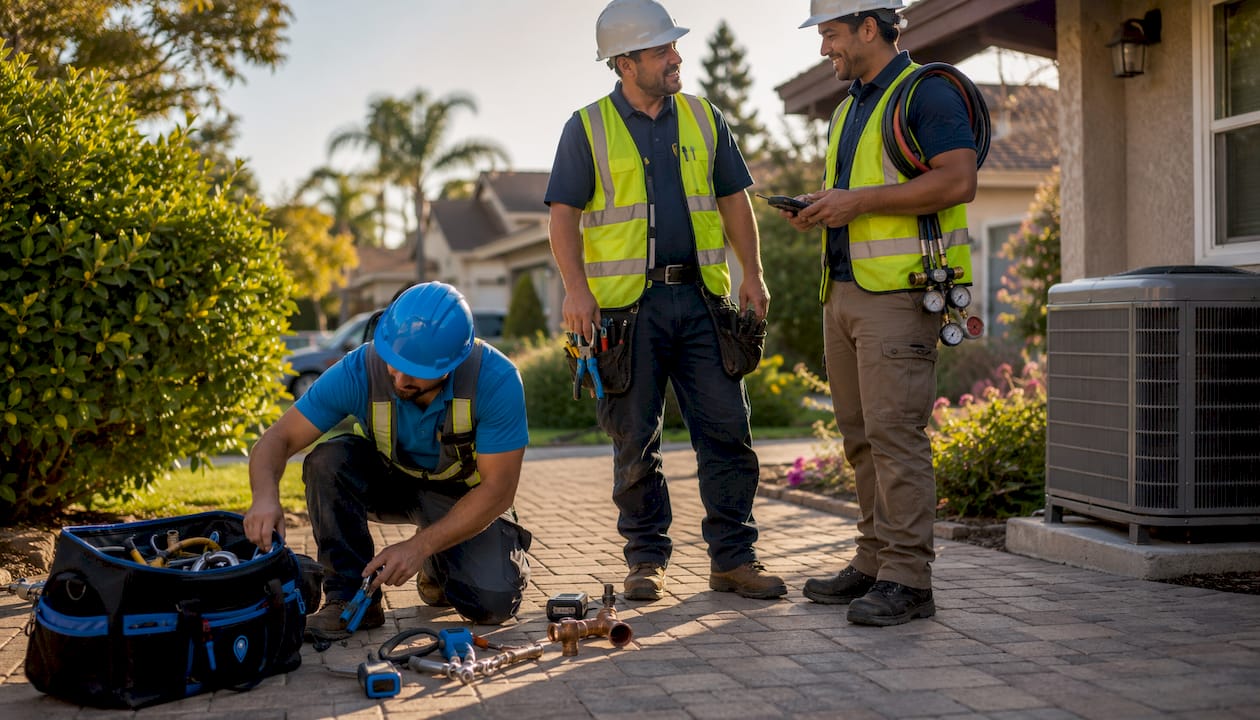
For trade employers, electricians, HVAC technicians, and plumbers often fall into the voluntary category. Their work involves real safety exposure. Reviewing electrician candidate screening practices can help you decide whether testing fits your risk profile.
What types of drug tests and testing events you need to know
Employment drug testing uses three main specimen types: urine (most common, required for DOT programs), oral fluid (now authorized for DOT testing), and hair (longer detection window, not DOT-approved for regulated programs). Each has different detection windows and use cases.
The six standard testing events are:
- Pre-employment — conducted after a conditional offer, before the employee begins safety-sensitive duties
- Random — unannounced, using a scientifically valid random selection process
- Post-accident — triggered by defined accident thresholds (DOT sets specific criteria by agency)
- Reasonable suspicion — based on documented, trained-supervisor observations
- Return-to-duty — required before an employee resumes safety-sensitive work after a violation
- Follow-up — a minimum of six unannounced tests in the 12 months after return-to-duty
"Timing errors remain a common compliance risk: testing before a conditional offer or bundling test and background checks pre-offer can violate state conditional-offer requirements and ban-the-box rules." — Pre Employment Drug Testing Employer Requirements Overview
DOT programs require SAMHSA-certified labs, a qualified Medical Review Officer (MRO), and strict chain-of-custody procedures. Non-DOT programs are governed by employer policy and state law, giving you more flexibility but also more responsibility to design the process correctly. For a broader look at employment screening methods, including how drug testing fits alongside background checks, Locatehire's blog covers the sequencing in detail.
What drug tests actually measure — and what they don't
Drug tests detect the presence of substances or their metabolites in a biological specimen. They do not measure current impairment, diagnose addiction, or tell you whether someone was impaired at the time of an incident. That distinction matters legally and operationally.
Detection windows vary by specimen type and substance. Urine typically detects recent use within days; hair can reflect use over a much longer period. Factors like metabolism, frequency of use, and body composition all affect results.
The confirmatory testing workflow is non-negotiable. A presumptive positive from an initial screen must be confirmed through a definitive test before any adverse employment action. MedlinePlus confirms that presumptive positives can produce false positives, and that MRO review is the safeguard against wrongful action. The MRO is a licensed physician who reviews non-negative results, contacts the donor to check for legitimate medical explanations, and issues a final verified result.
The chain-of-custody process protects the integrity of the specimen from collection through reporting. Disputes over results are not uncommon; proper chain-of-custody documentation reduces the risk that results can be challenged on procedural grounds.
Pro Tip: Never take adverse action on a non-negative result until the MRO has issued a verified positive. Skipping this step exposes you to ADA claims, wrongful termination suits, and DOT compliance violations.
How to integrate drug testing into a broader safety program
Testing alone does not create a safe workplace. The National Safety Council frames testing as one component of a safety and wellbeing system, not a standalone disciplinary tool. Programs that combine testing with training, clear protocols, and support resources produce better outcomes and stronger employee buy-in.
Core program components:
- Written drug-testing policy with defined scope, substances, and consequences
- Consistent application across all applicants and employees in covered roles
- Supervisor training on reasonable-suspicion documentation and objective observation
- Employee Assistance Program (EAP) or referral pathways for support
- Incident investigation protocols that include post-accident testing triggers
- Designated Employer Representative (DER) trained to manage results confidentially
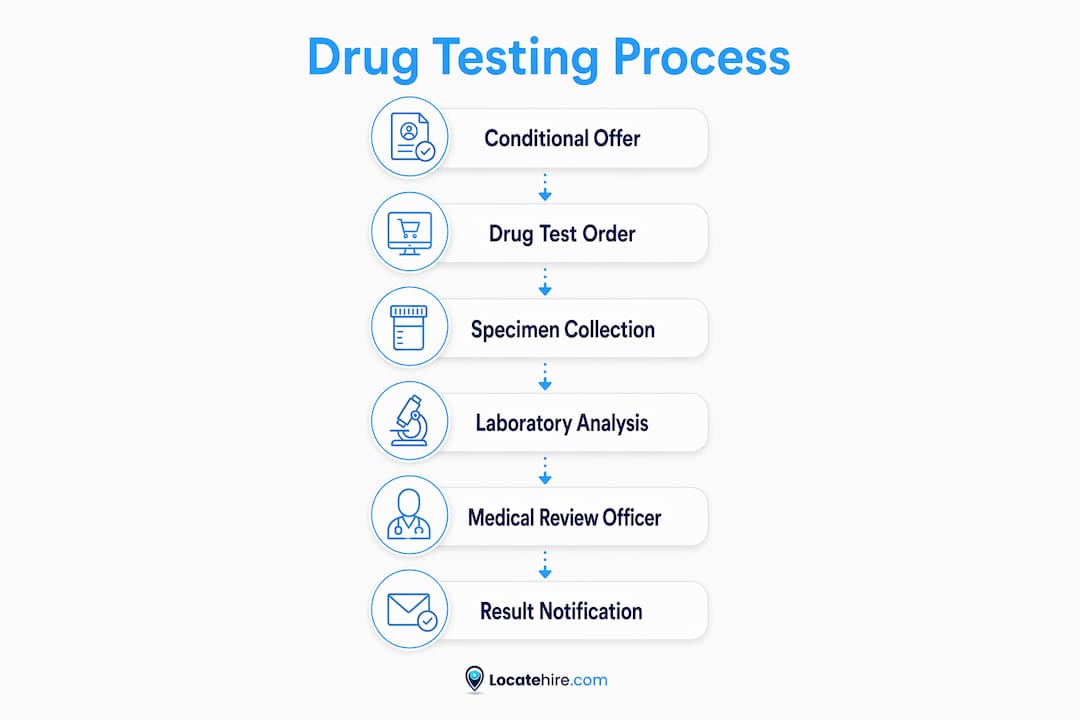
| Hiring Stage | Action | Responsible Party |
|---|---|---|
| Conditional offer extended | Initiate drug test order | Hiring manager / DER |
| Specimen collected | Chain-of-custody form completed | Certified collection site |
| Lab analysis | Presumptive result reported | SAMHSA-certified lab |
| Non-negative result | MRO review and donor contact | MRO |
| Verified result issued | Onboarding proceeds or safety duties withheld | DER / hiring manager |
Framing testing as a proactive safety initiative rather than a punitive measure reduces resistance and improves retention among safety-focused hires. Chemical safety training is one area where this framing pays off directly for trade employers.
What a compliant drug-testing policy must include
A written policy is the foundation of any defensible program. Without it, consistent application is impossible and legal exposure increases significantly.
Policy checklist:
- Scope: which roles and locations are covered
- Timing: post-conditional-offer sequencing for pre-employment tests
- Substances tested and specimen types authorized
- Testing events covered (pre-employment, random, post-accident, reasonable suspicion, return-to-duty, follow-up)
- MRO process and chain-of-custody requirements
- Consequences for positive results, refusals, and adulteration
- Appeals process and confidentiality protections
- DER role and responsibilities
- Union negotiation requirements where a collective bargaining agreement applies
Sample policy language (template only, not legal advice):
State laws vary significantly on marijuana, off-duty use protections, and testing timing. Review your policy with employment counsel before rollout, and audit it whenever your operating states change their rules.
Step-by-step implementation for small businesses
Getting a program in place does not require a large HR team. Here is a practical sequence:
- Decide scope. Identify which roles are DOT-covered and which you will test voluntarily based on safety exposure.
- Draft and approve your policy. Include all checklist elements above; have counsel review for state compliance.
- Sequence conditional offers correctly. Extend the offer first, then initiate testing. Never test pre-offer.
- Select a certified vendor and lab. For DOT programs, the lab must be SAMHSA-certified. Confirm MRO availability, specimen types supported, turnaround times, and chain-of-custody reporting formats.
- Assign a DER. This person manages confidential results, communicates with the MRO, and decides on removing employees from safety functions.
- Train supervisors. Reasonable-suspicion training must cover objective observation, documentation, and the limits of personal judgment.
- Track and audit. Document every test, result, and action. Audit random selection processes annually.
Vendor checklist:
- SAMHSA-certified lab (required for DOT; best practice for non-DOT)
- Qualified MRO with availability for donor contact
- Specimen types supported: urine, oral fluid, hair as needed
- Turnaround time commitments for routine and urgent results
- Chain-of-custody documentation and electronic reporting
- State-specific compliance support
Turnaround times for routine urine screens are typically one to three business days for a negative result; non-negatives take longer due to MRO review. Costs vary by specimen type, panel size, and vendor. For small businesses managing applicant screening across multiple open roles, keeping these steps in a single workflow reduces errors.
Key Takeaways
Federal mandates, not general employment law, determine whether drug testing is required for a specific job — and the MRO confirmatory step is non-negotiable before any adverse action.
| Point | Details |
|---|---|
| Federal mandates are narrow | Only DOT-regulated roles, NRC positions, and some federal contractors are legally required to test. |
| Conditional-offer timing is critical | Always extend the offer before initiating a drug test to avoid state-law sequencing violations. |
| MRO review protects you | Never act on a non-negative result until a qualified Medical Review Officer issues a verified finding. |
| Testing works best in a system | Pair testing with supervisor training, EAP access, and a written policy for defensible, effective programs. |
| Locatehire supports the workflow | Locatehire helps small businesses track conditional offers, manage candidate status, and keep testing steps organized inside the hiring process. |
Why balanced, safety-first testing programs actually work
Most employers I see struggle with drug testing not because the rules are too complex, but because they treat it as a checkbox rather than a system. A positive test result that triggers immediate termination, with no MRO review and no documented reasonable-suspicion process, is not a safety program. It is a liability.
The employers who get this right in trades like HVAC, electrical, and pool service do three things consistently: they sequence the conditional offer correctly every time, they route every non-negative through an MRO before making a decision, and they train supervisors to document observations rather than act on instinct. Those three habits alone close most of the legal exposure.
Testing framed as a safety and wellbeing commitment also changes how candidates respond to it. Workers who take safety seriously tend to respect employers who do the same. The program becomes a signal about the kind of workplace you run.
Locatehire keeps your testing workflow on track
Hiring in trades means managing conditional offers, background checks, and drug-testing steps across multiple candidates at once. Locatehire gives small businesses a single place to track where every candidate stands, trigger the right next step at the right time, and upload test clearances before moving to onboarding.
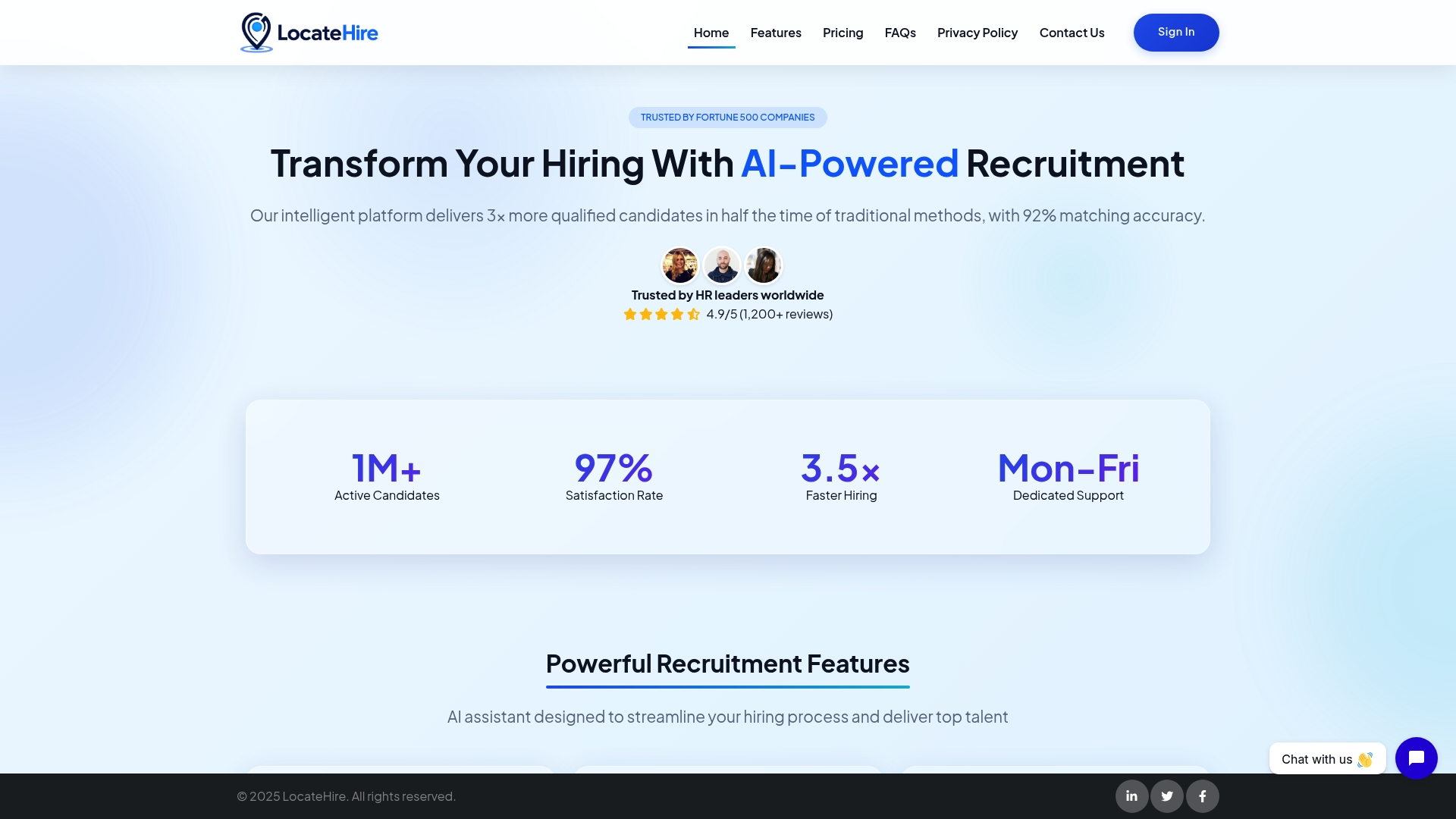
Locatehire is not a drug-testing lab or MRO. You will still contract directly with a certified collection site and MRO for the testing itself. What Locatehire does is keep the administrative workflow organized: conditional-offer status, document uploads, candidate stage tracking, and reminders so nothing falls through the cracks between offer and first day.
If you are building or auditing a hiring process that includes drug-testing steps, start with Locatehire to see how the workflow fits your team.
Authoritative sources and further reading
Primary sources employers should consult:
- DOT Employer FAQs — required testing events and DOT program obligations
- 49 CFR Part 40 employees-covered guidance — check whether a specific role is DOT-regulated
- SAMHSA employer resources on federal laws — ADA/EEOC intersections and federal statutes
- SAMHSA FAQs on federal workplace drug testing — Mandatory Guidelines for federal programs
- MedlinePlus on drug testing accuracy and MRO — confirmatory testing and false-positive risks
- National Safety Council drug testing quick guide — program design and wellbeing framing
| Source | Agency / Publisher | Best Used For |
|---|---|---|
| DOT Employer FAQs | U.S. Department of Transportation | Required testing events, DOT program rules |
| 49 CFR Part 40 coverage | U.S. Department of Transportation | Confirming whether a role is DOT-regulated |
| SAMHSA employer resources | SAMHSA | Federal statutes, ADA/EEOC limits |
| MedlinePlus drug testing | National Library of Medicine | MRO process, false positives, confirmatory testing |
| NSC drug testing guide | National Safety Council | Program design, supervisor training, wellbeing framing |
This article is general information, not legal advice. Confirm current federal and state requirements with qualified employment counsel before implementing or modifying a drug-testing program.